SRINAGAR: Khyber Aquaculture, in partnership with the Jammu and Kashmir Department of Fisheries, has launched a specialised training programme for local trout farmers to promote modern, sustainable aquaculture practices, improve fish health, and strengthen the efficiency and resilience of the region’s trout-farming sector.
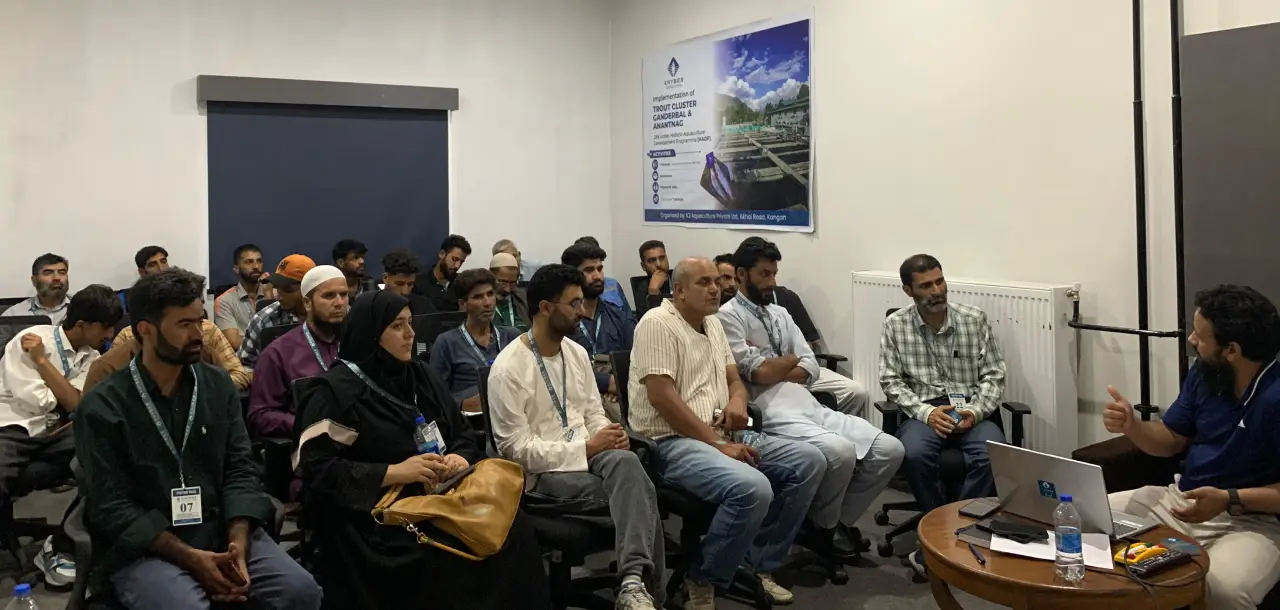
The programme is being implemented under Project No 22, Implementation of Trout Cluster Programme covering Ganderbal and Anantnag, of the Holistic Agriculture Development Plan (HADP). It seeks to move traditional trout farming towards a more scientific, professionally managed model, with greater emphasis on biosecurity, water quality, disease prevention, and modern production systems.
The training brought together progressive trout farmers from Ganderbal, Bandipora and Srinagar for an intensive session on Sustainable Trout Aquaculture and Fish Health Management.
Technical experts conducted practical modules covering biosecurity, water-quality management, responsible aquaculture, early disease detection and Recirculating Aquaculture Systems (RAS).
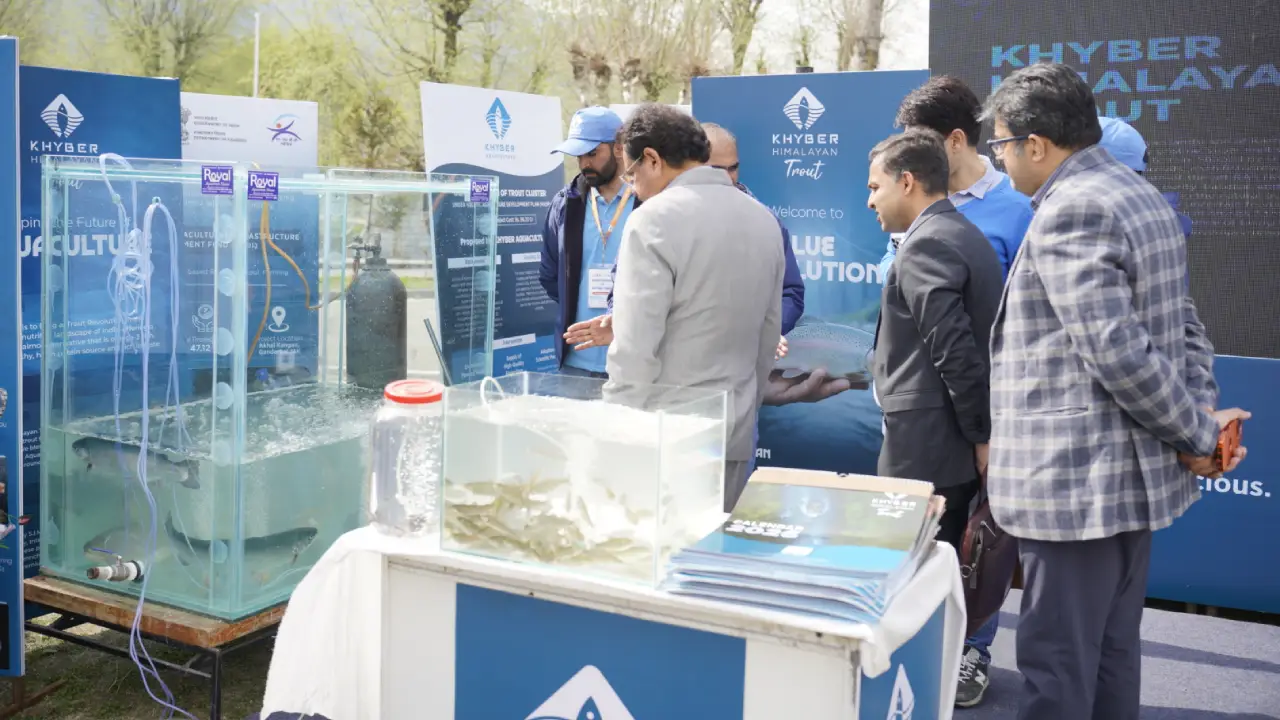
A central theme of the programme was the need to shift trout farming from a reactive approach to fish diseases towards proactive health management. Farmers were encouraged to adopt routine water-quality monitoring, reduce environmental and handling-related stress on fish and establish early-warning mechanisms to identify potential health problems before they develop into major outbreaks.
The programme also focused on practical challenges faced by farmers in day-to-day operations. Its interactive format allowed participants to discuss field-level problems and explore solutions aimed at improving fish survival rates, growth performance and overall farm efficiency.
Umar Tramboo, CMD, Khyber Aquaculture, said capacity building was essential to developing a resilient trout industry.
“Capacity building is the cornerstone of a resilient trout sector. By fostering collaboration between farmers, government institutions, and technical experts, we can build a sustainable cold-water aquaculture ecosystem that supports livelihoods, food security, and rural enterprise development in Jammu and Kashmir,” he said.
The initiative comes against the backdrop of Jammu and Kashmir’s favourable natural conditions for cold-water fisheries. The region’s mountain environment and cold-water resources provide a strong foundation for trout production, while the organisers believe that the adoption of scientific farming practices can help farmers improve productivity and make the sector more resilient.
The programme is therefore intended not merely as a technical training exercise but as part of a broader effort to modernise the region’s trout-farming ecosystem. By strengthening farmers’ understanding of water management, fish health and biosecurity, the initiative aims to reduce production losses and improve the consistency and efficiency of farm operations.
The organisers said better production practices could also help strengthen trout value chains, create additional rural enterprise opportunities and contribute to livelihoods and food security in communities associated with cold-water aquaculture.
Khyber Aquaculture said the initiative forms part of its broader effort to advance India’s cold-water fisheries sector through innovation, stronger biosecurity systems and internationally aligned aquaculture practices. The long-term ambition is to contribute to positioning India more prominently on the global trout and salmon aquaculture map.
The focus on biosecurity is particularly significant for intensive aquaculture systems, where disease outbreaks can affect fish survival and farm economics. The training’s emphasis on prevention, regular monitoring and early detection is intended to enable farmers to identify emerging risks before they become severe.
The introduction of Recirculating Aquaculture Systems (RAS) also points towards the adoption of more controlled and resource-efficient production technologies. Such systems can offer farmers greater control over water and production conditions, although their practical application depends on farm design, investment and technical management.
The organisers said continued collaboration between farmers, technical specialists and government agencies would be important for building a sustainable cold-water aquaculture sector in Jammu & Kashmir.
The training programme is part of the Holistic Agriculture Development Plan, under which the trout cluster initiative covering Ganderbal and Anantnag seeks to support the development of the sector through a more organised and scientifically managed approach.
The Khyber Group is a Jammu & Kashmir-based business conglomerate with interests in luxury hospitality, cement, real estate, healthcare and sustainable aquaculture.
Established about five decades ago in the Kashmir Valley, the group says it has focused on investments intended to create long-term value, generate employment and contribute to the region’s socio-economic development. Its aquaculture operations form part of this broader diversification into sustainable and agriculture-linked enterprises.