SRINAGAR: Chairman of Anjuman Nusrat-ul-Islam and Mirwaiz-e-Kashmir, Moulvi Muhammad Umar Farooq, expressed grave concern over what he described as a rapidly spiralling drug crisis in Jammu and Kashmir. Addressing a student seminar titled “Building a Drug-Free Kashmir – Role of Students and Society” at Islamia Higher Secondary School, Srinagar, the Mirwaiz warned that substance abuse has grown into a full-fledged social emergency threatening to derail the future of Kashmiri youth.
Mirwaiz said the situation has escalated beyond a mere concern and now represents a systemic crisis. “If we do not act now—if we do not decisively address this knot of unemployment, frustration, and the easy availability of drugs—we risk losing an entire generation,” he cautioned.
Citing recent data, he said approximately 22 lakh young Kashmiris—about one-third of those aged 18 to 35—remain unemployed, with nearly one lakh graduates entering a saturated job market each year. Around 11 per cent of Kashmiri youth, he said, are believed to have experimented with or become addicted to narcotic substances, primarily opioids like heroin and tramadol. “The average age of first marriage for men has now crossed 32 years, adding further to psychological distress,” he said.
Mirwaiz underlined that while religious leaders, civil society, and families play a crucial role in awareness and prevention, the ultimate responsibility lies with the government. “The absence of a coherent and urgent policy response reflects serious governmental negligence,” he said, criticising what he called the state’s failure to act in the face of mounting evidence.
He was especially critical of what he called the increasing availability of liquor under the pretext of tourism promotion. “At a time when drug addiction is wreaking havoc on our youth, allowing alcohol to flow freely is not only irresponsible but dangerous. Instead of protecting the physical and moral health of its citizens, the government is abdicating its duty,” Mirwaiz said.
While welcoming the police crackdown on drug cartels, he emphasised that the issue should not be viewed solely through the lens of law enforcement. “This is not just a law and order problem—it is a societal emergency,” he said. He called for an “all-of-society” approach that includes education, rehabilitation, and community involvement. He urged religious leaders to speak about the issue from the pulpit and asked educational institutions to become active sites of awareness. “Our mosques, schools, and homes must become centres of resistance against this scourge,” he said.
Renowned psychiatrist Dr Kausar Siddiq Pandit of SKIMS also addressed the seminar. She sensitised students to the psychological risks of substance abuse and stressed the importance of awareness and early prevention. She urged the youth to take personal and collective responsibility for resisting addiction.
The event was attended by students, teachers, scholars, and civil society members and featured insightful presentations and discussions highlighting the scale of the crisis and the urgency of coordinated action.
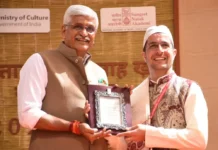
As part of the seminar, outstanding students were felicitated for their contributions. Muhammad Rameen from Crescent Public School, Naseem Bagh, Srinagar, won the first position. The second position went to Zahra Aslam from Islamia Higher Secondary School, Rajouri Kadal, while the third position was jointly awarded to Maheen Khurshid (Nusrat-ul-Islam Trust, Anantnag), Ayan Ahmad Butt (Islamia High School, Botakadal), and Falak Nabi (Islamia Higher Secondary School, Rajouri Kadal).