SRINAGAR: JK Bank has announced its decision to discontinue the controversial Name and Shame policy, bringing significant relief to borrowers, particularly Micro, Small, and Medium Enterprises (MSMEs) in the region. This commitment was made by the bank’s Managing Director and CEO, Amitva Chatterjee, during a crucial meeting with a high-level delegation from the Federation of Chambers of Industries Kashmir (FCIK), led by Shahid Kamili, the industry body said in a statement.
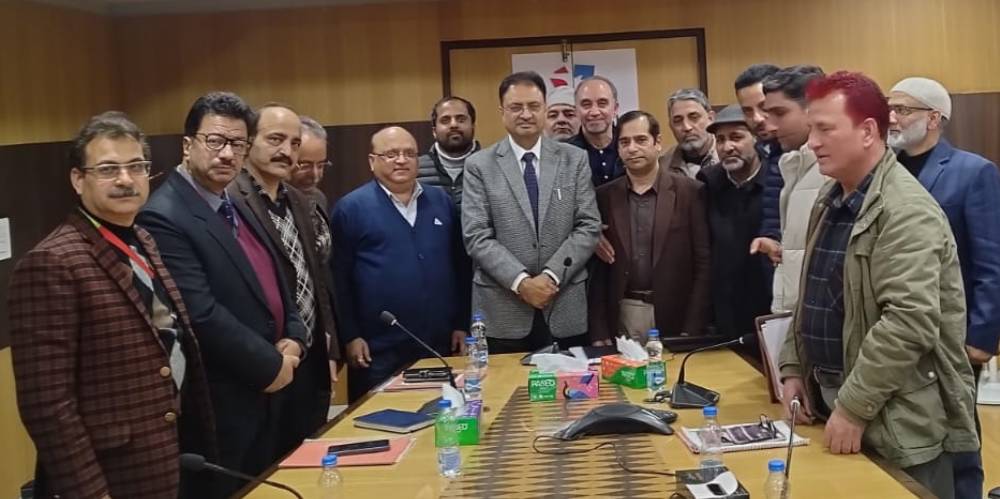
The meeting, which also included JK Bank’s Executive Director Sudhir Gupta and other senior officials, was convened to discuss key challenges faced by MSMEs and seek constructive solutions. For years, the bank’s practice of publicly naming defaulters through SARFAESI notices and e-auction advertisements in newspapers had led to reputational damage for many struggling businesses, impacting their ability to secure financial assistance or business opportunities in the future.
FCIK has consistently opposed this approach, highlighting that it disproportionately affects MSMEs already under financial stress due to external factors. The delegation called for adherence to government-mandated revival and restructuring mechanisms, including provisions in the Government of India’s 2015 Notification and the Reserve Bank of India’s 2016 Guidelines on MSME Rehabilitation. The Supreme Court of India has also upheld the principle that MSME accounts should not be classified as Non-Performing Assets (NPAs) prematurely.
In response to these concerns, Chatterjee assured that JK Bank would no longer issue SARFAESI notices and e-auction advertisements for MSMEs. He also confirmed that MSME accounts would not be hastily declared NPAs, ensuring that due process and RBI guidelines would be followed. Furthermore, the bank will engage in open dialogue with struggling MSMEs, offering restructuring and repayment options to facilitate business recovery.
FCIK has welcomed this decision and commended Chatterjee for his proactive approach to debt resolution. The Federation has urged the bank to prioritise business revival over liquidation, ensuring that MSMEs receive the necessary support to rebuild their operations.
To further streamline financial access for local businesses, FCIK presented a comprehensive 25-page charter of demands to J&K Bank. This document outlines key measures aimed at addressing the unique financial challenges faced by entrepreneurs in the region. The delegation also proposed a structured, three-pronged strategy for resolving the growing NPA crisis, urging the bank to take an inclusive and sustainable approach.
With this policy shift, J&K Bank has taken a significant step toward fostering financial stability and promoting rehabilitation over punitive action. Under Chatterjee’s leadership, stakeholders remain optimistic that the bank will continue working closely with MSMEs to resolve financial challenges and ensure their sustained growth in Jammu and Kashmir.