Survey of 750 people across six villages in Kishtwar finds pressure on high-value Himalayan plants from climate change, deforestation and overharvesting; researchers call for community-led conservation that protects local livelihoods
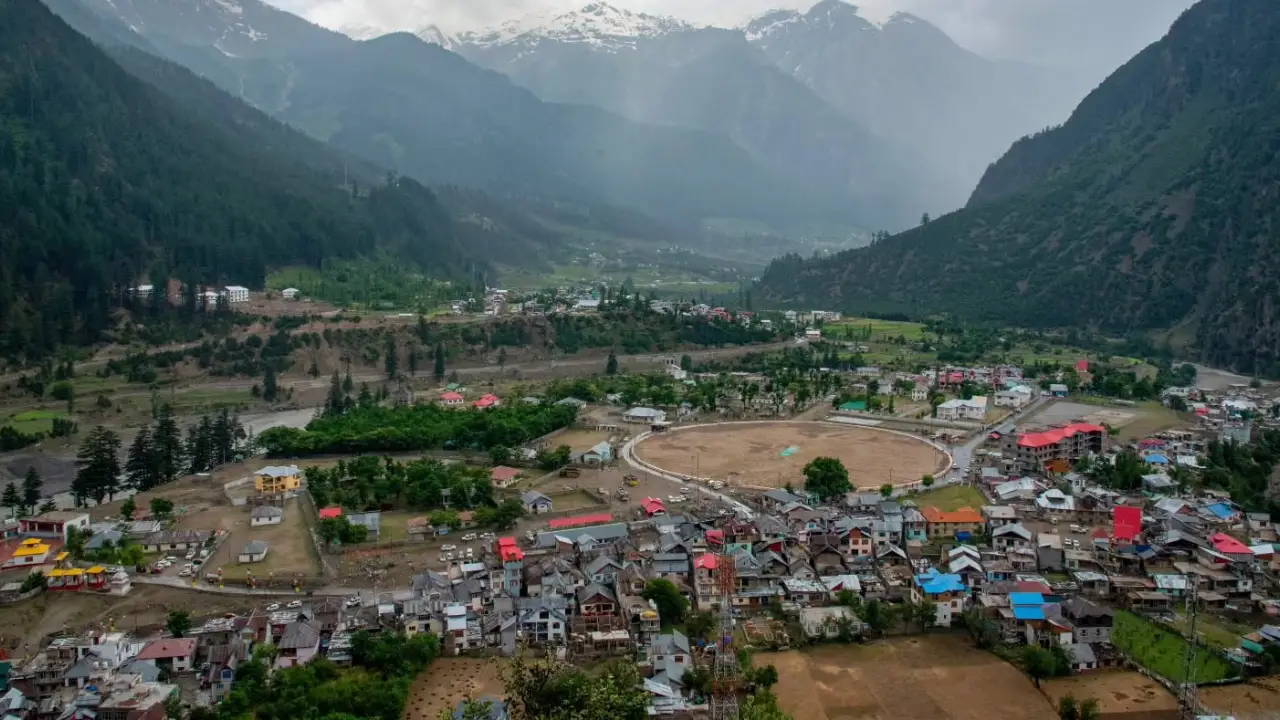
SRINAGAR: A study of traditional ecological knowledge in Paddar Valley has documented 75 plant species used by local communities, principally for medicine but also for food, fodder and dyes, while warning that valuable medicinal plants are declining and knowledge of their uses is increasingly concentrated among older generations.
The study, based on fieldwork involving 750 people across six villages between August 2022 and September 2024, identifies climate variability, deforestation, excessive grazing, commercial harvesting and expanding development among the pressures on the valley’s biodiversity. Its authors argue that conservation efforts will struggle to succeed unless local communities are involved in decision-making and their dependence on forest resources is taken into account.
The research, Traditional ecological knowledge and conservation challenges in Paddar Valley of Kishtwar Himalaya, Jammu and Kashmir, was conducted by Anil Thakar and Deeksha Dave of the School of Interdisciplinary and Trans-disciplinary Studies at Indira Gandhi National Open University, New Delhi. It was published in Discover Environment in 2026 by Springer Nature.
The researchers used semi-structured questionnaires, open-ended interviews and group discussions to document plant use and local perceptions of environmental change. Participants were selected through purposive and snowball sampling, including people with knowledge of medicinal plants and traditional healers known locally as Vaidyas and Amchis.
Plant Record
The survey recorded 75 plant species belonging to 69 genera and 31 botanical families. The Asteraceae family accounted for the largest share, with 11 species, or 14.6 per cent of the total, followed by Apiaceae, with eight species, or 10.6 per cent.
Herbaceous plants dominated the inventory, accounting for 56 species, compared with 11 shrubs and eight trees. Leaves were the most frequently used plant parts, cited in 33.3 per cent of reported uses, followed by roots at 25.3 per cent and fruits at 19.2 per cent. Other parts used included seeds, stems and rhizomes, flowers, whole plants and bark.
The paper says the plants serve multiple purposes, with medicinal use accounting for 77.61 per cent in the study’s classification. They also provide food, fodder and natural dyes, underlining the importance of wild vegetation to household needs and traditional practices.
The researchers found that seven species were common to all six surveyed villages. Kundal had the highest number of species unique to a village, with 11, pointing to differences in plant distribution across the valley and the need for conservation strategies tailored to individual locations.
Local Remedies
Traditional medicine remains a significant part of healthcare in the surveyed communities. The study found that 68.68 per cent of respondents reported using traditional medicines overall. Kabban recorded the highest reported use, at 80.06 per cent, closely followed by Gandhari at 79.91 per cent. Both villages are predominantly Buddhist, and the authors suggest that cultural practices and close-knit community structures may help sustain the knowledge.

The survey found that 44.68 per cent of respondents relied on local healers, while 47 per cent prepared medicines themselves. Traditional remedies were most commonly preferred for fever and gastrointestinal problems. Some 89.73 per cent of participants considered the remedies consistently effective, while 77.56 per cent cited affordability and 80.27 per cent the perceived absence of side effects as reasons for their use.
These findings reflect respondents’ reported experiences and beliefs; the study did not clinically test the effectiveness or safety of the remedies.
The plants also have an economic value. Some respondents identified species such as Fritillaria cirrhosa, Trillium govanianum and Valeriana jatamansi as sources of household income, contributing an estimated Rs 8,000 to Rs 26,000 annually per family.
Species Decline
The researchers recorded local concern about declining populations of several high-value plants, including Picrorhiza kurroa, Fritillaria cirrhosa, Dactylorhiza hatagirea and Dolomiaea costus. Respondents attributed the decline to climate change, deforestation, excessive grazing, unsustainable commercial harvesting, pollution, natural disasters and expanding urban development.
The paper identifies eight high-elevation plant species as having threat classifications under one or more of the conservation frameworks it consulted. These include Aconitum heterophyllum, Dactylorhiza hatagirea, Fritillaria cirrhosa, Dolomiaea macrocephala, Picrorhiza kurroa, Sinopodophyllum hexandrum, Rheum australe and Dolomiaea costus.
The classifications vary by species and assessment system. The paper lists Dolomiaea costus as critically endangered under both the IUCN and CAMP assessments cited in the study. At the same time, Aconitum heterophyllum and Dactylorhiza hatagirea are also listed as endangered under the IUCN framework.
The findings highlight the pressure on plants that serve both as traditional remedies and sources of income. The authors recommend sustainable harvesting and the cultivation of high-demand medicinal species to reduce dependence on wild populations.
Knowledge Gap
The study also raises concern about the transmission of traditional ecological knowledge, or TEK, between generations. Its conclusion says plant-based knowledge remains central to local subsistence and healthcare, but its transmission is increasingly restricted to older people, with younger and formally educated individuals showing less engagement.
The authors describe this as a gradual reduction in traditional knowledge, particularly knowledge associated with alpine and forest plants. They argue that documenting such knowledge is important not only for preserving cultural practices but also for understanding changes in local ecosystems.
The study’s findings are based on interviews and participants’ observations rather than a long-term ecological census of every species. Nevertheless, the authors say the community’s accounts of declining plant populations broadly reflect perceived environmental changes and provide useful information for conservation planning.
Conservation Plan
The paper recommends exploring Other Effective Area-based Conservation Measures (OECMs) to improve habitat connectivity and protect biodiversity while allowing regulated resource use. One proposal is to establish a Conservation Reserve linking Kishtwar High Altitude National Park in Jammu and Kashmir with Sechu Tuan Nala Wildlife Sanctuary in Himachal Pradesh, helping maintain an ecological corridor across the two states.
The authors also call for sustainable harvesting guidelines, cultivation programmes for high-demand medicinal plants through Krishi Vigyan Kendras, and a region-specific assessment of carrying capacity by the Jammu and Kashmir Forest Department. Such an assessment, they argue, could help guide future development and management decisions in the ecologically sensitive valley.
Community participation, however, remains central to the proposed approach. The study found that although people broadly recognised the need for conservation, some were concerned that formal protection programmes might restrict access to plants and other forest resources on which their livelihoods depend.
The authors argue that conservation measures that overlook these links between ecology and subsistence are unlikely to secure sustained local support. They call for communities to be involved in both planning and decision-making, with their knowledge and livelihood needs considered alongside scientific assessments.
Study Limits
The research covered six villages and included 750 participants, but the authors acknowledge that the valley’s remoteness and logistical constraints may have left some high-altitude or seasonally inaccessible settlements underrepresented.
The absence of a local herbarium also limited the physical preservation of plant specimens close to the study area. Although the researchers created digital records, they say these cannot fully replace deposited herbarium specimens for taxonomic verification. They suggest developing herbarium facilities at Krishi Vigyan Kendras in Mughal Maidan and at the Bhaderwah Campus of the University of Jammu.