SRINAGAR: Polluted river stretches in India have fallen from 351 in 2018 to 296 in 2025, and Jammu and Kashmir is listed among the States showing improvement, official records tabled in the Lok Sabha show.
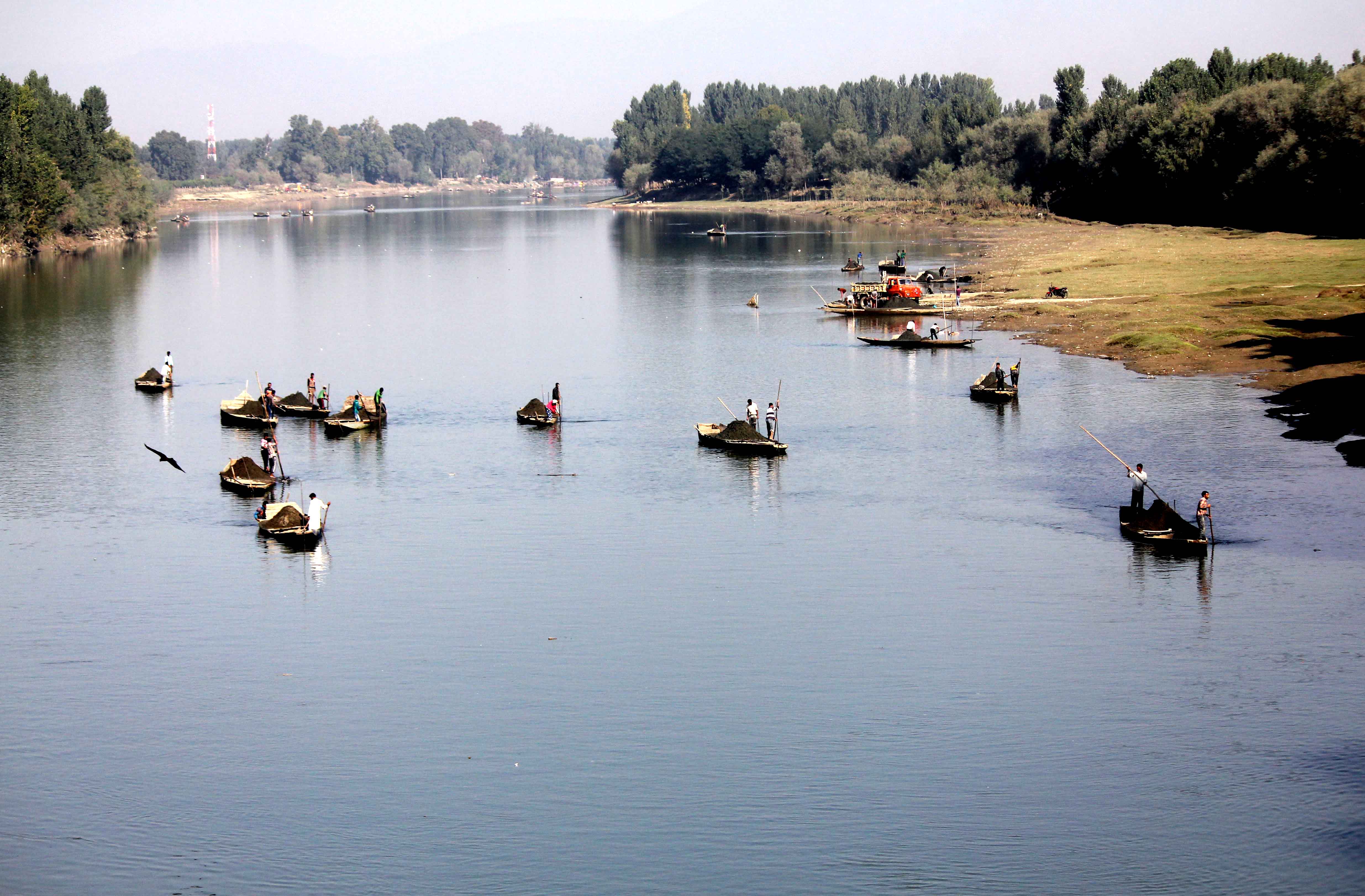
The Ministry of Jal Shakti told Parliament that the Central Pollution Control Board’s (CPCB) latest assessment, published in October 2025, identified 296 polluted river stretches nationwide and found that 149 stretches across 22 States and Union Territories had been delisted since 2018. Jammu and Kashmir appears in the list of jurisdictions where some river stretches have shown improvement in water quality, the ministry said.
Despite these gains, the ministry acknowledged that sewage treatment capacity, industrial pollution control and floodplain regulation remain primarily the responsibility of States and UTs, and that central schemes only supplement those efforts. For rivers such as the Jhelum and tributaries flowing through the Union Territory, the ministry’s response points to a framework of central assistance — through Namami Gange for the Ganga basin and the National River Conservation Plan for other basins — alongside urban programmes such as AMRUT and the Smart Cities Mission to fund sewerage infrastructure and related civic works.
To strengthen monitoring, the CPCB runs the National Water Quality Monitoring Programme and has mandated Online Continuous Effluent Monitoring Systems (OCEMS) for grossly polluting industries so that real-time data flows to regulators. Nationally, the CPCB lists 4,498 grossly polluting industries, of which 3,637 are operational; 3,036 of these are reported to be complying with environmental standards, while show-cause notices and closure directions have been issued to non-complying units. The ministry said river rejuvenation committees at the state level and Central Monitoring Committee meetings — 20 of which have been held so far — provide fora for review and intergovernmental coordination.
The department has also issued Technical Guidelines on Flood Plain Zoning to help States and Union Territories regulate development in flood-prone areas. In addition, the National Mission for Clean Ganga has supported the preparation of Urban River Management Plans with the National Institute of Urban Affairs to integrate river-sensitive planning into statutory master plans.
Recycling and reuse of treated wastewater are being advanced at the national level under a National Framework for Reuse of Treated Wastewater. The ministry cited examples of reuse progress in States including Gujarat, Maharashtra, Uttar Pradesh, Karnataka, Haryana and Tamil Nadu. For Jammu and Kashmir, adoption of reuse norms and local policies will be a key lever to reduce freshwater withdrawals and improve river health, officials and analysts say.
The ministry also outlined convergence with rural employment and water conservation schemes. Under the revamped Viksit Bharat — Guarantee for Rozgar and Ajeevika Mission (Gramin), previously known as MGNREGS, at least 65 per cent of allocations in critically exploited rural blocks are to be directed to water conservation, rainwater harvesting and related works. As an illustration, Parliament was told that 7,153 water-conservation and recharge works were completed in Siddharthnagar district, Uttar Pradesh, between March 02, 25 and Nov 30, 25. The ministry said such convergence can be replicated to strengthen catchment-level recharge and reduce run-off in fragile Himalayan watersheds.