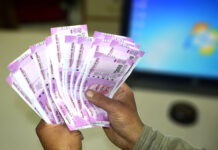
SRINAGAR: The continuous fall of the Indian Rupee against the US Dollar was the subject of a question in the Lok Sabha, where Minister of State for Finance, Pankaj Chaudhary, explained the reasons behind this trend and its broader implications.
Addressing the issue, Chaudhary stated that the Indian Rupee is a market-determined currency with its exchange rate influenced by a variety of domestic and global factors. These include the movement of the Dollar Index, trends in capital flows, interest rates, crude oil prices, and the current account deficit. He noted that during 2024, the Rupee depreciated by 1.4 per cent against the US Dollar up to November 19. The depreciation was largely attributed to the broad-based strength of the Dollar, which saw the Dollar Index rise by 4.8 per cent during the same period. Geopolitical tensions in the Middle East and uncertainty over US election outcomes further compounded the pressure on emerging market currencies.
Despite these challenges, Chaudhary emphasised that the Indian Rupee remains one of the best-performing Asian currencies. While the Rupee’s depreciation was relatively mild, currencies such as the Japanese Yen and the South Korean Won fell by 8.8 per cent and 7.5 per cent, respectively, as of November 19. He pointed out that most G10 currencies, except the British Pound, also faced significant declines during the year. This resilience of the Rupee reflects India’s sound economic fundamentals and macroeconomic stability.
The Minister also addressed concerns about the impact of a weaker Rupee on the general public. He explained that while depreciation can make imports more expensive, it also enhances export competitiveness, which may positively influence the economy. The overall effect on domestic prices depends on the extent to which international commodity prices are passed through to Indian markets.
The government’s stance highlights the balance between external economic pressures and internal stability, demonstrating confidence in India’s ability to navigate these challenges.