SRINAGAR: In a major boost to agricultural innovation and climate-resilient horticulture, Sher-e-Kashmir University of Agricultural Sciences and Technology of Kashmir (SKUAST-K) has secured a Government of India patent for a Smart Anti-Hail Net System, while simultaneously crossing the milestone of 125 patent grants, underscoring the university’s growing role in research commercialisation and technology development.
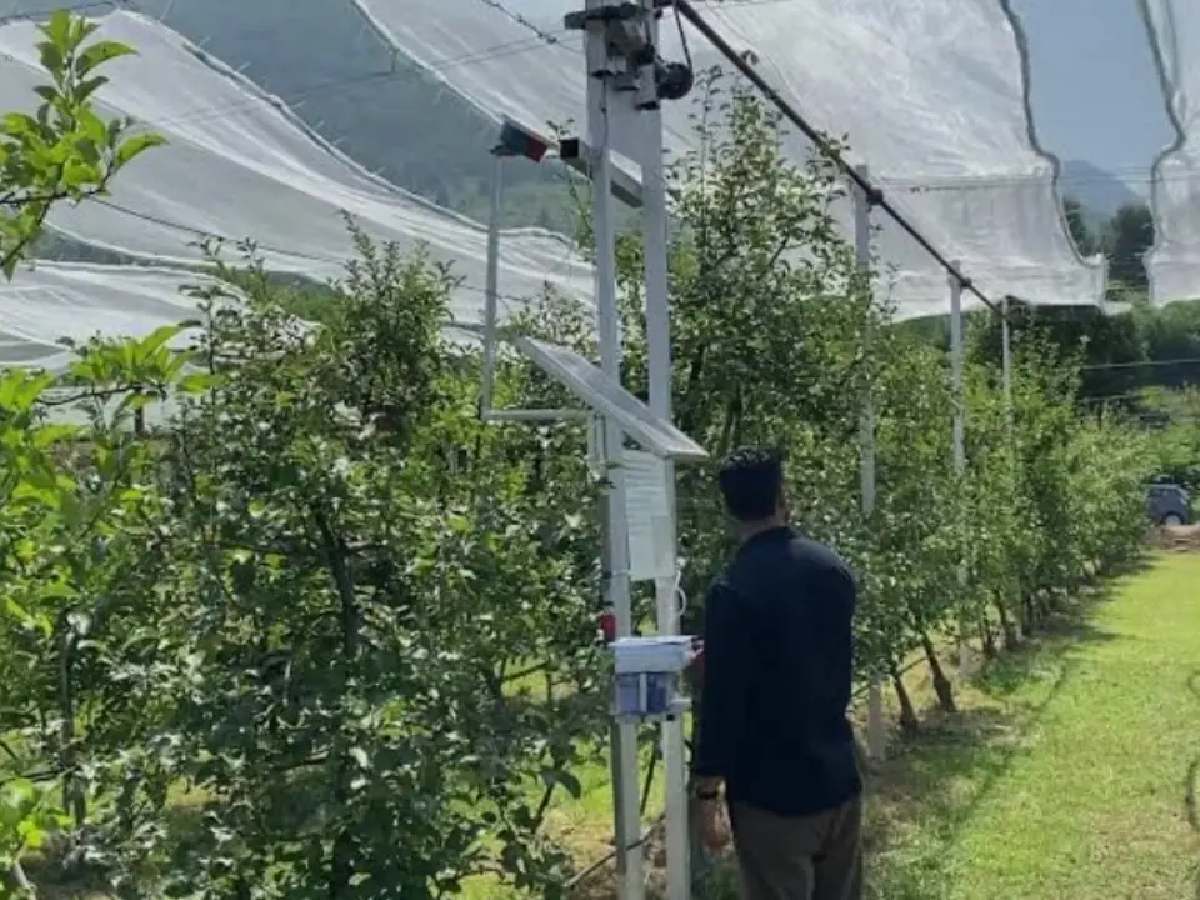
The newly patented technology, developed at the SKUAST-K Innovation, Incubation and Entrepreneurship Centre, is an automated sensor-based system designed to protect orchards from increasingly frequent hailstorms that have emerged as a major threat to Kashmir’s apple economy.
The patent has been granted by the Intellectual Property Office, Government of India under Patent No. 593446, against Application No. 202311084347 filed on December 11, 2023. The invention, titled “Anti-Hailstorm Net System”, has been awarded protection for a period of 20 years under the provisions of the Patents Act, 1970.
The system integrates real-time weather monitoring, sensor-based hail detection and automated deployment of protective nets over orchards. Unlike conventional hail-protection systems, the technology activates only when hail risk is detected, reducing labour requirements while ensuring timely protection of fruit crops, particularly apples.
The innovation was developed by a team comprising Raja Waseem Nazir, Dr Showkat Rasool, Shah Haris Nabi, Prof Khalid Mushtaq, Prof Haroon R. Naik and Dr Naveed Hamid, with incubation and institutional support provided through SKUAST-K’s innovation ecosystem.
According to the developers, the journey from concept to patent approval took nearly two-and-a-half years, while the technology itself was developed over a one-year period at the university’s Shalimar High Density Plantation Orchard.
Dr Naveed Hamid, Chief Executive Officer and Head of the SKUAST-K Innovation Incubation and Entrepreneurship Centre, described the system as a disruptive technology capable of transforming orchard protection across Kashmir.
“It is a great and disruptive technology which will drastically benefit the farming sector. We are now at the stage of commercialising it and taking it to the farm level to improve the quality of life of farmers engaged in horticulture,” he said.
Hamid said hailstorms have become a recurring challenge across Kashmir’s fruit-growing districts, often striking during critical flowering and fruit-setting stages and causing extensive losses within minutes.
The innovation comes at a time when climate variability is placing increasing pressure on Jammu and Kashmir’s horticulture sector, one of the region’s most important economic activities. Kashmir produces more than 20 lakh metric tonnes of apples annually and the sector serves as the primary source of livelihood for nearly seven lakh farming families.
Industry estimates indicate that apple cultivation contributes significantly to the Union Territory’s economy and supports millions of people directly and indirectly through farming, transportation, packaging and trade.
In recent years, growers across south Kashmir districts, including Shopian, Pulwama and Kulgam, have reported repeated hailstorm damage, with crop losses ranging from 30 to 70 per cent in severely affected areas. Farmers say even brief hail events can wipe out a substantial portion of a season’s income.
Climate experts attribute the increasing frequency of such weather events to changing climatic conditions, including erratic western disturbances, unseasonal temperature fluctuations and broader instability across the Himalayan region.
While anti-hail nets have gained attention as a protective measure, their adoption has remained limited due to high costs and operational challenges. The newly patented smart system aims to overcome these constraints by providing an automated and more efficient alternative.
Hamid said the university’s achievement extends beyond a single invention, noting that SKUAST-K has now reached 125 patent grants, marking a significant milestone in intellectual property creation and innovation-driven research.
He said the accomplishment reflects a broader transformation taking place within the university’s research and innovation ecosystem.
“The credit goes to our leader of change and transformation, Prof Nazir Ahmad Ganai, Hon’ble Vice-Chancellor, SKUAST-K, along with stakeholders of this movement, innovators, startups, faculty members and students of SKUAST-K,” he said.
With patent protection now secured, the inventors are preparing for commercialisation and field-level deployment of the technology across Kashmir’s orchard belt. Researchers believe that large-scale adoption of the system could significantly reduce climate-related crop losses and strengthen the resilience of one of India’s most important horticulture economies.