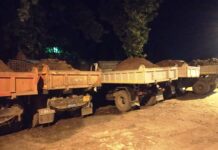
SRINAGAR: The Srinagar Municipal Corporation (SMC) has taken over the construction of Jammu and Kashmir’s first modern mechanised abattoir at Allochi Bagh, ending years of administrative delays and multiple changes in the executing agency.
The facility, designed to process 5,000 sheep and goats daily, has been floated on Engineering, Procurement and Construction (EPC) mode and is expected to be completed within two years, SMC Commissioner Fazlul Haseeb said.
“The project aims to replace conventional slaughtering practices with a hygienic, scientific and environmentally sustainable system conforming to national and international standards,” Haseeb said.
The abattoir has had a chequered history since its inception. Initially entrusted to the JK Projects Construction Corporation (JKPCC), preliminary civil works had begun years ago. In March 2022, JKPCC had reported that foundation work was in progress.
However, following the financial closure and cessation of JKPCC’s operations in August 2023, the project came to a halt. Though later transferred to the R and B department, officials said the project saw negligible physical progress.
The delay had also attracted judicial scrutiny, with a Public Interest Litigation on slaughterhouses bringing the project under court monitoring.
Following a comprehensive review, the SMC decided to execute the project directly through its Works Division. A revised Detailed Project Report, incorporating modern technologies, was prepared and accorded administrative approval in March 2025, officials said.
The facility will include fully mechanised slaughtering lines, scientifically designed lairage areas, carcass dressing units, chilling and cold storage, and by-product processing units.
A key feature is an advanced bio-digestion system integrated with a modern Effluent Treatment Plant (ETP) for scientific waste treatment and recycling of wastewater for non-potable uses, they added.
The SMC said the project would improve public health and sanitation while strengthening the livestock sector. It is also expected to generate direct and indirect employment during construction and operation. (KNS)