by Babra Wani
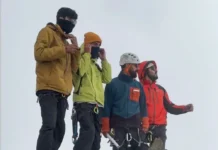
SRINAGAR: A team of Kashmiri climbers completed the fourth-ever ascent of Thajiwas Peak via the Glacier II route, a feat not repeated since 1945. The expedition represented not only a technical triumph but also a symbolic revival of alpine exploration in the Himalayas.
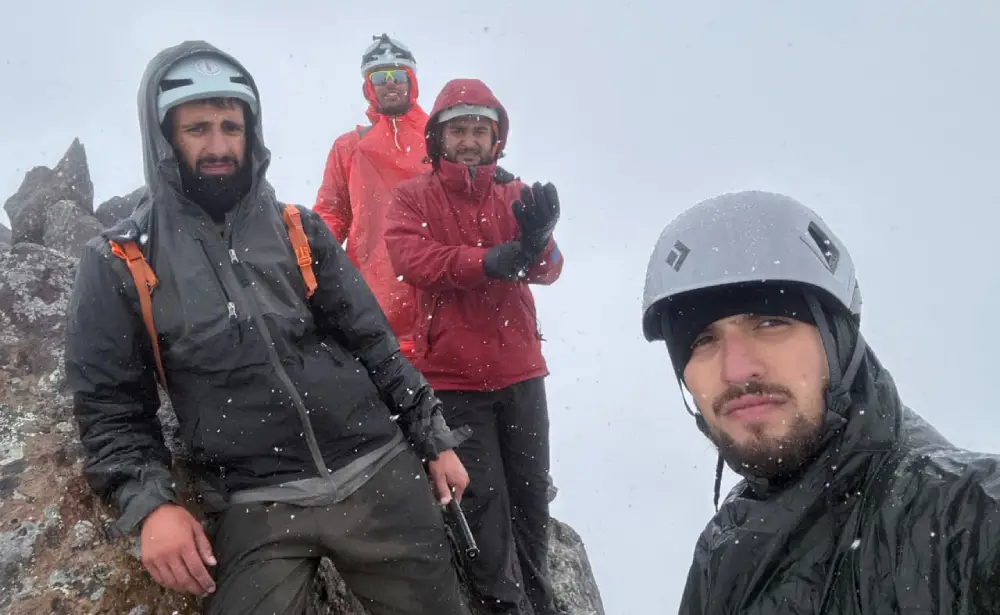
The team comprised Muzzakir Khan, 27, a resident of Chanapora, Faik Ajaz Pattoo, Yasir Khan, and Zaid Jan. They embarked on the challenging expedition from Sonamarg on September 7, traversing steep grassy slopes and scrambling over rock slabs to reach the glacier’s snout.
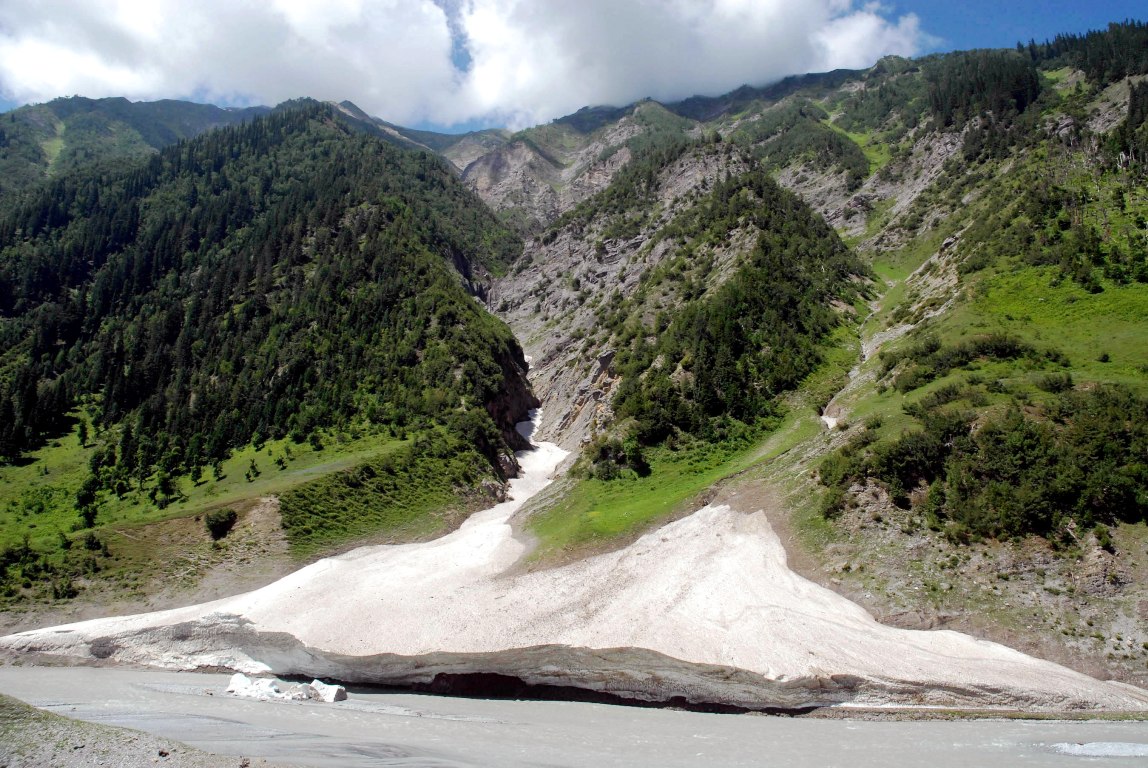
The Glacier II route is renowned for its difficult terrain, characterised by deep crevasses, steep ice walls rising to 20 feet, and towering ice barriers demanding precise rope techniques and meticulous teamwork. The team navigated narrow gulleys and loose-rock passages under rapidly deteriorating weather conditions, including heavy snowfall and poor visibility.
After five hours of sustained effort and a brief summit stop, the climbers stood at the peak, marking a significant milestone in Kashmir’s mountaineering history. The team returned to Sonamarg, completing a 19-hour round trip with a total elevation gain of approximately 2,930 metres.
Muzzakir Khan, whose passion for the mountains began in childhood, described the climb as an extraordinary test of skill, resilience, and collective spirit. He said his love for the mountains was rooted in a deep connection to nature and a desire to explore the untapped potential of the region. Muzzakir is a member of the All Jammu and Kashmir Mountaineering Foundation (AJKMF), a non-profit organisation dedicated to promoting responsible trekking and mountaineering in the region.
Having previously summited peaks such as Kolahoi, Tatakooti, and Harmukh, Muzzakir’s goal is to scale every major peak in Kashmir and Ladakh, including challenging ascents like Nun and Kun, and eventually attempt an 8000-metre Himalayan giant.
Faik said his love for the mountains began in childhood. He recalled being fascinated by the ridges and peaks around him and curious about what lay on the other side. Early exposure came through adventure camps in Gulmarg when he was in the third or fourth standard, followed by winter skiing camps. His parents always encouraged him to participate in outdoor sports and activities, which gave him both confidence and early exposure to adventure.
He added that these experiences connected him deeply with the outdoors. Each trek pushed him further, teaching resilience and discipline. Over time, the excitement of discovering his limits inspired him to pursue trekking and mountaineering more seriously.
Both Muzzakir and Faik emphasised that teamwork had always been the cornerstone of their expeditions. Faik said his journey with organised trekking began in 2021 with the All Jammu and Kashmir Mountaineering Association, where he joined his first Sunday trek and met Danish Dhar, along with other members who soon became close companions. Week after week, the group bonded over a shared passion for the mountains, and those teammates became more like brothers.
For the Thajiwas expedition, the team shared responsibilities across navigation, logistics, safety, and equipment, ensuring each member contributed to the group’s strength. Faik noted that their extended team, including Danish, Faizan, and Saqib, played a vital role in coordination and planning. The expedition’s success was possible only because of mutual trust, clear communication, and a collective spirit that held them together.
He considers climbing Kolahoi, the highest peak in Kashmir, among his most significant achievements. In addition, Faik has summited Mount Sunset, Mount Katsal, Mount Mahadev, and Thajiwas, and explored over 75 high-altitude alpine lakes. During his Basic Mountaineering Course at the Jawahar Institute of Mountaineering and Winter Sports, he was awarded the Best Student title.
Looking ahead, he plans to continue exploring the Himalayan ranges and attempt more technical peaks across the region. He emphasised the need to improve his technical skills and knowledge to prepare for more challenging climbs. Moreover, he aspires to promote adventure sports in Kashmir, encouraging youth to pursue trekking and mountaineering responsibly, with a focus on proper training and safety. “One of my long-term goals is to revive alpine climbing traditions in Kashmir and help the valley reclaim its place on the global mountaineering map.”
Danish Dhar, President of AJKMF, praised the team’s accomplishment. He said he congratulated the entire team for their extraordinary achievement. “This climb sets a new benchmark for alpine exploration in the Himalayas and reminds us of the untapped potential of our region. We hope that this ascent inspires many more young climbers across the valley to take to the mountains, not just as athletes, but as custodians of our rich mountain heritage.”
He further added that they would continue to support and promote such bold, ethical, and meaningful climbs that brought honour not just to the climbers, but to all of Jammu and Kashmir.