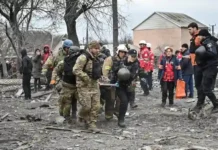
SRINAGAR: Israel on Saturday struck an Iranian nuclear research facility in Isfahan, killing three senior commanders and damaging key centrifuge production sites, as the conflict between the two nations entered its second week.

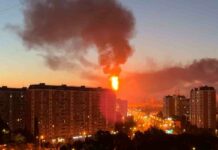
Israeli forces targeted the facility in two waves overnight. Smoke was seen rising from a mountainous area near Isfahan, a location previously hit in the early stages of the conflict. The Israeli military said the attacks were part of a wider effort to dismantle Iran’s nuclear infrastructure.
An Israeli military official, speaking anonymously, confirmed the strikes also targeted other centrifuge production sites. Iran’s deputy governor for security affairs in Isfahan, Akbar Salehi, confirmed the attack and reported material damage but no casualties at the facility.
In response, Iran launched a wave of drones and missiles, which Israeli defences largely intercepted. One drone hit a two-storey building in northern Israel, but no injuries were reported. Israel claims it has now destroyed over 50% of Iran’s launch systems, significantly reducing its capacity to launch further strikes.
Talks in Geneva on Friday failed to yield progress. Iran’s Foreign Minister Abbas Araghchi said Iran was open to diplomacy but would not negotiate under ongoing Israeli attacks. He warned against possible U.S. military involvement, which he said would be “very unfortunate”.
U.S. President Donald Trump has not ruled out American involvement and may decide within two weeks. Israel has signalled that key nuclear sites, such as Iran’s underground Fordo facility, may be unreachable without U.S. assistance.
Since the start of hostilities on June 13, Israeli airstrikes have targeted Iranian nuclear and military infrastructure, killing at least 657 people, including 263 civilians, according to a U.S.-based Iranian human rights group. Iran has retaliated with over 450 missiles and 1,000 drones, with at least 24 deaths and hundreds injured reported in Israel.
Israel has also continued targeted killings. On Saturday, it said it had eliminated senior Revolutionary Guard commander Saeed Izadi in Qom. He allegedly financed and armed Hamas in the lead-up to the October 7, 2023, Gaza war. Iran has not confirmed the death, though local media reported fatalities from a strike on a four-storey building.
Israel also claimed responsibility for killing Behnam Shahriyari, head of the Quds Force’s weapons transfer unit, and a commander from Iran’s drone force.
Meanwhile, Rafael Grossi, head of the International Atomic Energy Agency, warned against strikes on Iran’s nuclear reactors, particularly the Bushehr plant. He said a direct hit on the facility could lead to a major radioactive release.
So far, Israel has avoided hitting nuclear power reactors, focusing instead on enrichment and research sites. Iran continues enriching uranium up to 60% after the collapse of the 2015 nuclear deal, moving closer to weapons-grade levels.
Iran maintains its nuclear programme is peaceful, while Israel, though undeclared, is believed to possess nuclear weapons. On Saturday, Ali Larijani, adviser to Iran’s Supreme Leader, said IAEA chief Grossi would “pay” for his remarks after the war ends.