SRINAGAR: Weeks after the April 22 terror attack in Pahalgam that claimed 26 lives, the Jammu and Kashmir government, led by Chief Minister Omar Abdullah, has mounted a coordinated effort to revive the tourism industry in the Valley. In a powerful gesture of solidarity and reassurance, a 60-member delegation of tour operators from across India arrived in Kashmir this week, marking the first such visit since the tragedy.

Led by Maharashtra-based Abhijeet Patil of Raja Rani Travels, the visiting delegation includes representatives from 26 major tour operators. The group met Chief Minister Omar Abdullah in Pahalgam on Tuesday, expressing both sympathy and optimism. “This tour is more of a solidarity trip with the people of Kashmir to celebrate bonhomie,” Patil said. “We saw the local population condemn the attack with one voice. We felt we had to stand with them.”
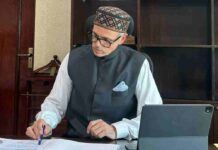
The group’s presence in the Valley is being seen as a morale booster for the local tourism sector, which has been reeling from widespread cancellations and reduced footfall following the attack. Omar Abdullah, who chaired a special Cabinet meeting in Pahalgam—the first ever held outside Srinagar or Jammu—called the visit “a heartening initiative” and praised the travel fraternity for taking the lead.
“This is their initiative. They said they wanted to come, and that speaks volumes,” Abdullah said, adding that such gestures would go a long way in restoring confidence among both tourists and tourism workers in the Valley.
In a symbolic act, Abdullah also cycled through the streets of Pahalgam to project a sense of normalcy and safety. “We want to give a message that the Valley is open, welcoming, and safe,” he said.
To honour the victims of the April 22 attack, the government has approved the construction of a memorial at Baisaran meadow, where the tourists were killed. The Roads and Buildings Department has been tasked with the project, which will feature the names of the deceased.
Alongside symbolic measures, a more practical roadmap is also unfolding. Abdullah said that the government would participate in upcoming travel and tourism fairs in Kolkata, Ahmedabad, and Hyderabad in an attempt to reach out to key domestic markets ahead of the festive and holiday seasons. “We are actively exploring how best we can tell the world that Jammu and Kashmir is open for business again,” he said.
The Chief Minister also stressed that tourism should be viewed as a purely economic activity, separate from the political turmoil that has historically defined the region. “Tourism has to be conflict-neutral, like in any other part of the country,” he said. “It provides livelihood to thousands, and we cannot afford to politicise it.”
Abdullah also revealed that he has held discussions with Prime Minister Narendra Modi and Home Minister Amit Shah on measures to revive tourism. “I cannot disclose details, but the Centre will be taking some major decisions soon. Security, of course, remains a key component, and we are discussing that as well,” he said.
A revival of shuttered tourist sites is also on the cards. Omar Abdullah called for a review of the closures imposed after the Pahalgam attack, suggesting that iconic locations such as Aru and Betaab valleys, Thajwas glacier in Sonamarg, and even Srinagar’s Tulip Garden and Badamwari be reopened in phases. “If we shut the Tulip Garden, we might as well shut all of Kashmir. We need to show some courage,” he said.
The government has also begun collecting data on economic losses incurred by tourism players and is in talks with the Centre on offering short-term financial relief, including possible loan waivers.
Adding his voice to the campaign, National Conference president Dr Farooq Abdullah appealed to people across the country to shed their fears and return to the Valley. “The fear has passed. Come and see Kashmir for yourself. The air is clean, the rivers sing, and the people are waiting to welcome you,” he said during a media interaction at Pahalgam Golf Course.
He also praised the hospitality industry for lowering prices and offering attractive packages. “Air tickets are cheaper, hotel tariffs have been slashed—this is the perfect time to come,” he said.
Responding to concerns about political instability and security, Farooq Abdullah was emphatic: “Life and death are in God’s hands. Let us not allow fear to destroy our economy and our spirit.”
The Cabinet meeting in Pahalgam, which also enhanced the Dearness Allowance for employees, was not just a procedural event but a statement of resolve. Health Minister Sakina Ittoo confirmed that the Cabinet had formally condemned the terror attack, reiterating the government’s commitment to peace and development.
An official spokesman summed up the spirit of the occasion: “The meeting was held to demonstrate the resolve of the Government to restart normal routine in Pahalgam, send a welcoming message to tourists and to vehemently reject all kinds of violence and attempts to derail peace in Jammu and Kashmir.”
As Kashmir steps into the summer season, with the annual Amarnath Yatra on the horizon, the government hopes that solidarity visits, confidence-building measures, and increased participation in national tourism fairs will slowly steer the region back to normalcy.