SRINAGAR: The United Nations has issued its starkest warnings yet as the Middle East teeters on the edge of a wider conflagration. Amid escalating hostilities between Israel and Iran and a deepening humanitarian catastrophe in Gaza, senior UN officials have called for urgent restraint, stressing that the region cannot absorb another wave of displacement and suffering.

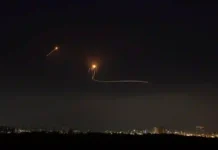
UN Secretary-General António Guterres told an emergency Security Council meeting that the situation threatens to “ignite a fire no one can control,” with tit-for-tat missile strikes between Israel and Iran already prompting civilians in both countries to flee their homes. UNHCR chief Filippo Grandi urged states to preserve asylum rights and ensure humanitarian access, warning that “once people are forced to flee, there’s no quick way back.”
The crisis has been sharply intensified by Israeli airstrikes on Iranian nuclear-related sites, including a centrifuge facility in Esfahan, which the International Atomic Energy Agency (IAEA) confirmed was under JCPOA surveillance. While the IAEA’s Rafael Grossi said no nuclear material was present at the site, he warned of mounting risks to nuclear security. Damage has now been confirmed at five sensitive locations in Iran.
Yet the human cost of this regional unravelling is most visible in Gaza, where starvation, disease, and death have become everyday realities for over two million besieged Palestinians. Philippe Lazzarini, head of the UN Relief and Works Agency (UNRWA), described the enclave as “a death-trap,” condemning the Israeli- and US-backed Gaza Humanitarian Foundation (GHF) as a mechanism that humiliates and endangers the very people it claims to serve.
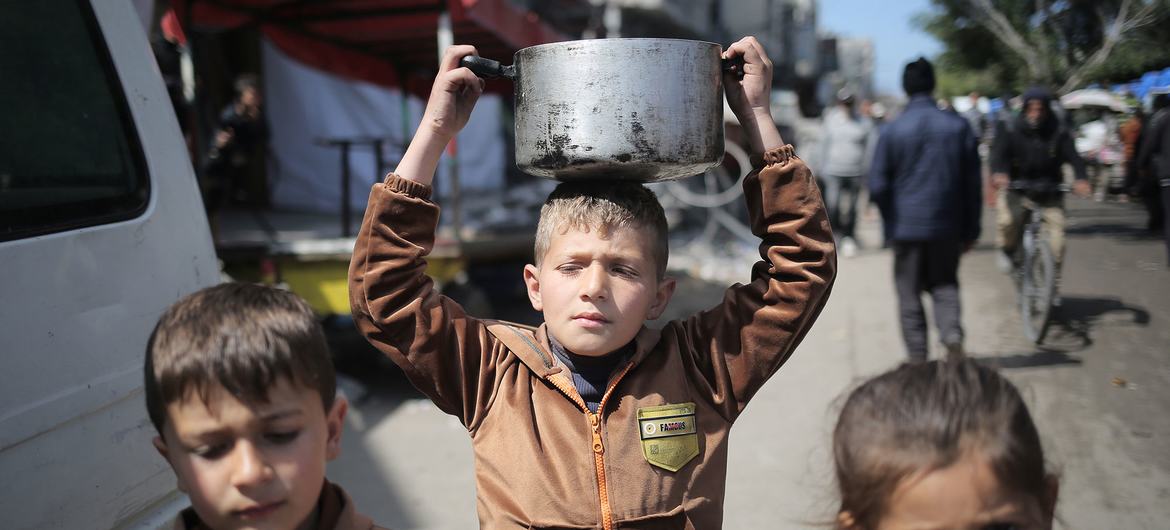
Speaking at a meeting of the Organisation of Islamic Cooperation in Istanbul, Lazzarini said more than 55,000 people have been killed in Gaza since October 2023, most of them women and children. “Survivors are shadows of their former selves,” he said. At least 318 UNRWA staff members have been killed, while the agency continues to provide essential services under bombardment.
The horror is magnified by direct Israeli attacks on aid distribution sites, which have now killed more than 400 Palestinians since late May, according to humanitarian workers and media reports. Witnesses and medics say that many of those killed were unarmed civilians, standing in queues for basic rations of flour, rice, or cooking oil. In Rafah and Khan Younis, victims included the elderly, women, and children. On June 16 alone, more than 80 people were killed, 34 in Rafah and at least 46 in Khan Younis, as tanks opened fire and drones buzzed overhead.
Survivors described chaos, with gunfire erupting as people bent to lift food parcels or tried to carry the wounded. “We thought it would be safe. It wasn’t,” said one man who escaped the shooting with injuries. Eyewitnesses reported that some of the dead were shot in the back while fleeing, while others lay bleeding beside sacks of flour. In some instances, drone footage later released by journalists showed no visible militant activity in the vicinity, contradicting Israel’s claims that its forces had responded to armed threats.
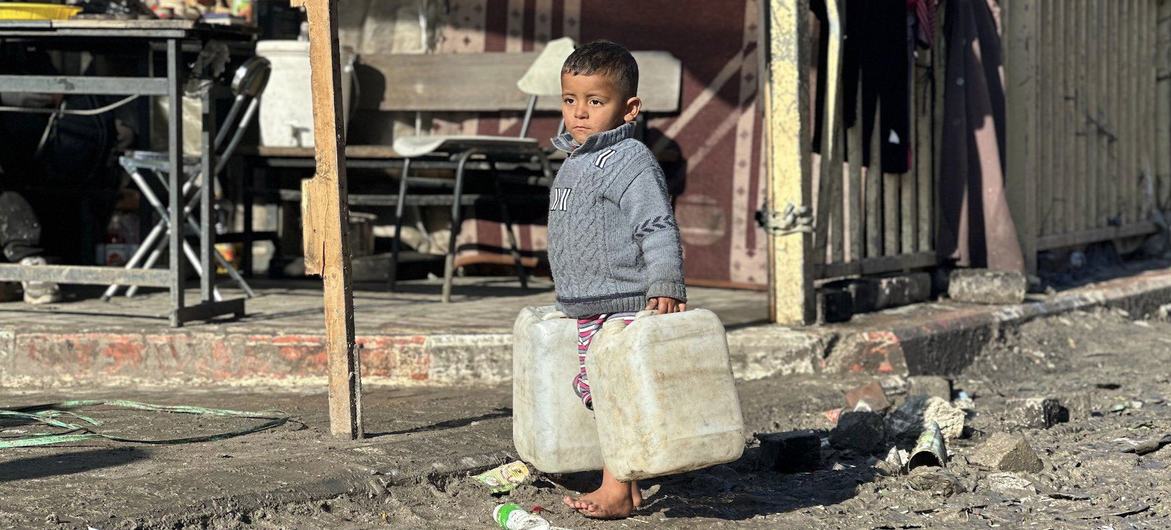
On June 1, another attack on a food queue near Rafah killed between 24 and 51 people. Then on June 20, a similar strike on a crowd gathered at a central Gaza distribution point left 23 dead and more than 100 wounded. In Khan Younis on Saturday, three Palestinians were shot dead at a GHF distribution site. Reports from the Red Cross field hospital confirmed that most patients arriving over the past two weeks had sustained gunshot or shrapnel wounds near these sites.
UNICEF’s James Elder, who recently returned from Gaza, said he had met a dying boy named Abed al-Rahman, wounded by a tank shell at one such site. The boy later died of his injuries, having been denied pain medication. “That speaks to both what is happening at these sites and what is not happening when it comes to medical evacuations,” Elder said.
Amid a two-month blockade of aid deliveries, UN officials warn that the GHF model has become synonymous with violence. Lazzarini said, “There is a clear pattern of attacks on desperate civilians seeking food. The system in place is not just failing — it is killing.” Other UN officials and rights groups have echoed that assessment, calling the GHF a potential instrument of collective punishment and accusing Israel of weaponising hunger.
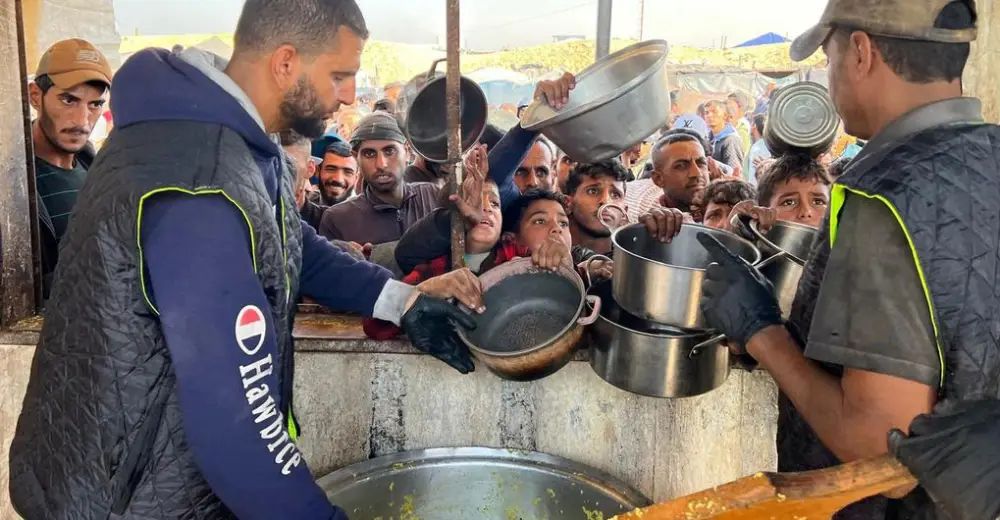
Human Rights Watch and the UN Special Rapporteur on the Right to Food have said that the obstruction of aid and lethal attacks on food-seekers may constitute war crimes under international law. “This is not collateral damage. This is a strategy,” one humanitarian official stated bluntly.
Alarming new attacks continue. On Saturday, a drone strike targeted a tent sheltering displaced members of the Shurrab family in Mawasi, an area previously designated as a “safe zone” by Israel. Three people were killed. Across Gaza, internet and landline services are down, isolating communities and hampering aid coordination. In just 48 hours, more than 200 people were killed and over 1,000 wounded, according to Gaza’s Health Ministry.
With malnutrition rates rising and health infrastructure in collapse, the World Health Organisation has warned that many will not survive the journey to the few remaining hospitals. The majority of Gaza’s casualties now include not only the war-wounded but also those simply trying to live and eat.
Despite the growing death toll, there has been no formal international investigation into the aid site killings. With no protection on the ground and access to Gaza still tightly controlled by Israel, the number of people killed while seeking food is expected to rise.
“This region has endured more than its share of war, loss, and displacement,” said UNHCR’s Grandi. “We cannot allow another refugee crisis to take root — and we cannot allow starvation to become a weapon of war.”