by Raqif Makhdoomi
A legal and emotional account of passive euthanasia in India, focusing on Harish Rana’s case, exploring dignity in death, law, and the anguish of families.
“Death” is a harsh reality of life that no one wants to think about; talking about it is out of the question. Whenever one talks about death, he/she is asked to change the topic.
Death scares everyone, something that people don’t want to accept. But even though we keep ignoring it, it has to come, and it will come. None of us is actually ready for death, nor do we often think about it. But when it comes, it shakes up the entire tribe.
We have seen people who suffer from life-threatening diseases who are then left to wait for death. It is when their bodies are taken over by bacteria in such a way that their whole body is now under its control. This happens when someone suffers from the last stage of a disease like cancer. There remains no chance of recovery, and the patient awaits death. But even after that, his or her loved ones try their level best to save them.
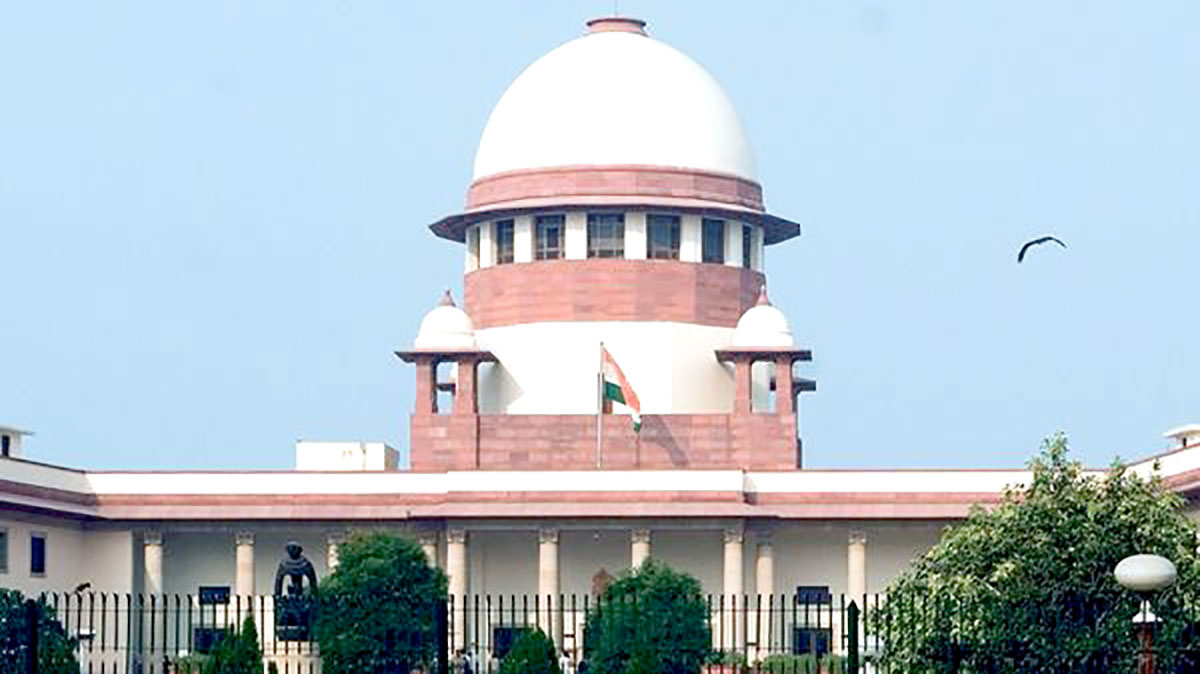
But have you ever heard of parents wanting their son to die? Did this shock you? Yes, absolutely, it might have shocked you. I am not even lying about it. The Supreme Court actually accepted a plea to allow parents to let their son die. But what led to this unexpected judgment?
Harish Rana, a B.Tech student of Punjab University, fell from the fourth floor of his hostel. And that changed everything for Harish and his parents. Harish’s father, speaking to the media after the Supreme Court allowed the petition, said, “Harish was a brilliant student. He won two competitions in his college and was preparing for a third one.” Unfortunately, destiny had something else in store for him. He fell from the fourth floor in the year 2013, and since then, he has remained in a coma. Thirteen years of a hard battle came to an end when, on March 11, the Supreme Court allowed passive euthanasia for Harish. It means allowing a patient to die naturally by removing artificial, life-prolonging interventions.
Passive euthanasia is the legal medical practice of withholding or withdrawing life-sustaining treatment (like ventilators or feeding tubes) from a terminally ill or permanently vegetative patient, allowing a natural death. It is legally permitted in India, distinct from active euthanasia (which is illegal), and focuses on alleviating suffering rather than accelerating death.
Legality of Passive Euthanasia
The Supreme Court recognised this in Common Cause v. Union of India (2018), linking it to the right to die with dignity under Article 21. India’s first approved case involved Harish Rana, a 32-year-old in a vegetative state for over 12 years, permitting withdrawal of life support, as reported by NDTV and Al Jazeera.
Harish’s case is the first such case where the Court allowed passive euthanasia. Euthanasia requires strict medical grounds. It must be noted that Indian law recognises death with dignity in the same way as it recognises life with dignity as a fundamental right.
Legal Safeguards: It requires strict medical supervision, usually following a “living will” (advance medical directive) or familial consent for patients who cannot consent, ensuring they are not forced to endure painful, futile treatment.
Active vs. Passive: Active euthanasia (illegal) involves direct, deliberate action to end a life; passive euthanasia simply stops hindering the natural death process.
Harish’s father, while speaking to the media, had mixed emotions. He was satisfied that his son would not have to bear pain anymore, but was also heartbroken to see his son dying in front of his eyes. His parents shall see their son dying, while all they can do is wait, when his soul fully leaves his body. No one can imagine the pain and the guilt they must be going through.
After the Supreme Court’s order, Harish has been shifted to a ward from the ICU. He no longer has a ventilator; a team of doctors is monitoring him to ensure that he has a painless death. All they can do for Harish is ensure that he gets a painless death.
It has to be understood that Harish’s case was not the first case before the Supreme Court. In 2011, the Supreme Court rejected a plea for euthanasia of Aruna Shanbaug. Aruna was a nurse in a hospital where she was attacked by a ward boy in an attempt to rape her. He tried to choke her to death by wrapping a rope around her neck. Although it did not take her life, the oxygen supply to her brain was cut off, which left her in a coma. She was assaulted in 1973. Her plea was rejected in 2011, and she passed away in 2015. She had spent 42 years in a vegetative state. This case became the first recognition of passive euthanasia in India.
After the Supreme Court allowed Harish’s passive euthanasia, the internet was taken by storm. People are expressing their solidarity with Harish and his parents. People are praying for his peaceful death and for the strength of his family. On March 11, the Supreme Court asked AIIMS to remove his life support and let Harish pass away.
Some people are calling this a painful death. They are terming the removal of life support a brutal act. But his parents are thanking the Court for this verdict.
There has always been a difference of opinion on things that come to public platforms. But the real opinion comes from those who are the direct sufferers of the event, and the direct sufferers are his parents. They have expressed satisfaction over it, and we have no right to call it brutal or whatever we think.
Let’s hope there is no one like Harish’s parents who has to file a case for the death of their child instead of life.
(Author studies law at the University of Kashmir. Ideas are personal.)