by Dr Ajaz Afzal Lone
One of the most significant strengths of this work lies in its thoughtful exploration of the contemporary lives of the Dard people.
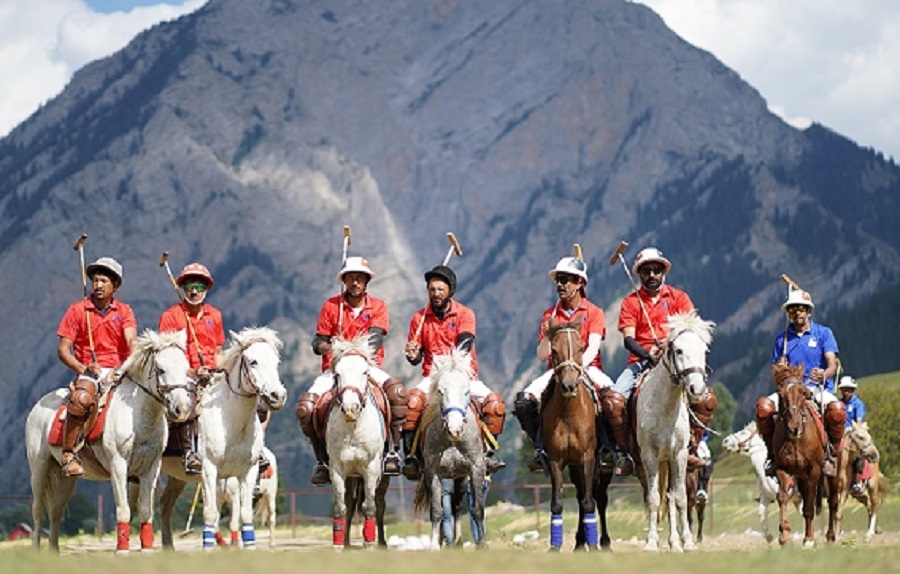
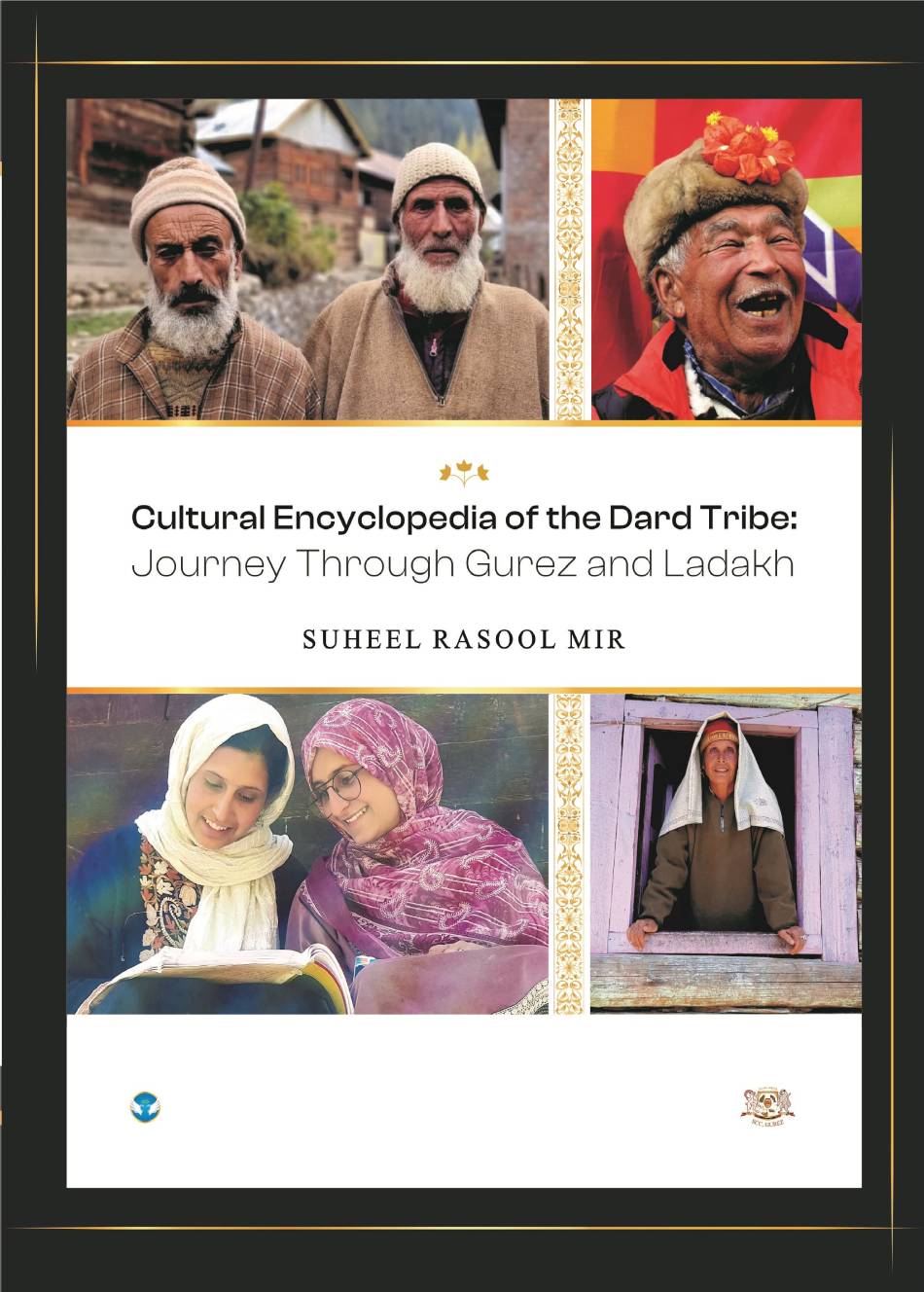
In his book, Cultural Encyclopaedia of the Dard Tribe: Journey Through Gurez and Ladakh, Dr Suheel Rasool Mir presents a monumental work that masterfully weaves together the intricate socio-cultural fabric of the Dard-Brokpa Tribe of Gurez and Ladakh. This meticulously researched volume seamlessly blends academic rigour with a heartfelt tribute, affording a unique community the dignity of nuanced understanding. Through an ethnographic lens, the author tenderly captures the traditions and way of life of the Dard people, from ancient rituals to modern adaptations. This comprehensive encyclopaedia offers a captivating exploration of Dard culture, illuminating its remarkable resilience. Engaging, informative, and definitive, this guide beckons readers to unearth the hidden treasures of Dard culture and embark on an unforgettable journey of discovery.
Scope and Structure
The book, spanning 450 pages, is thoughtfully divided into 15 detailed chapters, each devoted to exploring distinct facets of the Dard-Brokpa Tribe. Commencing with an introduction to Dardistan – encompassing Gurez, Drass, Kargil, Batalik, and Dha-Hanu – the author masterfully sets the stage for a nuanced exploration of this ancient tribe’s homeland.The subsequent chapters meticulously unravel the linguistic, cultural, and traditional aspects of the Dard people, presenting a rich tapestry of their history and contemporary life.
Through a masterful blend of rigorous research and evocative storytelling, the book delves into the remote landscapes and intricate cultural nuances of the Dard tribe. Traversing the rugged terrain of Gurez and Ladakh, this meticulously researched volume unveils the captivating customs, language, and social structures of the Dard people with stunning imagery and insightful commentary. Thus, the reader is invited to embark on a captivating odyssey that celebrates the diversity and complexity of Dard heritage.
Dr Suheel Mir’s research methodology is a testament to his commitment to nuance, combining ethnography, participatory research, and memory studies to create a rich tapestry of understanding. By blending conventional techniques with innovative approaches, Mir achieves depth and complexity in his exploration of Dard-Brokpa culture which is truly remarkable. The author’s masterful use of storytelling, informed by local knowledge and direct observation, elevates the narrative, rendering it at once scholarly and accessible.
The encyclopaedia offers a fascinating exploration of the cultural and traditional ethos of the Dard tribe, shedding light on their vibrant festivals, religious practices, and distinctive traditional attire and ornaments. Furthermore, Mir meticulously documents the traditional games, sports, and dances that are integral to the tribe’s cultural identity, displaying his dedication to preserving and celebrating their heritage. Through this painstaking attention to detail, the author affords the reader a profound appreciation for the intricacies of Dard culture.
The chapters devoted to the social structure of the Dard tribe offer a fascinating glimpse into their intricate family dynamics, marriage customs, and kinship patterns. Through a meticulous examination of the rites and rituals surrounding birth, marriage, and death, the book presents a comprehensive portrait of the social fabric that underpins the Dard community. Notably, the discussion on the role of Dard-Brokpa women shines a light on their remarkable resilience and strength in preserving and nurturing the cultural legacy, highlighting their pivotal position within the community.
Furthermore, the encyclopaedia delves into the economic and agricultural practices of the Dard tribe, providing a detailed account of the traditional and modern artefacts employed in agriculture, the primary crops cultivated, and the overall agrarian structure. This section thoughtfully underscores the tribe’s adaptability and resourcefulness, as well as the gradual evolution of their economic practices in response to the complexities of contemporary challenges, revealing a nuanced understanding of their resilience in the face of change.
One of the most significant strengths of this work lies in its thoughtful exploration of the contemporary lives of the Dard people. DrSuheel Mir thoughtfully examines the profound impact of tourism, modernisation, and infrastructure development on the Gurez and Ladakh regions, adeptly capturing the delicate balance the Dard people maintain between embracing modernity and preserving their age-old traditions.This nuanced discussion offers a fascinating glimpse into the complexities of cultural evolution.
The chapters devoted toTulail and Hanu Fort, the ancestral heritage regions of the Dard tribe, are particularly captivating. They shed light on the original heritage sites and the community patterns that define the social life of the Dards, providing a rich tapestry of their cultural identity. Furthermore, the book poignantly highlights the remarkable communal harmony that prevails in the Aryan Valley, where the Dard people have coexisted peacefully alongside other communities, maintaining their unique cultural identities with remarkable resilience.
DrSuheel Mir dedicates a fascinating chapter to the literary icons of the Dard tribe, paying tribute to the individuals who have played a pivotal role in promoting and preserving Dardic culture and language. This section serves as a testament to the intellectual and cultural richness of the Dard community, celebrating their contributions to the cultural heritage of the region. Through this thoughtful exploration, Mir underscores the significance of preserving cultural legacy in the face of an ever-changing world.

In the concluding chapter, Dr Suheel Mir distils the essence of the Dard-Brokpa culture and the significance of documenting their cultural history, underscoring the encyclopaedia’s dual role as a repository of knowledge for scholars and a means for the Dard community to reconnect with their past and navigate their future. This thoughtful conclusion encapsulates the book’s profound impact, both academic and personal.
The book’s aesthetic appeal is noteworthy, with meticulously curated lists of illustrations, maps, and tables that enrich the reader’s understanding of the Dard-Brokpa culture. The preface and acknowledgement sections add a personal touch, reflecting the author’s deep connection to the subject matter and underscoring the book’s scholarly value.

Cultural Encyclopaedia of the Dard Tribe: Journey Through Gurez and Ladakh is a landmark contribution to the fields of Sociology, Anthropology, History, ethnographic studies, and cultural preservation. DrSuheel Rasool Mir’s exhaustive research and eloquent writing render this book an indispensable resource for anyone seeking to understand the rich cultural heritage of the Dard-Brokpa tribe. This magnum opus not only preserves the past but also provides a foundation for future generations to appreciate and continue the cultural legacy of the Dard people.
Dr Suheel Mir’sbook is a profound and nuanced exploration of the Dard-Brokpa tribe, offering insights that are both academically rigorous and deeply human. It stands as a testament to the resilience and richness of a culture that continues to thrive amidst the changing landscapes of Gurez and Ladakh, a true masterpiece of cultural documentation.
(Affiliated with the University Institute of Legal Studies, the author is an academic and researcher dedicated to advancing knowledge in the field of legal studies. Ideas are personal)