by Naveed Bhat
Agri-incubators can scale by decentralising outreach, strengthening market linkages, adopting diversified revenue models, and focusing on high-value agricultural niches suited to regional strengths.
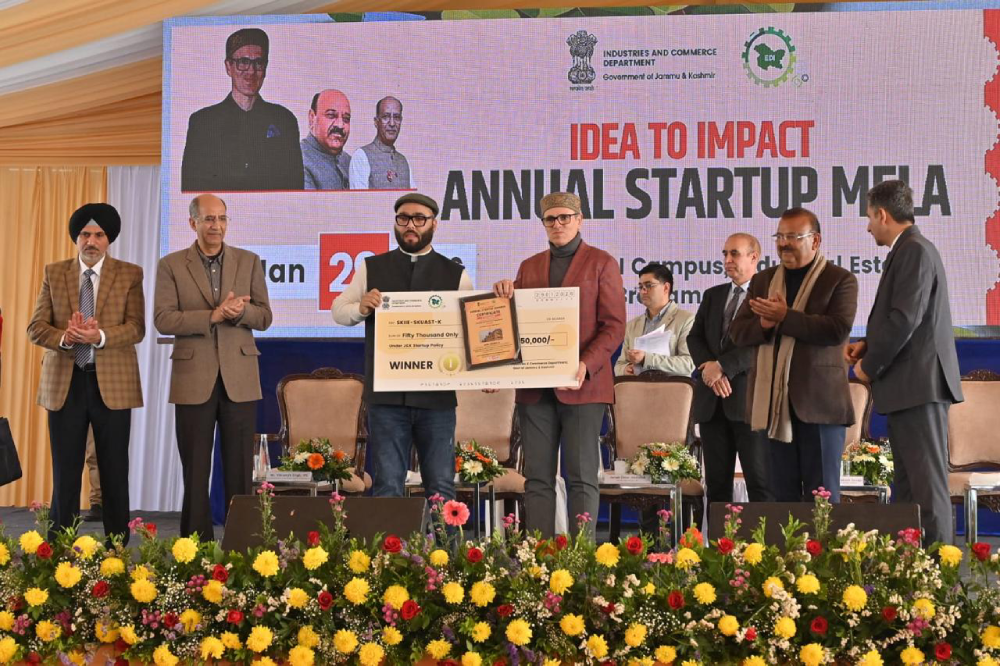
Scalability and sustainability sit at the heart of every incubation centre’s mission, but in agriculture they behave differently than in almost any other sector. Agriculture is seasonal, trust-driven, capital-intensive and geographically dispersed. The usual model of rapid iteration and quick scaling therefore rarely applies.
For an agriculture-focused innovation and incubation centre, growth is less about speed and more about steadily expanding reach, deepening impact and building the institutional capacity to sustain that growth.
The Core Challenge
The opportunity is enormous. Agriculture and its allied sectors form the backbone of the economy, contributing close to 17 per cent of GDP, yet the sector remains full of problems that research and innovation are well placed to address.
That is precisely what makes the space attractive, and also why it can be slow to move.
Seasonality means a crop-based product cannot be tested and refined every two weeks in the way software can. Farmers are risk-averse for sound reasons. Market access is fragmented across widely dispersed rural geographies. Across the ecosystem, the same barriers recur: resistance to technology adoption, constrained market access and limited financial resources.
Growth in this sector, therefore, is less about speed and more about patiently compounding trust, market access and infrastructure.
Scaling Strategy
An incubation centre faces two distinct questions about scalability, and conflating them is a common mistake.
The first concerns the scalability of its portfolio companies: can the ventures it incubates reach thousands of farmers and customers rather than dozens?
The second concerns the scalability of the centre itself: can it support 100 ventures as effectively as 10 without compromising quality or exhausting its funding?
These require different strategies.
A boutique, specialised, mentor-led model can produce strong startups but may be difficult to scale institutionally. A high-volume application funnel can increase numbers but may produce repetitive ideas and thinner engagement.
Deciding which outcome the centre is optimising for, and being honest about the trade-off, is a strategic choice, not an operational detail.
The Path
For an agri-incubator serving a region where innovators and farmers are widely dispersed, a hub-and-spoke or Innovation Clinic model can provide an effective way to expand reach.
Under this approach, the central incubator’s expertise, funding access and infrastructure are extended through regional institutions to reach local entrepreneurial communities.
The centre functions as the hub for deep technical expertise, funding linkages, specialised facilities and higher-level incubation support. Krishi Vigyan Kendras, research campuses and other regional institutions can serve as spokes for startup scouting, first-mile mentoring, local engagement and farmer connect.
This allows the centre to expand its geographical reach without increasing costs in the same proportion.
For Jammu and Kashmir, a model built around institutions such as SKUAST-K and its regional network could provide a particularly useful framework for connecting innovation with local entrepreneurs and farming communities.
Innovation Alone Is Not a Business
The single most important consideration for scalability, and one that incubators often underinvest in, is that developing an innovation does not automatically create a sustainable enterprise.
A highly effective biofertiliser or a smart IoT-based soil sensor is of limited commercial value if the startup cannot put it in farmers’ hands, price it viably and earn their trust.
Incubators seeking to scale their impact therefore need to invest deliberately in market linkages, branding, product positioning and customer engagement. These functions can determine whether a technically promising product becomes a commercially viable one.
If an incubator wants its portfolio success rate to rise, and with it the credibility and resources needed for further growth, it needs a strong go-to-market function, not merely technical mentoring.
Financial Sustainability
This is where many agri-incubators struggle.
Dependence on grants is inherently fragile. Government schemes are foundational, and national models such as ICAR’s a-IDEA and PUSA-Krishi demonstrate the potential of structured agricultural incubation. But grant cycles can be slow and uneven, while incubators often face delays in funding, limited operational autonomy, weak coordination among schemes and inadequate access to sector-specific investors.
A centre that wants to scale therefore needs to diversify its revenue base.
This could include a combination of government scheme funding, corporate CSR partnerships, equity or revenue-sharing arrangements with graduating startups, paid corporate innovation programmes, and income from testing, laboratory and other technical services.
The more an incubation centre’s survival depends on a single grant, the less confidently it can plan for long-term growth.
Agritech Tailwind
The encouraging structural trend is that agritech is maturing rapidly, expanding both deal flow and the addressable market for portfolio startups.
The current wave is being driven by the convergence of AI, big data, IoT and drone technology. For an incubation centre rooted in a temperate, horticulture-rich region, this creates an opportunity to focus on high-value niches where the region already possesses natural advantages.
These include horticulture, floriculture, high-value medicinal and aromatic plants, saffron, temperate fruits, post-harvest technologies, cold-chain systems, high-value organic produce and climate-resilient agricultural inputs.
Such specialisation may be more effective than competing directly in commodity segments where other regions have greater scale or structural advantages.
The Success Mantra

Scale reach through spokes and Innovation Clinics. Scale impact through market linkages. Scale the institution through diversified revenue.
For an agri-incubation centre, sustainability and scalability should therefore be treated not as separate objectives but as mutually reinforcing ones: wider reach creates a stronger pipeline, stronger startups create greater market credibility, and diversified revenue gives the institution the capacity to keep expanding.
(The author is heading the SKUAST-K’s Innovation, Incubation and Entrepreneurship Centre. Ideas are personal.)