by Shaista Amin
Chronic congestion on the Rambagh-Natipora corridor highlights the need for widening that goes beyond asphalt, improving safety, emergency access, public transport, drainage and Srinagar’s future mobility.
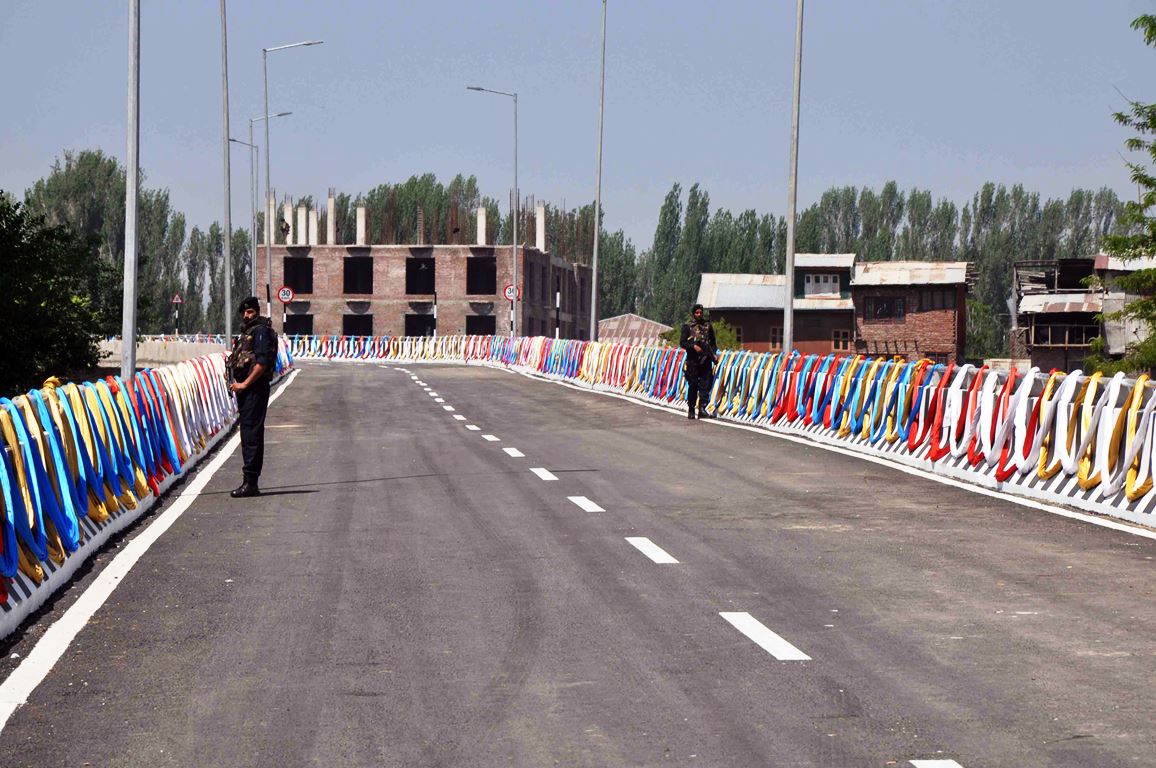
For many people in Srinagar, the Rambagh-Natipora road is just another busy stretch of the city. For me, it is a road I have grown up with, and a traffic problem I have lived with since childhood. As a resident of Natipora, I have travelled this route for years: first as a child, then to college, then to the University, and still today. The city around it has changed considerably, but the congestion on this stretch has remained remarkably constant. A journey that should take ten or fifteen minutes can stretch into forty, spent crawling forward a few metres at a time, stopping, waiting, moving again — until a good part of the day is simply gone. For those of us who use this route daily, that is no longer an occasional inconvenience. It is a fact of life.
I have been late to college because of this road, and later to the University. I still remember sitting in an auto near Rambagh, watching the minute hand move faster than the traffic, calculating how much of a lecture I would miss before I had even reached the gate. Even now, coming home can take far longer than it should. Winter makes it worse: darkness falls early, temperatures drop, and a family waiting at home worries when you’re late. A short phone call home explaining “I’m stuck in traffic” has, over the years, become almost a ritual phrase in itself. These are not the kinds of details that show up in traffic reports, but they are what congestion actually feels like for the people living through it.
There is a more serious concern than personal inconvenience, though: the movement of ambulances and other emergency vehicles. When an ordinary commuter loses time in traffic, it’s frustrating. When an ambulance loses that same time, the cost can be a life. A major urban road should let emergency vehicles move without obstruction, which is why this bottleneck is not just a traffic problem — it is a matter of public safety.
Against this backdrop, the proposed widening of the Rambagh-Natipora road is genuinely encouraging news. The project is reportedly estimated at around Rs 45 crore and is awaiting approval from the Government of India. If it goes ahead, it could bring real relief to the thousands who travel this route every day. But success shouldn’t be measured only in extra metres of asphalt. Good urban planning puts people first — pedestrians crossing safely, buses and public transport moving freely, ambulances getting through, water draining properly instead of flooding the road, and junctions that don’t choke traffic at peak hours. It also means thinking ahead: Srinagar’s population and vehicle numbers will only grow, and a road designed only for today’s traffic could become outdated within a few years of completion. A road built only wider, without this kind of thinking, will be congested again within a few years.

The corridor’s history is also a reminder that infrastructure projects rarely affect only traffic. Earlier efforts to improve this stretch raised real questions about existing structures and the interests of residents, and those concerns deserve to be heard, not brushed aside. Development shouldn’t come at the cost of people’s homes, livelihoods, or the places that matter to a community. But the daily reality faced by commuters can’t be ignored either. These two concerns are not actually in conflict — with proper consultation, planning, and a willingness to consider alternatives, it should be possible to protect what residents value while still delivering the connectivity the wider city needs.

This issue remains deeply personal to me. I have travelled this road since I was a child, been late because of it, been stuck in it, and come home later than I should have because of it. That is why I hope this project moves forward — with the approvals it needs and the planning it deserves. It would matter to the residents of Natipora and Rambagh, and to everyone who depends on this corridor every day. But the real hope isn’t simply for a wider road. It’s for fewer hours lost to traffic, safer and faster journeys for students and workers, less anxious waiting for families at home, and a clear path for ambulances when minutes matter most.
We have grown up on this road — studied through it, worked through it, come home through it, again and again. Perhaps it’s time, finally, to grow beyond it. Because what commuters lose in traffic isn’t just fuel. It’s time. And time, once lost, doesn’t come back.
(The Author is a Research Scholar in the Department of History at the University of Kashmir. Ideas are personal.)