by Dr Zahid Iqbal Sheikh
Gandhi Jayanti offers an opportunity to examine Gandhi’s ideas on truth, non-violence, dialogue and human dignity, while acknowledging the complexities and continuing debates surrounding his legacy.
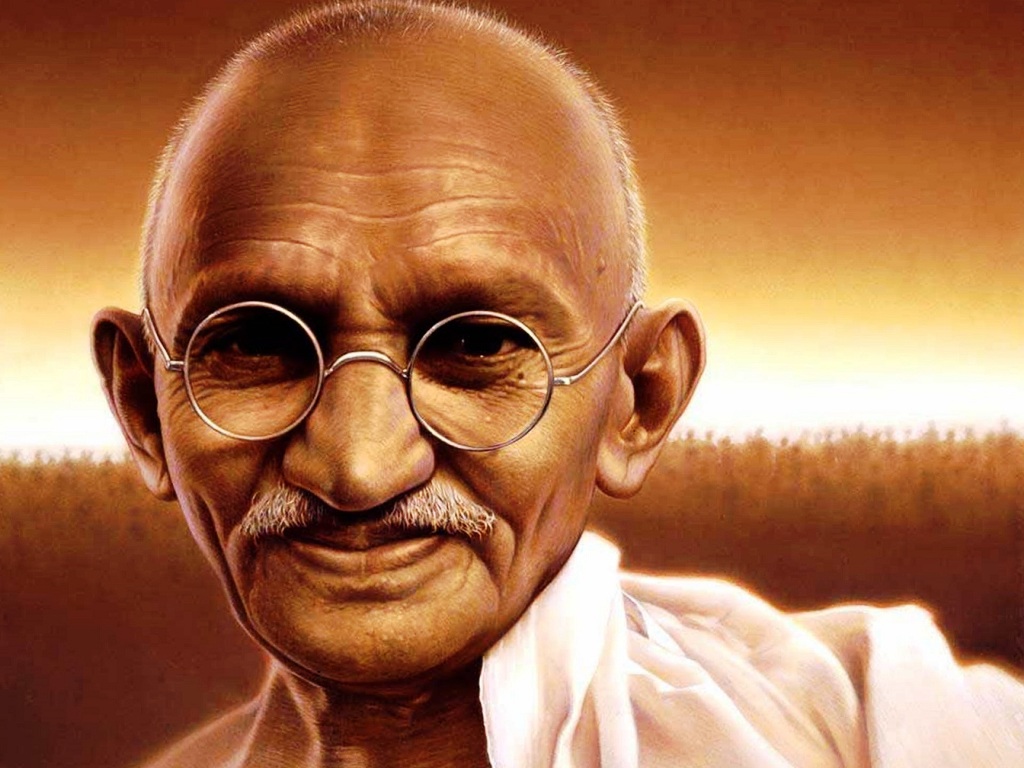
Every year on October 2, India pauses to remember a man whose life and ideas left a lasting mark on the history of the country and the wider world. Mohandas Karamchand Gandhi was born in Porbandar in 1869, and from relatively modest beginnings he emerged as one of the most influential figures of the twentieth century. Gandhi Jayanti is therefore more than a day of remembrance. It is also an opportunity to reflect upon some of the ideas that shaped his public life.
Gandhi did not present himself as someone who had discovered all the answers. He described his life as a series of experiments with truth, suggesting that ideas acquire meaning through practice and experience. His life therefore invites reflection rather than simple admiration. On Gandhi Jayanti, the question is not only what Gandhi achieved, but also what his ideas continue to mean in a changing society.
India’s independence was the result of the contributions and sacrifices of millions of people who participated in the freedom movement in different ways. Gandhi was one among the most prominent leaders of that movement, and his contribution lay particularly in the way he sought to transform political participation into a mass movement. His emphasis on satyagraha, or the pursuit of truth through non-violent resistance, offered a distinctive approach to political action.
For Gandhi, the means were closely connected with the ends. He believed that the pursuit of justice should itself be guided by principles of truth, self-discipline and non-violence. His approach encouraged people to participate in public life without losing sight of human dignity. It was a demanding philosophy, requiring patience, personal discipline and a willingness to engage with disagreement. These ideas remain relevant in a time when public communication has become faster than ever. Social media and digital platforms have transformed the way people exchange ideas and participate in public discussions. Opinions can travel across societies within seconds, while disagreements can sometimes become sharper because of the speed and intensity of communication.
In such an environment, Gandhi’s emphasis on patience, dialogue and respect for human dignity offers an opportunity for reflection. His idea of satyagraha was not simply about remaining passive in the face of injustice. It involved active participation, personal discipline and a commitment to persuasion rather than physical force. Whether or not one accepts every aspect of Gandhi’s philosophy, the principle that public disagreement can be conducted without abandoning respect for others remains significant.
Remembering Gandhi, however, does not require overlooking the complexities of his life and thought. Like many historical figures, Gandhi’s ideas have been examined, debated and interpreted from different perspectives. His writings and positions on questions such as caste, race, social reform and family life have generated considerable scholarly discussion. A meaningful commemoration can acknowledge these debates while also recognising the historical significance of his contribution to India’s freedom movement.
This balanced approach may be particularly important when remembering historical personalities. History is rarely a collection of perfect heroes or complete villains. Historical figures are products of their times, but their ideas can also be reconsidered in the light of later experiences.
Gandhi’s legacy has consequently been interpreted in different ways by different generations. Perhaps the continuing importance of Gandhi lies precisely in the questions he left behind. Can political and social change be pursued without losing sight of human dignity? Can disagreements be addressed through dialogue rather than hostility? Can individuals exercise self-restraint even when they strongly disagree with others? These questions are not limited to any particular period or political movement. They are part of the broader challenge of living together in a diverse society.

Gandhi Jayanti can therefore be understood not merely as a celebration of a historical personality, but as an occasion for reflection. A portrait, a statue, a commemorative programme or a quotation can preserve the memory of Gandhi, but his ideas acquire greater meaning when they are considered in everyday life. The enduring value of Gandhi’s legacy may ultimately lie not in treating his ideas as a finished doctrine, but in continuing to examine them. His life reminds us that social and political change involves not only determining what we seek to achieve, but also considering how we pursue it.
More than seven decades after independence, Gandhi remains a subject of discussion, interpretation and debate. That continuing conversation is itself a reminder of the lasting place he occupies in India’s historical imagination. On Gandhi Jayanti, perhaps the most meaningful tribute is not simply to remember his name, but to reflect upon the difficult questions that his life continues to place before us.
(The author is teacher at the Department of History, Government College VKB, Hyderabad. Ideas are personal.)