by Dr Jahanzaib Sirwal
Jammu and Kashmir’s latest Assembly session exposed a widening gap between political confrontation and public priorities, raising questions about legislative time, accountability, governance and the changing aspirations of its people.
The latest session of the Jammu and Kashmir Legislative Assembly has ended, but its most important takeaway isn’t in any single resolution, protest, or political speech. It lies in the widening gap between the politics performed inside the House and the politics demanded by the people outside it.
At a time when Jammu and Kashmir is searching for a new democratic vocabulary, the Assembly once again appeared caught in the old grammar of confrontation: limited sitting time, repeated disruptions, political theatrics, emotionally charged exchanges and competing narratives, while the everyday questions of employment, development, governance and opportunity struggled to remain at the centre of the discussion.
Jammu and Kashmir may have entered a new political era, but its political class has yet to fully adapt its methods and priorities to that new reality.
The expectations from this Assembly were always going to be high. After years of political and constitutional upheaval, the return of an elected legislature was expected to provide a meaningful democratic space where competing political ideas could be debated and public concerns could be translated into policy. The Assembly was supposed to be more than a venue for political confrontation. It was supposed to become an institution through which the aspirations of an evolving society could find structured expression.
Instead, much of the session was consumed by the familiar rituals of Jammu and Kashmir politics: protests, interruptions, accusations, counter-accusations, emotionally charged exchanges and political positioning. None of these are inherently undemocratic. A legislature without disagreement would hardly be democratic. Opposition has a legitimate and necessary role, and governments must be challenged. But there is a difference between vigorous parliamentary politics and allowing confrontation to consume the limited time available for legislation, scrutiny and public accountability.
That distinction becomes particularly important when the Assembly has only a few sittings at its disposal. Legislative time belongs to the people, not to the government or the Opposition. Every disrupted sitting carries an opportunity cost. It means fewer questions answered, fewer policies examined, fewer departments scrutinised and fewer constituency concerns brought into the official record.
Jammu and Kashmir has no shortage of such concerns. Young people are looking for employment and predictable recruitment processes. Families need accessible healthcare. Students need better educational opportunities. Farmers need stronger markets and infrastructure. Businesses require investment, connectivity and regulatory certainty. Remote areas continue to require roads, electricity, water and public services. Tourism needs to be developed sustainably, while the emerging challenges of drug abuse, urbanisation and economic inequality require sustained policy attention.
These issues may not create the dramatic political moments that dominate television coverage, but they are the matters on which people experience government every day.
The debate over restoration of statehood demonstrated both the importance and the limitations of the current political discourse. Statehood is a legitimate political question and deserves serious debate. The National Conference has made it a major political demand, while the BJP has also expressed support for restoration of statehood while objecting to aspects of the language and framing adopted by the government. These differences are legitimate and should be debated openly.
But the statehood debate should not stop at political symbolism.
A serious legislative discussion should examine what the restoration of statehood would mean institutionally, how powers would be distributed, how the elected government would interact with the Union, what arrangements would strengthen accountability and how such a political transition would affect administration and development. Those are complicated questions, and they require more than historical references or emotionally resonant speeches.
Jammu and Kashmir’s history cannot be separated from its politics, nor should it be. But history cannot be allowed to become the only language of politics. A younger generation is increasingly asking questions that are immediate and practical: Where are the jobs? Why are recruitment processes delayed? Can a young person build a business here? Can a family access quality healthcare without travelling outside the region? Can a student find opportunities without having to leave home?
These are political questions too, and perhaps they deserve much greater space in the political imagination of the Assembly.
This is where responsibility falls equally on the government and the Opposition.
The government cannot treat disruption as a reason to avoid scrutiny. A majority government should be prepared to face difficult questions and defend its decisions in the House. Parliamentary questioning is not an obstacle to governance; it is one of the mechanisms through which governance is tested and improved.
But the Opposition must also recognise that effective opposition is more demanding than protest. Disruption can draw attention to an issue, but sustained scrutiny requires studying budgets, examining departmental performance, questioning ministers, proposing alternatives and following issues beyond the headlines. A walkout can make a political point; it cannot substitute for legislative work.
The same standard should apply across the political spectrum. Congress, the People’s Democratic Party, the People’s Conference, the BJP, the National Conference and other political formations cannot expect the public to be satisfied indefinitely with political positioning. They have to demonstrate what they would do differently in government and what they would demand differently in opposition.
There was also an important institutional dimension to the session in the friction between the legislature, the political executive and the bureaucracy. The controversy surrounding official communications on the statehood resolution exposed the need for greater clarity and maturity in these relationships. The bureaucracy has a constitutional and administrative role; ministers carry political responsibility; legislators scrutinise the government; and the Speaker protects the functioning and dignity of the House. These roles cannot operate effectively if every institutional disagreement is immediately converted into a partisan confrontation.
For a legislature in a relatively new institutional phase, the development of conventions is particularly important. The Speaker must protect the right of the Opposition to be heard while ensuring that legitimate government business can proceed. The government must accept scrutiny without treating every criticism as hostility. The Opposition must exercise its right to dissent without reducing the House to permanent disruption. Institutional credibility is built through consistent conduct, not simply through rules written on paper.
The larger challenge, however, is that Jammu and Kashmir’s political class is operating in a society whose aspirations have changed considerably.
The younger generation is more connected to the wider economy, more exposed to developments elsewhere in the country and increasingly focused on education, employment, entrepreneurship, technology and mobility. Economic opportunity is becoming as important a political concern as constitutional identity. This does not make history or political rights less important. It simply means that the political agenda has expanded.
The Assembly therefore needs to broaden the definition of what constitutes a major political issue.
A recruitment examination conducted transparently and on time is a political issue. A functioning hospital is a political issue. The quality of a government school is a political issue. The condition of rural roads is a political issue. The ease with which an entrepreneur can establish a business is a political issue. The ability of a farmer to reach a market is a political issue.
Democracy becomes meaningful when these concerns are brought into the legislature and when the government is required to answer for them.
This is also why the culture of resolutions deserves some reconsideration. Resolutions have an important place in parliamentary democracy because they allow the House to articulate a collective political position. But a resolution cannot become a substitute for implementation. It can express a demand; it cannot deliver the outcome demanded. It can articulate an aspiration; it cannot create employment or improve a hospital.
The political class must therefore learn to connect political demands with administrative outcomes.
That is ultimately the difference between politics as performance and politics as public service.
The conclusion of the session should consequently not be judged simply by which party produced the most memorable political moment. The more important questions are whether the available legislative time was used effectively, whether legislators received adequate opportunity to question the government, whether the government answered those questions with seriousness, whether political parties offered meaningful alternatives and whether the session strengthened public confidence in the Assembly as an institution.
These questions do not belong to one party. They belong to the entire political class.
Jammu and Kashmir does not need less politics. It needs more substantive politics. It does not need an Assembly without confrontation; it needs an Assembly in which confrontation leads to scrutiny, scrutiny leads to debate and debate leads to better decisions. Political disagreement should remain vigorous, but it should ultimately produce policy, accountability or institutional improvement.
The people of Jammu and Kashmir have lived through enough periods in which politics itself became the centre of public life. The democratic opportunity before the present generation is to make governance the centre of politics.
That requires a change in priorities.
The old political vocabulary will not disappear, and it should not. Constitutional questions, statehood, political rights and historical memory will remain part of Jammu and Kashmir’s public discourse. But they have to exist alongside a politics of jobs, investment, education, healthcare, infrastructure and opportunity.
The Assembly has the opportunity to become the place where these two dimensions of politics meet: where history is debated without becoming a permanent substitute for the future, where constitutional questions are taken seriously without crowding out development, and where political differences are expressed forcefully without paralysing the institution meant to accommodate them.
The people outside the Assembly will ultimately judge the political class by a simpler measure than parliamentary drama. They will judge it by whether their lives improve, whether institutions work, whether opportunities expand and whether their representatives use the authority entrusted to them responsibly.
The session has ended. The political arguments will continue. But the real challenge now is whether the next session can be less about who shouted louder and more about who came prepared with better questions, stronger arguments and workable solutions.
Jammu and Kashmir has entered a new democratic chapter. Its politics must now learn to behave like it.
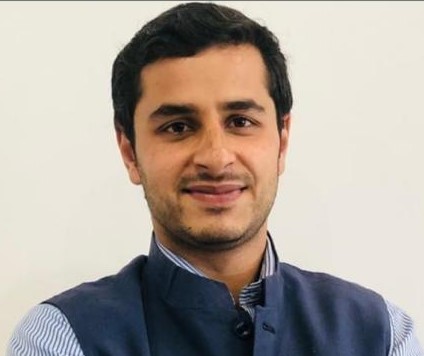
(The author, a veterinary Doctor and political commentator, has been formerly the national spokesperson of the Indian Youth Congress and later associated with the Bharatiya Janata Party (BJP). Ideas are personal.)