by Quaseen Jahan
A street vendor struggling to rebuild after losing his shop highlights unequal access to credit, risk and institutional support in India.
A recent conversation with a street vendor in Kharghar left me thinking about the unequal architecture of credit, risk and economic opportunity in India.
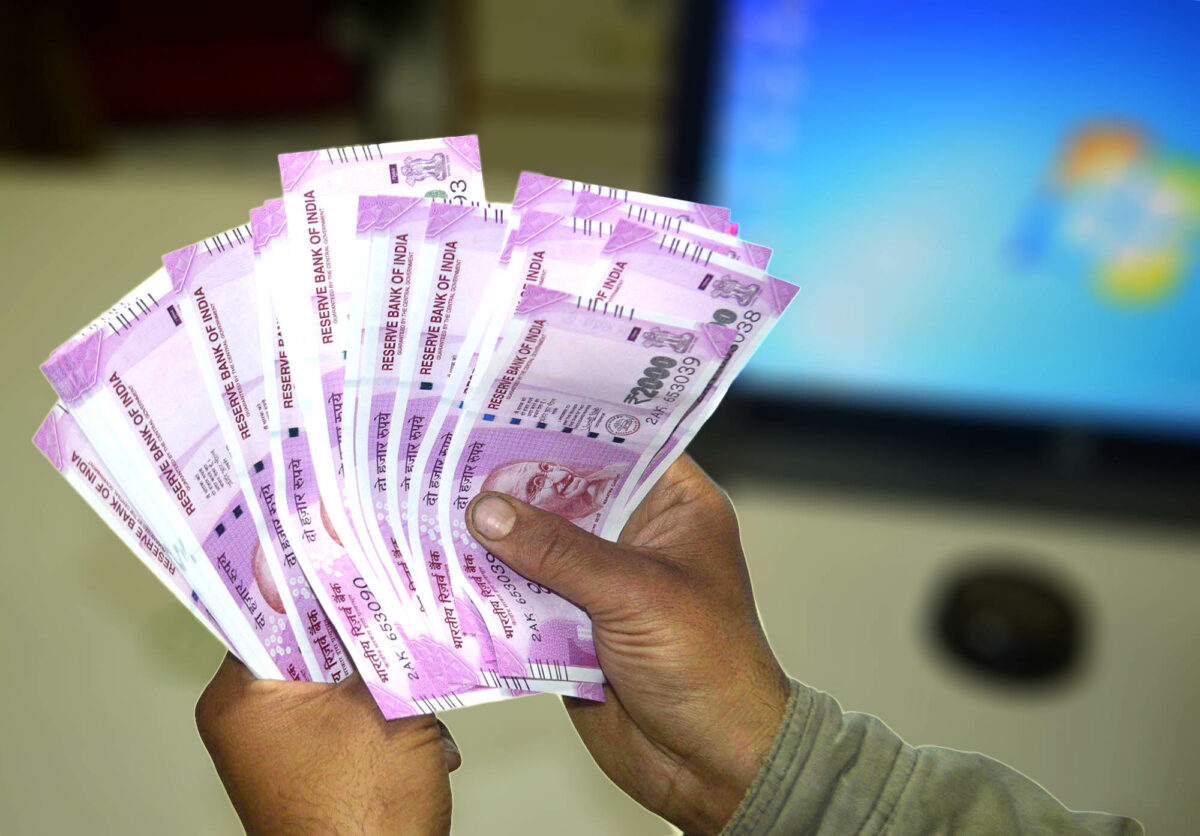
The vendor sells cigarettes from a makeshift stall under a tarp. Until recently, he operated from a small iron cuboid shop that had cost him more than Rs 50,000. The municipality removed and destroyed the structure because it was operating on the roadside. For him, Rs 50,000 was not simply the cost of a business asset; it represented a substantial portion of his savings and years of accumulated effort.
What made his story even more striking was that this was not the first time. He told me that similar incidents had occurred twice before, each time wiping out almost all of his savings. He had rebuilt his livelihood repeatedly, only to see the small capital he had accumulated disappear.
The municipality is now encouraging him to rent a proper shop. But renting a shop in a commercially viable area such as Kharghar requires an initial investment that is simply beyond his means. He therefore faces a peculiar trap: the informal roadside business is vulnerable to eviction, while the formal alternative is financially inaccessible.
And then comes the question of credit.
He cannot easily approach a bank for a loan. The reasons may include inadequate documentation, lack of collateral, limited financial knowledge, or simply the difficulty of navigating the formal financial system. Yet what he needs is not a large corporate loan. He needs a relatively small amount of capital to rebuild a business that already generates his livelihood.
His experience reflects a broader problem. Reports have documented the difficulties faced by street vendors in accessing formal credit, including instances where banks have been reluctant to lend because of concerns about repayment and the perceived risk associated with small informal businesses. Street vendors have also reported loan applications being rejected without clear explanations.
Now juxtapose this with the other end of India’s credit spectrum.
In the case involving businessman Subhash Chandra, the National Company Law Tribunal approved a personal insolvency repayment plan under which creditors would receive approximately Rs 6.5 crore against admitted claims of around Rs 22,006 crore. This amounts to a recovery of only a tiny fraction of the claims. The case has generated considerable debate about personal guarantees, insolvency proceedings and the extent of losses ultimately borne by creditors.
The two situations are obviously not identical. A personal insolvency proceeding is not the same thing as a conventional loan waiver, and large borrowers operate within a legal and financial framework that is fundamentally different from that of a street vendor. Creditors also have legitimate reasons to assess risk before lending.
Yet the contrast raises an uncomfortable question: Who bears economic risk in India?
For the street vendor, Rs 50,000 represents years of savings. When his shop is demolished, the loss is immediate and personal. There is no balance sheet on which the loss can be absorbed, no sophisticated restructuring mechanism and little bargaining power. He simply has to start again.
For a large borrower dealing with liabilities running into thousands of crores, financial distress can be processed through an elaborate institutional framework involving banks, creditors, lawyers, insolvency professionals and courts. The losses can ultimately be distributed among multiple stakeholders.
This is not simply a story about the rich and the poor. It is a story about access to institutions.
The poor often need relatively small amounts of productive capital, but they are precisely the people most likely to lack collateral, formal documentation and financial sophistication. Their businesses may be economically viable, yet their lack of formal assets makes them appear risky to conventional lenders.
The paradox is striking. A street vendor may struggle to obtain ₹50,000 to rebuild a livelihood, while the financial system simultaneously deals with claims worth thousands of crores.

This raises a broader question about what we mean by financial inclusion. Opening bank accounts and creating government-backed credit schemes are important steps, but genuine financial inclusion must also mean that a person with a viable livelihood can obtain affordable credit when circumstances destroy his existing capital.
Perhaps the real test of India’s financial system is not whether it can lend thousands of crores to large businesses. It is whether it can extend a small, timely and affordable loan to the person who has nothing but his labour and a small business to fall back on.
The street vendor I met does not need a bailout. He needs an opportunity to rebuild. And that is what makes the contrast so uncomfortable: for one person, Rs 50,000 can represent everything he has; at the other end of the financial system, thousands of crores can become a matter of negotiation over what creditors will ultimately recover.
(Author is Visiting professor at NMIMS Navi Mumbai. Ideas are personal.)