by Anuj Verma
Microplastics have been detected in Kashmir’s lakes, rivers and fish, exposing gaps in waste management. The government must curb plastic pollution, improve treatment and monitor freshwater ecosystems.
Researchers at MIT World Peace University, Pune, have detected microplastics in freshwater fish commonly consumed in the city, raising concerns about plastic pollution entering the human food chain through everyday diets. An ongoing study by PhD scholar Simran Singh, supervised by Dr Soma Mishra, identified fibres, fragments and pellets in fish samples. It estimated that a person consuming 250 grams of freshwater fish twice a week for 50 years could ingest between 93,600 and 124,800 microplastic particles. Health experts advise caution rather than panic. Microplastics often accumulate in fish guts and gills rather than muscle tissue, but repeated dietary exposure remains a potential concern because plastics can contain additives and adsorb toxic chemicals.
The warning is particularly relevant to Jammu and Kashmir, where environmental pressures are mounting. The region’s fragile Himalayan ecology, limited carrying capacity, overexploitation of natural resources, unsustainable construction and road expansion, population growth, tourism-dependent livelihoods, inadequate urban waste management, increasing reliance on single-use plastics and irresponsible disposal practices are converging into a serious ecological challenge. Plastic pollution is one symptom of this crisis, but it is increasingly evident in the region’s lakes, rivers and aquatic food chains.
Independent research has detected microplastics in several of Jammu and Kashmir’s most important freshwater systems, including Dal, Anchar, Wular and Mansar lakes, as well as the Jhelum, Basantar, Ujh and Chenab rivers.
Recent Studies
A 2025 study published in the Journal of Contaminant Hydrology, titled First Incidence of Microplastic in Commercially Important Food Fishes and Waters: A Case Study in the Dal Lake Ecosystem of North-Western Himalaya (India), examined microplastics in Dal Lake water and the gastrointestinal tracts of commercially important fish. The researchers recorded an average of 196.65 particles per litre in water, while concentrations in individual fish ranged from 3.66 to 22.33 particles. Fibres, fragments and pellets were among the forms identified.
Anchar Lake has also emerged as a repository of microplastic pollution. Research into its bottom sediments found an average of 606 microplastic particles per kilogram of dry sediment, with fibres accounting for 91 per cent of the particles. Polyamide, polyethylene terephthalate (PET), polystyrene, polyvinyl chloride (PVC) and polypropylene were identified. The researchers pointed to a complex mix of possible sources, including automobile-related activities, textiles and packaging.

Wular Lake, a Ramsar-designated wetland, presents a similar picture. A study published online in March 2026, titled Microplastic Pollution in Wular Lake, Kashmir-India (Ramsar Site): First Report and Associated Risk Assessments, examined sediment samples collected from 32 locations. Microplastics were detected at every sampling site, with concentrations ranging from 300 to 1,280 particles per kilogram of dry sediment and a mean of 835.6 particles per kilogram. Five sites recorded concentrations exceeding 1,000 particles per kilogram, with the northeastern part of the lake emerging as the most contaminated region. Fibres accounted for 74.7 per cent of the particles, while nylon or polyamide was the dominant polymer identified. The findings underline the need for stronger waste management, regulatory enforcement and continued monitoring to protect the wetland’s ecological integrity.
Mansar Lake provides further evidence that microplastics have reached water bodies in the Jammu region. A 2026 study published in Environmental Science: Advances, involving researchers affiliated with IISER Mohali, IIT Roorkee and Cluster University Jammu, compared contamination in Mansar Lake with that in Sukhna Lake. In Mansar, microplastic concentrations ranged from 45 to 120 particles per litre of water and from 390 to 5,720 particles per kilogram of sediment. In the relatively well-managed Sukhna Lake, the corresponding ranges were 5 to 75 particles per litre in surface water and 170 to 2,320 particles per kilogram in sediment. The researchers associated Mansar’s higher contamination levels with human activities, including tourism, boating, sewage, temple waste, agriculture and catchment runoff.
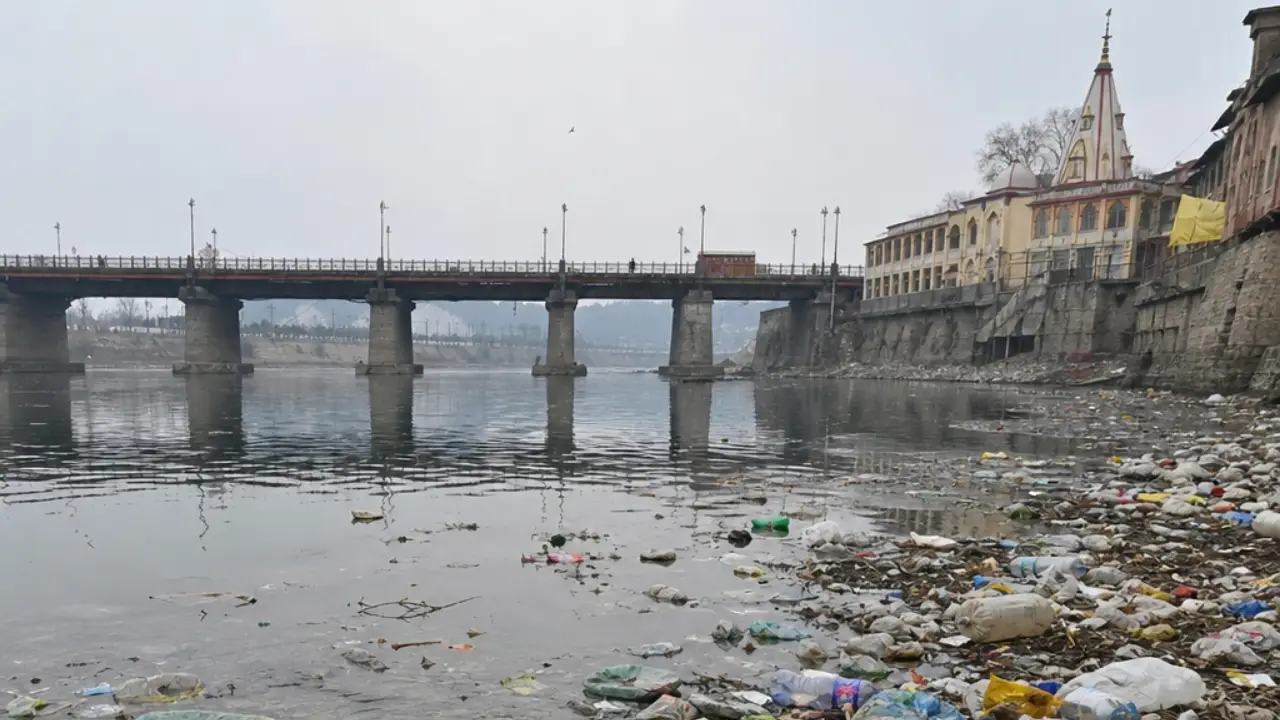
The Jhelum River offers particularly clear evidence of the relationship between unmanaged waste disposal and microplastic pollution. A 2023 study by researchers at the National Institute of Technology Srinagar, titled Abundance and Characteristics of Microplastics in a Freshwater River in Northwestern Himalayas, India: Scenario of Riverbank Solid-Waste Disposal Sites, detected microplastics at every sampling site along the river. The average concentration was 1,474 particles per cubic metre, with readings ranging from 600 to 2,500 particles per cubic metre.
The study found that microplastic concentrations increased threefold downstream of unscientific municipal solid-waste disposal sites compared with upstream stretches. Polyethylene was the most common polymer, followed by PVC and polypropylene. Flakes were the dominant form, followed by filaments, fragments and spherules. Co-author Muneeb Farooq identified unscientific municipal solid-waste disposal as a potential source of pollution along the Jhelum and described the findings as alarming.
Studies Seek Urgency
The researchers emphasised the urgent need for scientific municipal solid-waste management. Land-based pollution sources must be addressed, particularly as Srinagar’s Achan dumpsite receives an estimated 400 to 500 tonnes of municipal waste daily. Waste dumped in peri-urban and rural areas frequently ends up along the Jhelum’s banks. The study also highlighted the need to remediate legacy dumpsites across Jammu and Kashmir, which were estimated to contain 1.9 million tonnes of accumulated waste, of which only about 12 per cent had been treated at the time covered by the cited figures.
Surinsar Lake, Mansar’s twin lake, has also been reported to face deteriorating water quality because of human interference. However, detailed peer-reviewed data on microplastic contamination in Surinsar remain limited. Comparable evidence is also lacking for the Tawi, Suran and rivers draining Poonch and Rajouri. The absence of published findings should not be interpreted as evidence that these water bodies are uncontaminated. They require baseline monitoring of water, sediment, fish and riverbank waste.
Research into the Basantar River in Jammu and Kashmir provides further evidence of the problem. A study by Shaveta Padha, Rakesh Kumar, Yogesh Sharma and Anjali Dhar, published in the Journal of Contaminant Hydrology in February 2025, examined the movement and accumulation of microplastics in the river. Concentrations ranged from 200 to 850 particles per litre in surface water and from one to six particles per gram in sediment. The researchers identified fragments, fibres and films among the common forms and associated contamination with urbanisation and human activities.
Researchers at the Central University of Jammu have also reported microplastics in the Ujh River in Kathua and the Chenab in Kishtwar. In the Ujh, particles were reportedly detected in every water, sediment and fish sample examined, with 280 particles recovered from water and 75 from sediment. In the Chenab study, 20 particles were found in fish samples, including in the gastrointestinal tract, gills and liver.
The Ravi, which rises in the Himalayan region, has also been found to contain microplastics in water, air and sediment in downstream research. PET, polyisobutylene and polychloroprene were among the polymers identified, while synthetic textiles and domestic sewage were cited as likely sources. For the Tawi, Suran and rivers in Poonch and Rajouri, the lack of comparable published studies represents a significant gap in environmental monitoring. These water bodies need scientific assessment rather than assumptions about their safety.
Health Issues
The implications for human health require careful interpretation. The concern is not that every fish is immediately dangerous to eat, but that contamination is persistent and potentially preventable. Microplastics are often concentrated in fish guts and gills, making the pattern of exposure dependent on the species consumed and how the fish is cleaned and prepared. Studies of fish have associated microplastic exposure with gut damage, inflammation, oxidative stress and changes in immune and physiological functions. Plastics can also contain additives and adsorb chemicals from the surrounding environment. However, the precise consequences of long-term dietary exposure for human health remain an area requiring further research.
The government must address the source of the problem: inadequate municipal waste management. Jammu and Kashmir generates about 1,557 tonnes of municipal solid waste daily but processes only about 1,027 tonnes, leaving a treatment gap of roughly 530 tonnes a day, according to figures placed before the National Green Tribunal and the Jammu and Kashmir Legislative Assembly. Srinagar generates about 550 tonnes daily but processes only about 210 tonnes, while Jammu collects around 375 tonnes daily and processes about 295 tonnes. Together, the two cities leave a substantial proportion of their waste untreated.
Much of the plastic that eventually breaks down into microplastics begins as everyday packaging. Thin polythene bags, wrappers, pouches, cigarette-packet films, sweet-box linings and discarded plastic water bottles fragment under sunlight and weathering. When dumped outside municipal collection systems or discarded along drains, lake shores and riverbanks, these materials can be carried into Dal, Anchar, Wular and Mansar lakes, the Jhelum, Basantar, Ujh and other water bodies. The Jhelum study’s finding of a threefold increase in microplastic concentrations downstream of waste-disposal sites makes the link between poor waste management and freshwater contamination particularly compelling.
In line with the recommendations of the NIT Srinagar researchers, the government should prioritise scientific waste management, stop open dumping along rivers, remediate legacy dumpsites such as Achan, expand segregated waste collection and material-recovery facilities, and ensure that bulk waste generators comply with segregation and processing requirements.
Government Must Act
The government should also consider stricter restrictions on single-use plastic packaging and packaged drinking water in plastic bottles of up to one litre in government offices, tourist sites, hotels, restaurants and public events. Purified drinking-water fountains and water ATMs could provide alternatives at bus stands, hospitals, markets, educational institutions and tourist destinations. Such facilities would need regular water-quality testing and maintenance to ensure that they offer a safe and reliable alternative to bottled water.

Plastic films used to wrap cigarette packets and line sweet boxes should also be addressed through appropriate restrictions and alternatives. The existing prohibition on polythene bags below 120 microns should be enforced in busy markets, weekly bazaars, fruit and vegetable mandis, tourist spots and settlements along riverbanks. Enforcement must target manufacturers, wholesalers, shopkeepers and bulk waste generators, rather than placing the burden solely on consumers. Public campaigns should encourage the use of reusable steel, glass or earthen bottles, while hotels, restaurants and event organisers should provide refill facilities wherever safe drinking water is available.
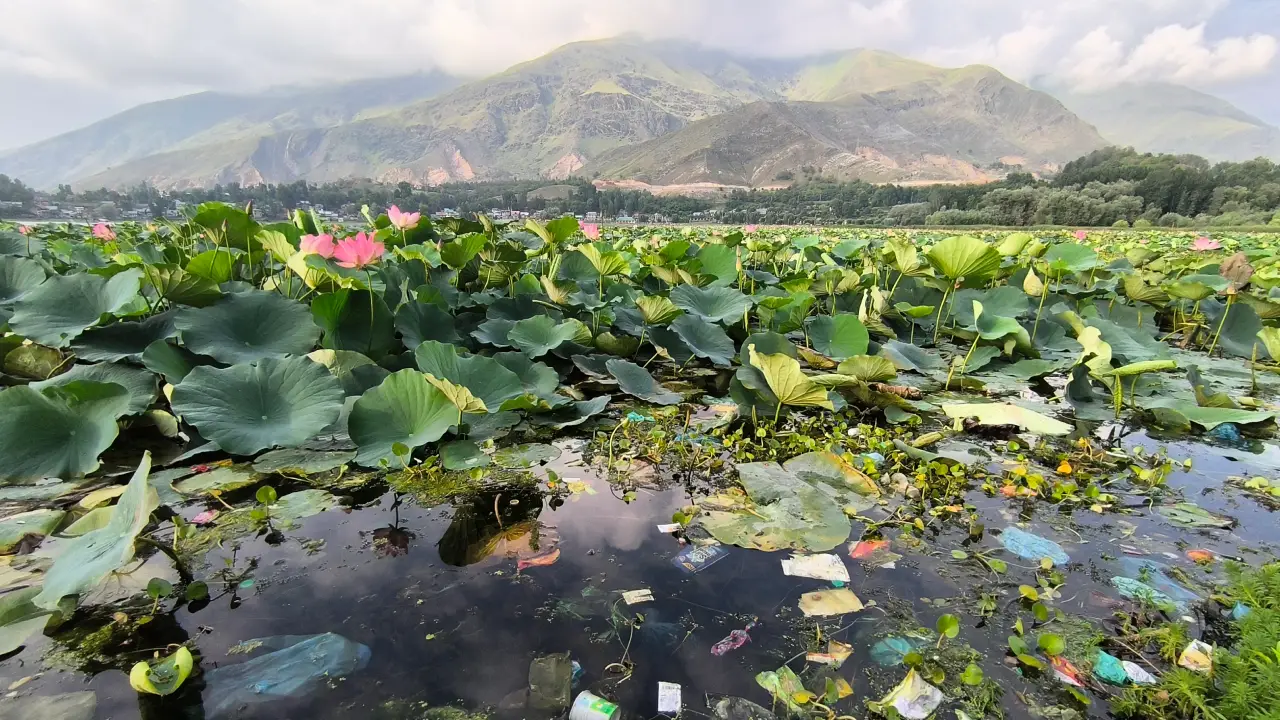
The evidence from Dal, Anchar, Wular and Mansar lakes, as well as the Jhelum, Basantar, Ujh and Chenab rivers, shows that microplastic pollution has become an environmental concern across Jammu and Kashmir. Waiting until contamination is routinely detected in every fish sold in local markets would mean responding to a crisis whose warning signs have been visible for years in plastic-choked drains, littered riverbanks and unmanaged municipal waste.
The time to act is now. Strict waste-management enforcement, reduced dependence on single-use plastics, remediation of legacy dumpsites, safe public drinking-water alternatives and independent monitoring of lakes, rivers and food fish must become priorities. Protecting Jammu and Kashmir’s freshwater ecosystems requires action at the source of pollution, before the damage becomes more difficult to reverse.