by Shabeer Ahmad Lone
Oneness must become ethics, education and institutions. Comparing Sufi and Yogic traditions, it defends difference, justice and accountability, seeking a humane civilisation that protects every person’s dignity without demanding uniformity.
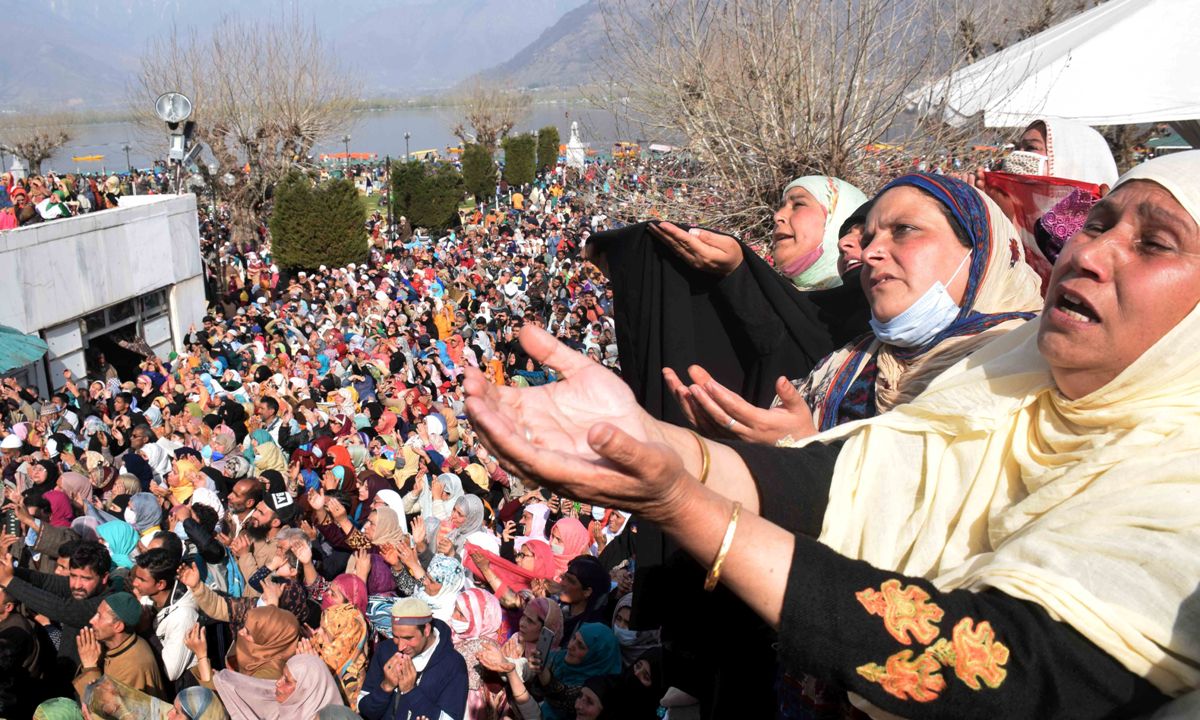
The deepest question of civilisation may not be how human beings can live together despite their differences, but whether they can become inwardly capable of recognising relationship without erasing difference. Across centuries, Sufi and Yogic traditions have approached this question through different languages, metaphysical frameworks, disciplines and visions of human transformation.
Rabiʿa al-Adawiyya placed divine love at the centre of spiritual aspiration; Junayd of Baghdad emphasised sobriety and disciplined realisation; Al-Ghazali examined intention, knowledge and the diseases of the heart; Ibn ʿArabi developed an extraordinarily rich metaphysical and symbolic account of divine Reality, existence, consciousness and human realisation; and Jalal al-Din Rumi transformed mystical insight into a language of love, longing, death and renewal.
On the Indian side, the Upaniṣadic traditions posed fundamental questions about self, ultimate reality and liberation; Patanjali systematised a discipline concerned with consciousness, ethical restraint, concentration and liberation; Sankara developed Advaita Vedanta’s radical non-dual vision; Natha traditions cultivated distinctive embodied disciplines; while Utpaladeva and Abhinavagupta of Kashmir developed sophisticated accounts of consciousness, recognition, manifestation and aesthetic-spiritual experience.
In the modern period, figures such as Swami Vivekananda and Ramana Maharshi brought aspects of Indian contemplative thought into new intellectual settings, while Muhammad Iqbal reworked questions of selfhood, spiritual agency and civilizational renewal within an Islamic philosophical framework. The enduring question beneath these diverse traditions is not whether their doctrines can be made identical, but what happens when profound inner transformation becomes responsibility toward other human beings, society and the living world.
Defining Oneness
“Oneness” itself requires clarification. It may refer to metaphysical unity-the nature of ultimate reality; to experiential unity-the transformed perception reported in contemplative states; to ethical unity-the recognition that other beings possess dignity and therefore make claims upon our conduct; and to civilizational unity-the creation of institutions capable of protecting human dignity while allowing genuine difference to remain. These levels must not be collapsed into one another.
A mystical experience does not, by itself, establish a metaphysical doctrine; a metaphysical doctrine does not automatically produce a virtuous character; and moral conviction does not become civilisation until it enters relationships, habits, education and institutions. The mature question is therefore not simply, “Are all realities one?” but: What conception of reality produces what conception of the human being, what conception of the human being produces what kind of character, and what kind of character produces what kind of society?
This distinction is indispensable in a Sufi-Yogi dialogue. Islamic Sufism is rooted in tawḥid, the uncompromising affirmation of divine oneness, and in the Qur’anic vision of God as Creator, Sustainer and ultimate Reality. Ibn ʿArabis vocabulary of wujud, divine manifestation, human realisation and the insān kāmil offers one of the most sophisticated mystical-philosophical syntheses in Islamic intellectual history.
Yet scholarly precision matters: Ibn ʿArabi is often described as the founder of waḥdat al-wujud, but this formulation is historically misleading if treated as the name of a doctrine he himself formally established; he did not use the expression as a technical designation, and its later history involved substantially different interpretations. His thought is better approached through his own interconnected vocabulary of tawḥid, wujud, divine names, manifestation, human realisation and the relationship between the Real and contingent existence.
Classical Yoga, meanwhile, cannot simply be equated with Sufi metaphysics. Patanjali’s system works with concepts including puruṣa, prakṛti, citta, kleśa, ethical discipline and liberation; Advaita Vedānta develops a distinct non-dual metaphysics; and Kashmir Shaivism develops another account of consciousness, manifestation and recognition. The comparison becomes intellectually fruitful precisely because these traditions are neither identical nor isolated.
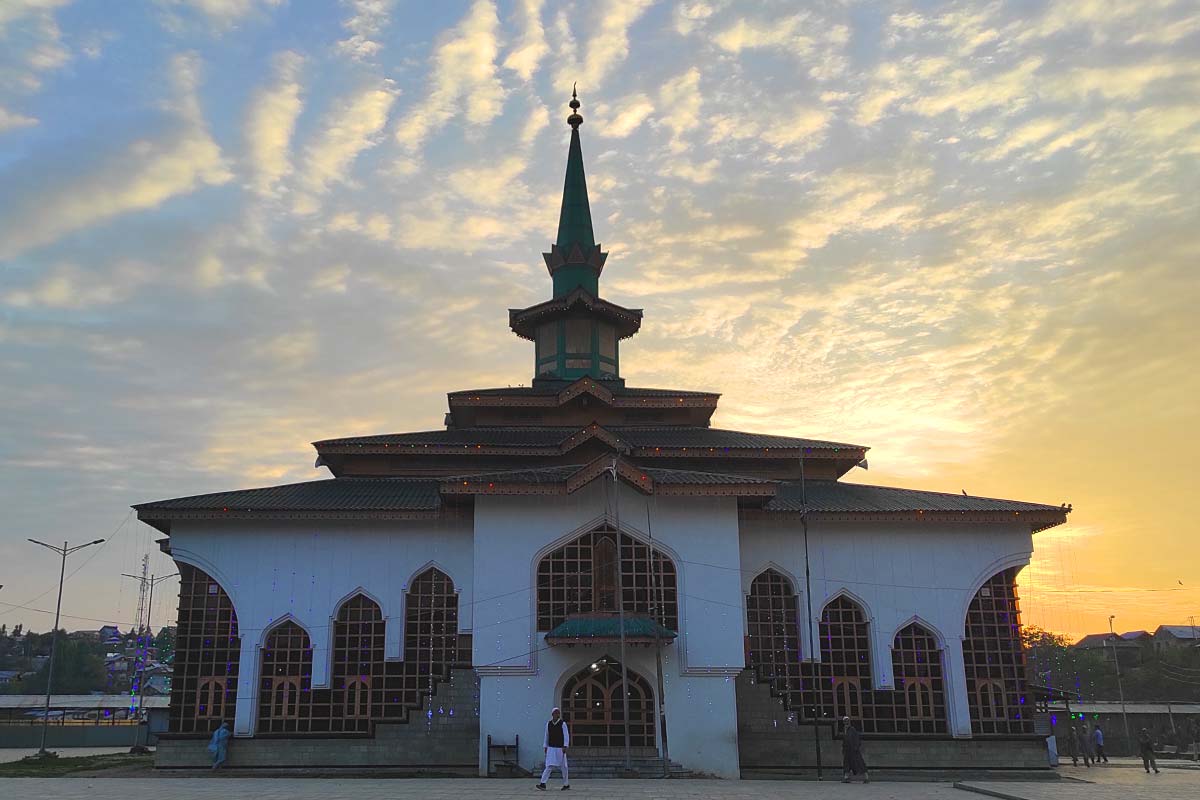
Disciplined Transformation
The strongest bridge between Sufism and Yoga is therefore not the assertion that their doctrines are “the same,” but the recognition that both contain sophisticated traditions of disciplined transformation. Sufi practice may involve remembrance (dhikr), vigilance, repentance, self-examination, purification of intention, love, service and refinement of the heart. Yogic traditions may employ ethical restraints, bodily discipline, breath regulation, concentration, meditation, self-inquiry and other contemplative practices.
The meaningful comparative questions are consequently: What human problem is each practice addressing? What anthropology does it presuppose? What does it regard as bondage? What does it regard as freedom? What role does desire play? What is the relation between body, mind and consciousness? How is knowledge acquired and tested? What constitutes spiritual maturity? And what ethical consequences are expected to follow from realisation?
Historical Encounters
The historical record offers an important precedent for such disciplined encounter. Al-Biruni did not merely write about India from a distance; he engaged Indian intellectual traditions and produced an Arabic rendering of Patanjali’s Yogasutra, a work whose chapters and manuscript tradition have subsequently been studied in detail by modern scholarship. His example is valuable because comparison at its best begins with intellectual seriousness: learning another tradition sufficiently well to understand its own categories rather than forcing it into one’s preferred vocabulary.
Dara Shikoh’s Majmaʿ al-Baḥrayn represents another historically significant attempt to place Islamic and Indian intellectual languages into conversation. Kabir and Guru Nanak developed powerful vernacular religious voices that challenged sectarian complacency and emphasised remembrance, devotion, ethical conduct and human dignity.

Lal Ded and Nund Rishi became deeply embedded in Kashmiri religious and cultural memory. Yet historical integrity requires caution: these figures should not be recruited retrospectively as if they were modern theorists of pluralism. Their own theological, philosophical and social worlds must be allowed to remain distinct.
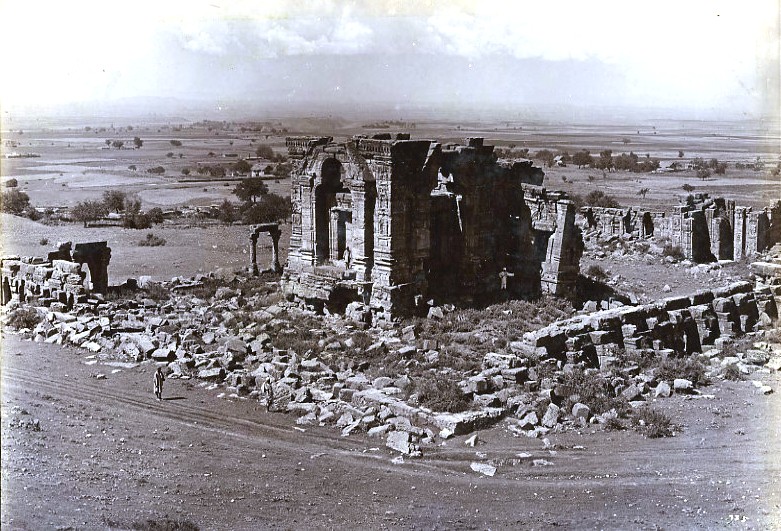
Kashmir provides an especially compelling setting for this dialogue because its intellectual and cultural history contains encounters among Sanskritic, Shaiva, Buddhist, Islamic, Sufi and vernacular traditions. Lal Ded and Nund Rishi have been venerated together in Kashmir for centuries, and modern scholarship has examined both their continuing cultural significance and the ways in which their memory has been incorporated into competing constructions of Kashmiri identity.
Nund Rishi’s poetry has also received recent scholarly attention for its engagement with Islam, death, nothingness and apocalyptic themes. The importance of this inheritance lies not in romanticising Kashmir as a place where differences simply disappeared, but in asking how spiritual traditions negotiated difference, memory, locality, belonging and moral community. The Rishi-Sufi inheritance is therefore most valuable when approached historically, critically and ethically-not merely as a slogan, but as a continuing question about how a society remembers and renews its deepest resources for human coexistence.
Lived Test
The decisive test of spirituality, however, is not the vocabulary of transcendence but the quality of life. Rabia’s love, Junayd’s sobriety, Ghazali’s examination of intention, Ibn ʿArabis vision of human realisation, Rumi’s transformation through love, Patanjali’s discipline of consciousness, the Bhagavad Gita’s reflections on action and detachment, and Ramana Maharshi’s radical self-inquiry all raise, in different ways, the question of what must change within the seeker.
The test is deceptively simple: Has insight altered conduct? Has knowledge become wisdom? Has remembrance become character? Has contemplation become compassion? Attention must become character, or spirituality risks becoming an aesthetic experience of the self.
Modern psychology gives this ancient insight another vocabulary. Human transformation involves attention, emotion, memory, habit, motivation, identity and relationships; it is also affected by fear, humiliation, trauma and collective memory. Classical Sufi discussions of the nafs, qalb, intention and diseases of the heart can be placed in illuminating conversation with Yogic analyses of citta and kleśa, Buddhist analyses of craving and suffering, and contemporary psychological approaches to attention, emotion regulation and behaviour.
Yet comparison must not become reduction: spiritual concepts should not simply be renamed as psychological mechanisms, nor should psychological findings be treated as proof of metaphysical claims. Research on meditation illustrates the need for such caution.
A 2018 systematic review and meta-analysis of randomised controlled trials found some evidence for effects on compassion and empathy, but not on aggression, connectedness or prejudice, while also identifying substantial methodological limitations in the underlying studies. The responsible position is therefore neither dismissal nor credulity, but disciplined inquiry.
Power Justice
Inner transformation, moreover, cannot be separated from power. A person may cultivate extraordinary private serenity and still participate in structures of humiliation, exclusion or exploitation. A civilisation may speak eloquently of unity while reproducing hierarchy through caste, gender discrimination, economic domination, racism, displacement or ecological destruction. This is where the consciousness of oneness acquires its deepest ethical force: if human existence is relational, then the suffering of another cannot remain entirely external to moral responsibility. Spirituality that never questions domination risks becoming consolation for the powerful. Compassion without justice may relieve pain without changing its causes; harmony without justice may preserve oppression; forgiveness without accountability may become impunity; tolerance without understanding may remain distance; and acceptance without dignity may become paternalism.
The question of caste is especially important in any serious comparative discussion of Indian traditions. India possesses extraordinarily rich philosophical, devotional and contemplative traditions, but spiritual history cannot be detached from social history. Nor can the moral achievements of particular saints be used to erase the historical realities of hierarchy and exclusion. The mature civilisational approach is neither romanticisation nor blanket dismissal. It is the willingness to hold spiritual ideals and historical realities together and to ask where teachings, communities and institutions have fulfilled, resisted, complicated or contradicted those ideals.
Gender demands the same intellectual honesty. The prominence of figures such as Rābiʿa and Lal Ded reminds us that women were not absent from the history of mystical and contemplative realisation, even though historical institutions and literary canons have often privileged male authority. Their presence invites a larger question: what happens when claims of spiritual equality encounter institutional inequality? The answer cannot be found merely by celebrating exceptional women; it requires examining the structures through which authority, education, leadership, interpretation and social recognition have historically been distributed.
The same critical discipline must be applied to spiritual authority itself. Every tradition capable of profound transformation is also vulnerable to distortion. Charisma can become domination; discipleship can become dependency; reverence can become personality cult; mystical language can become a shield against accountability; claims of realisation can be used to silence criticism; and “spiritual surrender” can be manipulated to excuse abuse. A civilisation serious about consciousness must therefore cultivate not only devotion but discernment, not only trust but accountability, not only spiritual authority but ethical safeguards. No claim to sainthood, realisation, enlightenment or divine intimacy should place a human being beyond moral scrutiny.

Body Desire
The body must also return to the centre of the conversation. Human consciousness is never encountered in abstraction from breathing, sensation, fatigue, illness, sexuality, ageing, hunger, pleasure, pain and mortality. Sufi disciplines such as prayer, fasting, remembrance and bodily restraint, and Yogic disciplines involving posture, breath, concentration and embodied awareness, demonstrate different ways of incorporating embodiment into spiritual formation.
But these practices should not be flattened into interchangeable “wellness techniques.” Their meanings arise from distinctive cosmologies, anthropologies and disciplines. The body is not merely an instrument to transcend, nor merely a biological machine. It is one of the places where mortality, desire, vulnerability and responsibility become conscious.
Desire may be the hidden centre of the entire civilizational problem. Human beings do not merely possess desires; desires educate the self by determining what appears worthy of pursuit. Ghazali’s analysis of intention and disordered appetite, Sufi teachings on detachment, the Bhagavad Gita’s reflections on desire and action, and Patanjali’s account of the kleśas all approach, in different ways, the question of how freedom relates to desire. A civilisation that perfects the production of desire while neglecting the education of desire may become technologically sophisticated yet spiritually impoverished. The decisive question is therefore not simply, “What can we obtain?” but “What is worth desiring?”
Mortality intensifies that question. Nund Rishi’s poetry engages deeply with death and nothingness; Rumi repeatedly makes death part of the language of transformation; the Qur’an places human finitude within a larger moral and eschatological horizon; and Indian contemplative traditions repeatedly confront impermanence, bondage and liberation in their own distinctive conceptual languages.
Nund Rishi scholarship, for example, has specifically examined the themes of Islam, death, nothingness and the apocalyptic in his poetry. Mortality strips away the fantasy of limitless possession and forces the human being to distinguish the urgent from the important, the transient from the enduring, accumulation from formation. A civilisation that refuses to contemplate death may become extraordinarily efficient at extending consumption while remaining confused about the purpose of life.
Wider Dialogue
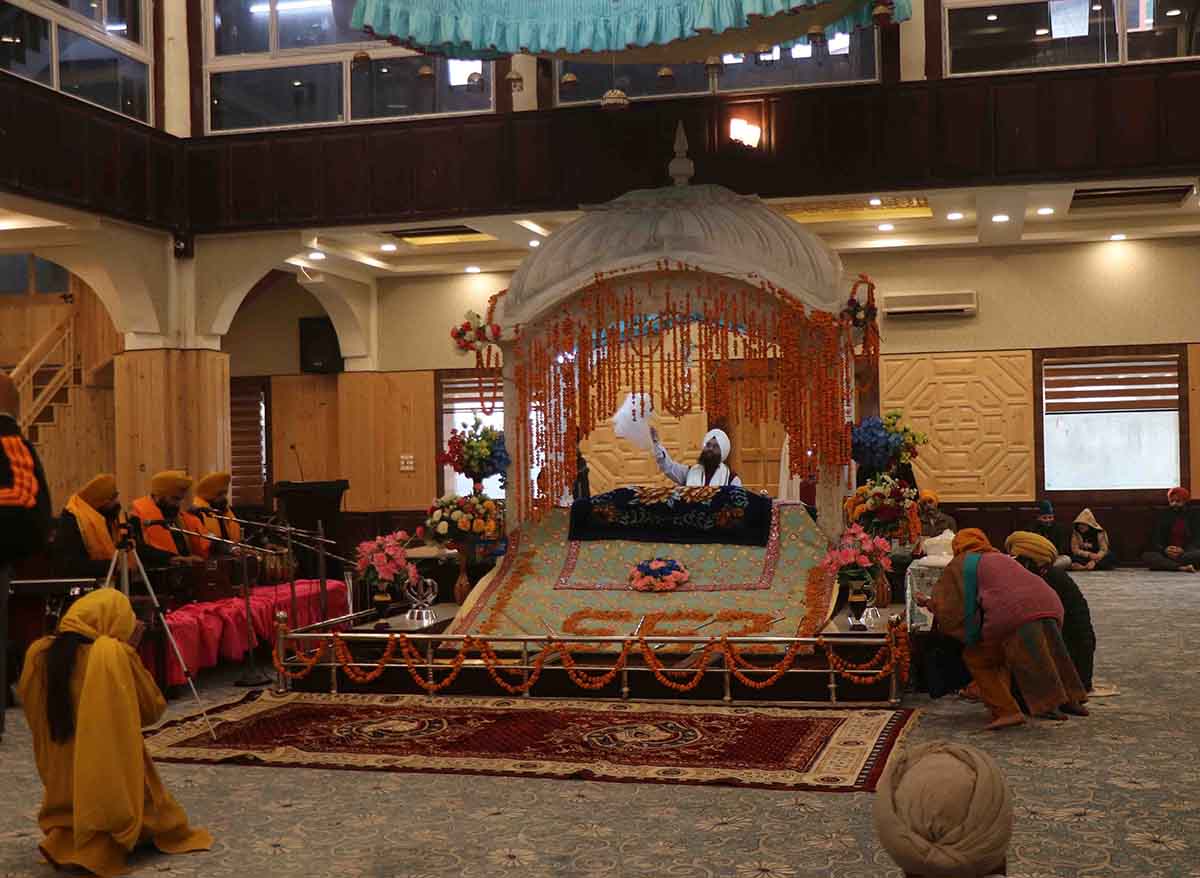
The dialogue must also resist becoming a two-tradition monopoly. Buddhism contributes rigorous analyses of suffering, craving, impermanence and compassion; Sikh thought joins remembrance to equality and service; Christian contemplative traditions explore love, humility, forgiveness and transformation; Jewish mystical and ethical traditions connect holiness with responsibility; African philosophies such as Ubuntu place relational personhood at the centre of moral reflection; Indigenous traditions offer diverse accounts of reciprocal relationship with land, community and more-than-human life; and East Asian traditions contribute distinctive reflections on harmony, discipline, nature and relational order.
These traditions should not be treated as interchangeable pieces of a universal spiritual mosaic. Their differences are intellectually valuable. Dialogue becomes meaningful precisely when participants are allowed to speak from within their own traditions while remaining open to correction, illumination and transformation.
This is why pluralism must be distinguished from relativism. Truth is not the same as tolerance. Pluralism is not the claim that all propositions are equally true. Universalism is not erasure. Conviction is not contempt. One can hold a serious theological or philosophical commitment while recognising that another human being possesses dignity that does not depend upon sharing one’s metaphysical conclusions. The civilisational challenge is therefore to develop unity without uniformity; difference without hierarchy; identity without hostility; plurality without relativism; conviction without contempt; universality without erasure.
The philosophical distinction between mystical experience and philosophical argument is equally important. Mystical experience may generate metaphysical reflection, but experience and argument are not the same mode of knowing. A visionary state cannot automatically establish a proposition about the structure of reality; conversely, philosophical coherence does not by itself constitute spiritual realisation. The mature seeker therefore requires both depth of experience and discipline of thought, both inward transformation and intellectual humility. This is where the dialogue among Sufism, Yoga, philosophy, theology, psychology and history becomes especially fruitful: each can illuminate the others without pretending to replace them.
Education Attention
Education is consequently central to social transformation. Comparative religious literacy should not produce superficial lists of similarities. It should teach students how traditions construct concepts of reality, selfhood, suffering, freedom, community, morality and the sacred; how texts are interpreted; how historical contexts shape institutions; and how claims can be examined without either contempt or credulity.
Al-Biruni’s comparative scholarship, Ghazali’s integration of theology and spiritual psychology, Ibn ʿArabi’s symbolic hermeneutics, Abhinavagupta’s philosophical and aesthetic synthesis, Vivekananda’s modern articulation of Indian spiritual thought and Iqbal’s concern with dynamic selfhood and civilisational renewal can all become resources for an education that seeks not merely information but intellectual and moral character.
The deepest educational movement may be from information to attention, from attention to understanding, from understanding to wisdom, and from wisdom to responsibility. In an age of algorithmic distraction, outrage economies and technologically amplified tribal identities, attention itself becomes an ethical resource. Digital systems can connect human beings across enormous distances, but they can also reward anger, accelerate misinformation, and fragment sustained attention. Artificial intelligence intensifies the question. A civilisation may acquire machines capable of generating vast quantities of information while becoming less capable of asking what information is for. The crucial distinction is again between intelligence and wisdom: intelligence can increase capability; wisdom asks whether that capability should be exercised, for what purpose, under what constraints and with what consequences.
Ecological Movement
Ecology extends the same argument beyond the human. If consciousness of oneness means anything civilisationally, it must eventually alter the way human beings relate to animals, forests, rivers, mountains, soil and atmosphere. Sufi traditions of stewardship, Yogic and Vedantic reflections on existence and interdependence, Buddhist compassion, Indigenous relational ethics and contemporary ecological thought can enter dialogue without being artificially homogenised. The question is not whether every tradition possesses an identical environmental philosophy, but whether spiritual consciousness can generate restraint against a civilisation organised around limitless extraction. The Earth cannot be reduced to a warehouse of resources without eventually turning that reduction against humanity itself.
The ultimate movement is therefore neither from one religion to another nor from plurality into sameness. It is from separation to relationship, ego to responsibility, fear to encounter, indifference to compassion, hierarchy to dignity, domination to stewardship, information to wisdom, and power without conscience to power governed by moral imagination. The movement begins within the person, but it cannot end there. The self becomes relationship; relationship becomes community; community shapes institutions; institutions shape civilisation; and civilisation determines, in turn, the moral environment in which future selves are formed.
Converging Questions
The Sufi asks: What has your vision of the Real done to your heart? The Yogi asks: What has your discipline done to your consciousness and conduct? The philosopher asks: Can your experience withstand critical examination? The scholar asks: Can your claim survive historical scrutiny? The citizen asks: What has your conviction done to your neighbour? The vulnerable person asks: Does your compassion include my suffering? The Earth asks: Does your consciousness include the conditions of my life? And the future asks: What kind of institutions will you leave behind?
These questions converge upon a demanding conclusion: the consciousness of oneness cannot remain merely a mystical idea, a poetic metaphor or an attractive interfaith slogan. It must become a way of seeing, a discipline of attention, an education of desire, a purification of intention, a formation of character, an ethic of dignity, a practice of relationship, a discipline of power, a commitment to justice, a stewardship of the Earth and an architecture of humane institutions.
Closing Vision
The deepest lesson is not that all paths are one. It is that human beings can enter serious dialogue without surrendering intellectual integrity; that difference need not become hostility; that conviction need not become contempt; and that spiritual depth is ultimately tested by the quality of relationship it creates. The journey is not simply from many to one, but from fragmentation toward wholeness, from isolation toward relationship, from ego toward responsibility, and from the consciousness of separation toward a civilisation capable of recognising the dignity of every person without demanding sameness.

The task is not to make humanity one by making everyone the same, but to make our shared world humane enough that difference can never become a reason to deny another’s dignity. Here the dialogue between Sufi and Yogi becomes a dialogue about civilisation itself: whether inner awakening can become ethical responsibility, spiritual insight compassionate action, and conviction humble coexistence.
The consciousness of oneness is not the erasure of difference, but a transformation of how difference is seen, lived, and related to-moving from separation to relationship, ego to responsibility, fear to encounter, indifference to compassion, and power to moral stewardship. At its deepest, it is more than mystical insight: it is an ethic, an education of consciousness, a discipline of character, a practice of solidarity, an institutional responsibility, and a civilisational vocation-to build a world where difference enriches humanity rather than diminishes it, and where the dignity of every human being remains inviolable.
(The author is an educator, researcher and writer. Ideas are personal.)