by Tanveer Ahmad Rather
Gurez’s rich sea buckthorn resources could support a community-led bio-resource economy, creating livelihoods through sustainable harvesting, processing, value addition, branding and marketing.
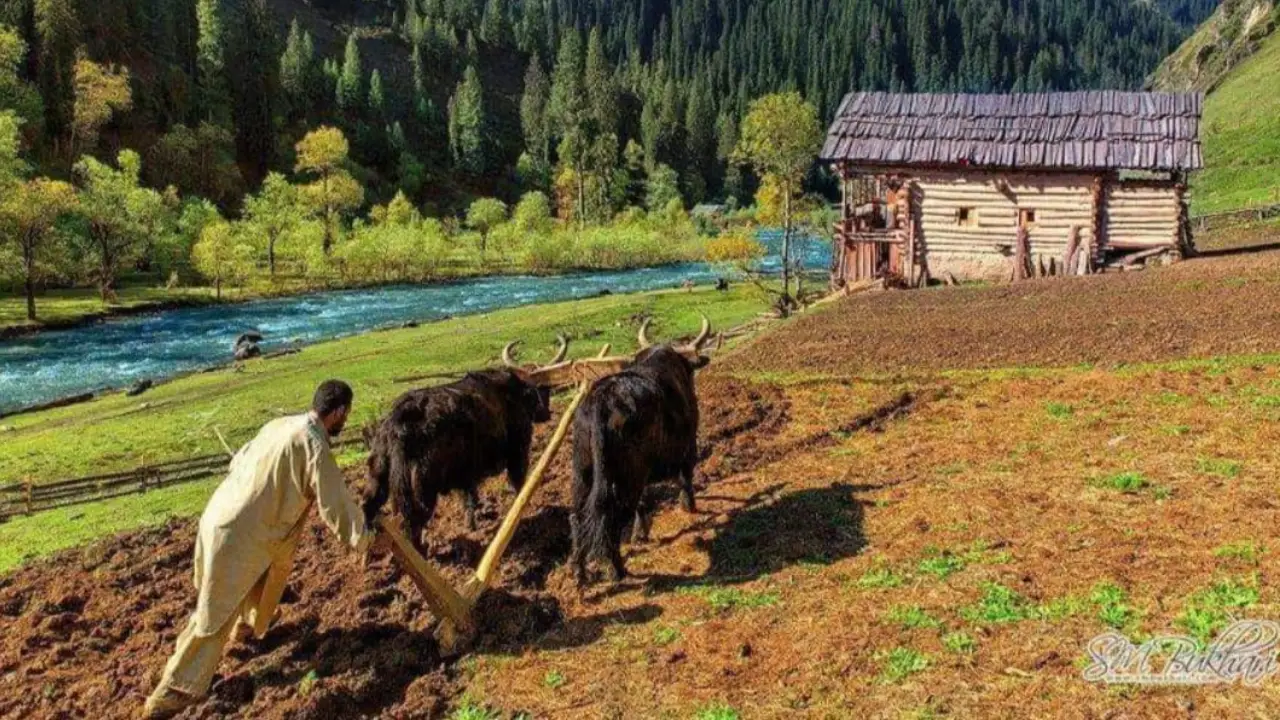
Nestled in the remote highlands of north Kashmir, Gurez Valley is one of the most spectacular and ecologically rich regions of Jammu and Kashmir. Gurez remains geographically isolated for several months every year. Due to harsh winters and heavy snowfall, Razdan Pass, the principal link with the rest of Kashmir, often remains closed for nearly five months, making accessibility, employment and economic opportunities major challenges for the local population. Yet, behind this geographical isolation lies a remarkable natural wealth. Gurez is blessed with extraordinary biodiversity, including a rich diversity of medicinal and aromatic plants that have been traditionally used by local communities for generations.
The traditional knowledge associated with these plants represents an important part of the valley’s cultural heritage and has the potential to become a foundation for sustainable, nature-based livelihoods. During the past six months of field engagement in Gurez, it has also been observed that local communities maintain a strong connection with traditional and natural practices.
Greener Gurez
The District Administration Bandipora, under the leadership of Deputy Commissioner Mrs Indu Chib Kanwal (JKAS), has also taken important steps towards environmental protection. This year, Gurez witnessed a significant move towards reducing plastic use, reflecting an effort to protect the fragile Himalayan ecosystem and promote environmentally responsible development. Such initiatives assume particular importance in a valley where the economy and livelihoods are closely dependent on natural resources.
A project currently being implemented in Gurez focuses on bio-resource-based livelihood generation. The project, initiated by GIAN in collaboration with the District Administration Bandipora, with support from the Jamnalal Bajaj Foundation, has the broader objective of strengthening local livelihoods, promoting entrepreneurship and enabling communities to derive greater economic value from the resources available in their surroundings.
The focus is not merely on collecting natural resources and selling them as raw material. The larger vision is to take local resources through the entire value chain, from collection and sustainable utilization to processing, value addition, packaging, branding and marketing.
Several bio-resources of Gurez remain commercially underexplored. With appropriate scientific intervention, community participation and market linkages, these resources could potentially create new avenues of employment and entrepreneurship while reducing dependence on conventional sources of income.
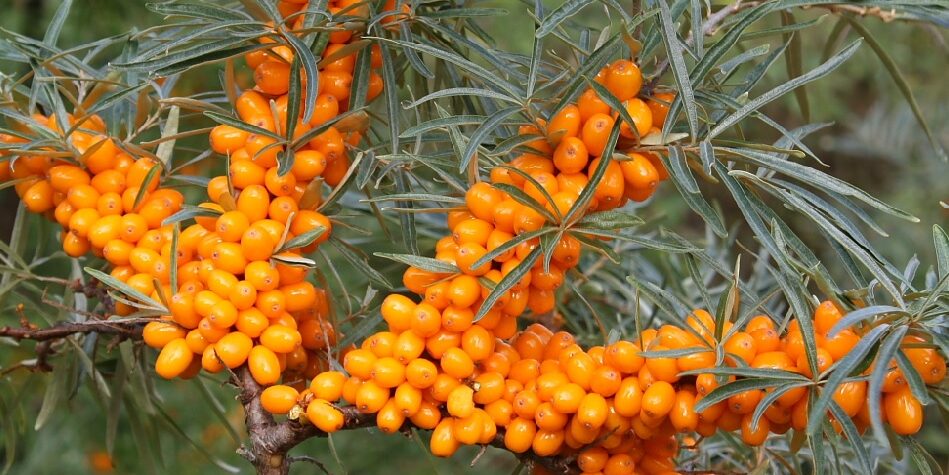
One such promising resource is sea buckthorn (Hippophae rhamnoides), a hardy Himalayan shrub known for its highly nutritious berries and valuable bioactive compounds. Although sea buckthorn has gained considerable economic importance in Ladakh, its potential in Gurez has remained largely unexplored.
As part of the ongoing bio-resource livelihood initiative, GIAN (Grassroots Innovations Augmentation Network), Gujarat, a Gujarat-based organisation founded by Prof. A. K. Gupta (Padma Shri) and led by CEO Dr. Anamika Dev, has been working with local communities in Gurez for the past six months. The field team, including Dr. Tanveer A. Rather and Er. Jehangir Aursheed, has explored the potential of Gurez’s sea buckthorn resources and initiated efforts towards developing value-added products. Local communities have also been introduced to the possibilities of processing sea buckthorn into commercially useful products and have received training in processing and value addition.
Learning from the Ladakh Model
Ladakh offers an important example of how a locally abundant Himalayan bio-resource can contribute to rural economic development. Sea buckthorn has been increasingly incorporated into livelihood and value-addition initiatives in Ladakh. Berry collection provides seasonal income to rural households, including women involved in collection and processing.
The resource has also created opportunities beyond the sale of fresh berries through products such as pulp, juice, squash, jam, dried berries, herbal tea, oil, cosmetics, nutraceuticals and soaps. The economic significance of the resource is becoming increasingly visible.
In August 2026, the first consignment of sea buckthorn pulp from Kargil was dispatched to Delhi, demonstrating the growing market potential for processed sea buckthorn products from the Himalayan region. Research from Nubra Valley has also highlighted the economic potential of sea buckthorn processing, estimating annual pulp production at around 464.25 tonnes, with an estimated market value of approximately US$1.14 million.
Government initiatives have further strengthened the sector. Ladakh has promoted commercial sea buckthorn cultivation and provides substantial financial support under its development programmes, including assistance for cultivation, processing and post-harvest infrastructure. In 2026, work was also initiated towards establishing a National Sanjeevani Research Centre for Sea Buckthorn in Nubra Valley, aimed at advancing research, innovation and economic development around this valuable Himalayan resource.
Could Gurez Follow the Same Path?
Gurez has naturally distributed sea buckthorn populations, yet the resource has not been adequately explored from the perspective of scientific harvesting, processing, value addition and organised marketing. Rather than selling raw berries, local communities could potentially develop a complete value chain.
Fresh berries could be converted into pulp, juice and squash; fruits could be processed into jams and dried products; leaves and berries could be explored for herbal teas; while seeds and berries could provide raw material for oil, cosmetic and nutraceutical products.
Such an approach could create employment at multiple stages, from collection and primary processing to packaging, branding, transportation and marketing. Importantly, this could be achieved through a community-based model, in which local families, Self-Help Groups, Farmer Producer Groups and village-level enterprises participate directly in the value chain.
The future of Gurez need not depend solely on conventional employment opportunities. Its biodiversity itself can become an economic asset if utilized scientifically, sustainably and responsibly. The objective should not be to exploit the natural resources, but to create a model where conservation and economic development go hand in hand.
Sea buckthorn could become one such example—a resource that grows naturally in the Himalayan landscape, requires relatively limited agricultural inputs and has applications across food, wellness, cosmetics and other value-added sectors.

For a remote valley like Gurez, where connectivity remains a major challenge for several months each year, developing high-value, low-volume bio-resource products could be particularly relevant. Proper processing, packaging, branding and market linkage could allow products originating in Gurez to reach markets far beyond the valley.
Gurez today stands at an important juncture. Its mountains, forests, medicinal plants and traditional knowledge represent more than ecological wealth; they represent an opportunity to build a sustainable local economy. The emerging work on sea buckthorn demonstrates how science, traditional knowledge, government support, community participation and entrepreneurship can come together to unlock this potential.
(The author is a PhD student in Forestry at the Faculty of Forestry, SKUAST-K. Ideas are personal.)