SRINAGAR: Wildfires raging near Jerusalem have triggered a national emergency in Israel, forcing the evacuation of thousands and bringing large parts of central Israel to a standstill, even as the country continues its relentless bombardment of Gaza, where the humanitarian crisis is worsening by the hour, reports appearing in international media said.
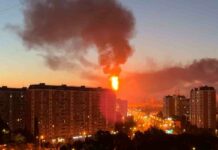
Prime Minister Benjamin Netanyahu declared the fires, which began Wednesday near the Mesilat Zion area, around 10 miles west of Jerusalem, as life-threatening and a “national danger.” The fires, fanned by strong winds, have spread rapidly through the Jerusalem Hills, threatening surrounding communities and prompting road closures, including the critical Tel Aviv–Jerusalem highway.
Shmulik Friedman, commander of Jerusalem’s Fire and Rescue District, said the blazes may be the largest in Israel’s history, adding that firefighting operations would continue through the week. According to the fire authority, at least 163 ground crews and 12 aircraft are currently engaged in battling the flames. Seventeen firefighters have been injured, and over 20 civilians have been treated for smoke inhalation or burns.
International firefighting support is arriving from Italy, Croatia, Cyprus, France, Romania, Spain, and Ukraine, while the Israeli military has deployed troops, aircraft, and heavy engineering vehicles to assist in containing the disaster.
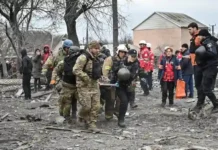
But the wildfires have struck at a moment of broader national crisis, as Israel intensifies its military campaign across Gaza. On the same day the fires broke out, Israel carried out airstrikes in several parts of Gaza, killing at least 13 Palestinians, according to field reports cited by international media. Targets included the southern city of Khan Younis, the Al-Tuffah and Al-Shaaf neighbourhoods in Gaza City, and areas near Deir al-Balah. Among the dead were farmers, children, and displaced civilians sheltering in tents.
The overall Palestinian death toll has reportedly reached 52,418 since the war began on October 7, 2023, with over 118,000 injured. The toll continues to rise as rescue workers retrieve bodies from under rubble, while thousands remain unaccounted for in areas inaccessible due to ongoing bombardments.
The airstrikes come as Gaza faces catastrophic levels of hunger, with some 3,000 humanitarian aid trucks blocked at the border by Israeli forces. International aid organisations and UN agencies have warned of deepening famine in the Strip, calling on world powers to intervene.
The wildfires and the war are testing Israel’s emergency response capabilities. While
firefighters and military units race to contain the flames at home, thousands of Israeli troops remain deployed in the Gaza campaign. Critics have pointed to signs of overstretched capacity, with one local resident near the city of Modiin telling reporters, “We knew the weather, we knew this could happen, and still it feels like they weren’t ready.”
President Isaac Herzog, in remarks during a subdued Independence Day ceremony, acknowledged the multiple crises facing the country, warning that the wildfires were “part of a climate crisis we must not ignore.” He also appealed for an end to internal political polarisation, which has deepened in recent weeks amid protests, attacks on joint memorial events, and a public clash between Netanyahu and the head of the Shin Bet security service.
Meanwhile, far-right national security minister Itamar Ben-Gvir has hinted that arson may be behind the fires, though no official evidence has been presented. Israeli media reported that 18 suspects had been detained on arson suspicions.
As fire crews continue to battle blazes on one front and bombs continue to fall on another, Israel finds itself in the grip of dual emergencies—one unfolding in its forests and fields, and another in the densely populated and devastated Gaza Strip.