by Dr Farooq A Lone
As AI transforms everyday tasks, are we allowing technology to weaken memory, navigation, writing, calculation, judgement and traditional knowledge, or can education preserve human abilities while embracing technological progress responsibly?
While reflecting on the times gone by as witnessed by our generation, who have already lived for more than six decades, one easily recalls that there was a time when a person could remember dozens of telephone numbers, find his way through unfamiliar places without a GPS, calculate simple figures mentally and write a long letter without thinking twice about grammar or spelling.
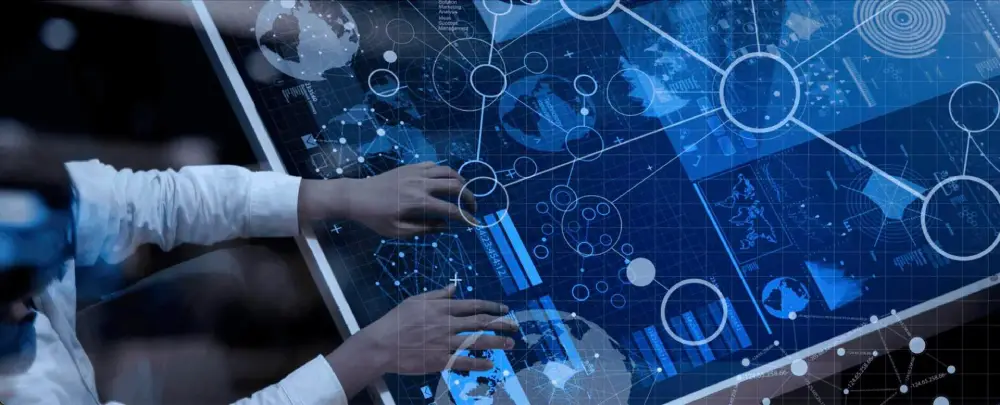
Much of that has changed over the years. Today, our phones remember our contacts, GPS and location apps tell us where to go, calculators do our arithmetic and search engines answer questions that earlier required an interesting visit to a library. And now Artificial Intelligence is beginning to write our emails, prepare presentations, translate languages, summarise books and even generate ideas.
There is no denying that these technologies have, in a sense, made life easier. They have saved time, expanded access to knowledge and opened possibilities that were unimaginable only a few decades ago. But there is another side to this remarkable progress.
Are we gradually losing some of the skills that earlier generations considered essential?
The question is not whether technology is good or bad. Technology and its day-to-day advancements are a hard reality. The real question is what happens to a human ability when we stop exercising it just because a machine can do it for us.
Consider something as simple as navigation. Earlier, people developed a mental map of their surroundings. They remembered roads, landmarks, rivers, bridges and directions. Today, many of us simply follow a blue line on a screen. Convenient, certainly. But the mental map is no longer being created.
The same is true of memory. We once memorised telephone numbers of our friends and dear ones, as also addresses, important dates and directions. Today, almost everything is stored somewhere in some device.
Writing has undergone an even greater transformation. Handwritten letters have virtually disappeared from everyday life. Writing skills are disappearing, not to talk of cursive writing or ‘khatati’. Even when we type, predictive text and spell-check increasingly anticipate what we want to say. Many a time, we get confused about spellings and ideas we intended to write down.
Then came search engines. Instead of remembering information, we learned to retrieve it. For anything, Google baba came to be consulted.
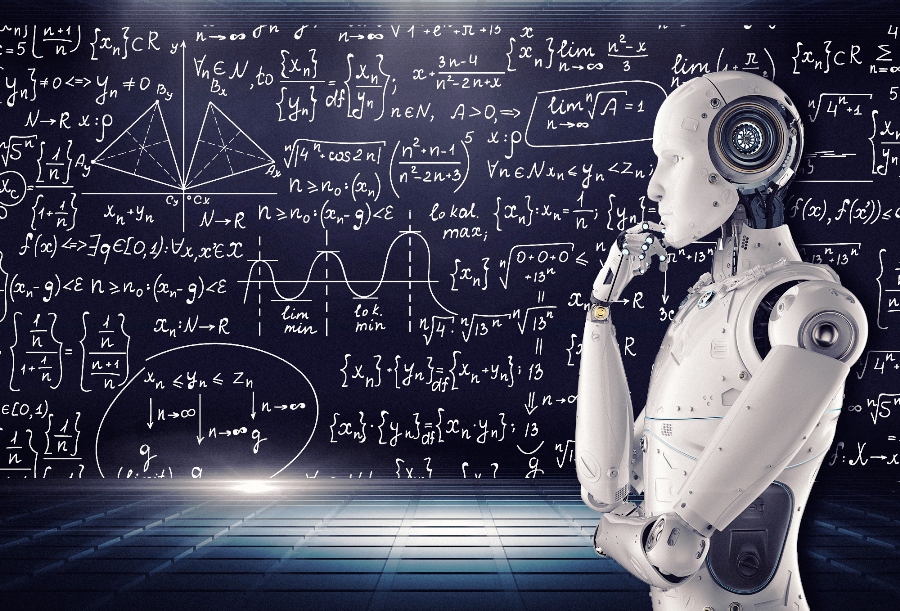
And now comes AI.
AI takes this process a step further. It does not merely retrieve information; it can organise it, interpret it and produce a finished piece of writing. A student can ask it to prepare an essay. A professional can ask it to draft a report. A researcher can ask it to summarise a large volume of material. What used to take days and months is ready in a moment. The convenience is extraordinary. But convenience has a hidden danger. And that danger is dependency. A muscle that is never exercised becomes weak.
Could the same principle apply to some of our mental abilities? If students rarely write independently, will their ability to express complex thoughts weaken? If they never calculate without a calculator, will numerical intuition decline? If they always ask AI to generate ideas, will they become less comfortable with the difficult but valuable process of thinking through a problem themselves?
These are not arguments for rejecting technology. On the contrary, technology should be embraced. But education must ensure that students use technology as an assistant rather than as a substitute for thinking. This is particularly important in our colleges and universities. The purpose of higher education cannot simply be to provide students with access to information. Information is now available everywhere. The real purpose must increasingly be to teach students how to question information, analyse it, distinguish evidence from opinion and arrive at reasoned conclusions. In other words, when information becomes cheap, judgement becomes valuable.
There is another category of skills that deserves attention. These are skills connected with our cultural and local heritage. In Jammu and Kashmir, generations have accumulated knowledge about agriculture, horticulture, medicinal plants, weather, forests, crafts, food preservation and the use of local resources. Much of this knowledge was transmitted orally, from one generation to another. Some of it is disappearing.
Modern technology and changing lifestyles have brought enormous benefits, but they have also weakened the everyday transmission of traditional knowledge. The challenge is not to reject modernity in order to preserve the past. It is to document, study and integrate valuable traditional knowledge with modern science.
The same principle should apply to practical skills. A highly educated young person should not necessarily be someone who can only operate a computer. Knowing how to grow a plant, repair something, cook a meal, communicate face to face, observe nature or work with one’s hands also has value.
Perhaps education needs to rediscover this balance. We should teach our children how to use AI. Alongside, we should teach them how to think without it. We should teach them how to search the internet but also how to read a book deeply.
We should give them calculators but ensure that they understand numbers.
We should provide them with digital maps but allow them to develop an understanding of their physical surroundings. And we should encourage them to use AI for productivity while insisting that the final judgement remains their own.

The great challenge of the AI age may therefore not be keeping up with machines. Machines will continue to become faster and more capable. Our challenge is to ensure that human beings do not become intellectually passive. Artificial Intelligence can generate an answer. It cannot decide what question is worth asking. It can produce a paragraph. It cannot give that paragraph personal experience or moral purpose. It can analyse information. But humans must decide what to do with the knowledge.
Perhaps, therefore, the most important lesson for education in the coming decades should be: not preserve every old skill merely because it is old, but not abandon an important human ability merely because a machine can perform it.
The future should not be a choice between human beings and technology. It should be a partnership in which technology takes care of what machines do best, while human beings continue to cultivate what makes them uniquely valuable: that is, curiosity, judgement, creativity, empathy, wisdom and responsibility. That may be the real meaning of being educated in the age of Artificial Intelligence.