SRINAGAR: The National Green Tribunal (NGT) has seriously noticed the alarming pollution levels in the Doodh Ganga and Mamath Kull rivulets in Kashmir, ordering local authorities to immediately address the crisis. In addition, the Tribunal has imposed Environmental Compensation (EC) penalties on the concerned departments.

The NGT expressed strong displeasure over the lack of meaningful remedial action by state authorities, despite the serious violations found by the joint committee. The Tribunal warned that failure to set up the required treatment facilities by the stipulated timeline of March 31, 2018, as per the Supreme Court’s judgment, will result in the prosecution of the concerned government secretaries. The Tribunal has also directed the authorities to take disciplinary action and impose compensation for the continued failure to manage waste, which has been detrimental to the environment and public health.
The twin rivers, tributaries of the Jhelum River, have been inundated with untreated sewage and illegal dumping of municipal solid waste, posing grave risks to the environment and public health of nearby communities. According to the applicant, Raja Muzaffer Bhat, the Doodh Ganga river originates from the Pir Panjaal mountains and becomes heavily polluted as it flows through populated areas of Budgam and Srinagar districts. The river’s water is used by the Public Health Department’s water filtration plant at Kralpora to supply drinking water to an estimated 500,000 residents.
Similarly, the Mamath Kull stream has been polluted by the unscientific dumping of municipal solid waste, including hazardous biomedical waste from local hospitals and clinics, along its banks in the Budgam district. This waste is gradually flowing into the stream, which eventually merges with the Jhelum River, causing widespread environmental degradation.
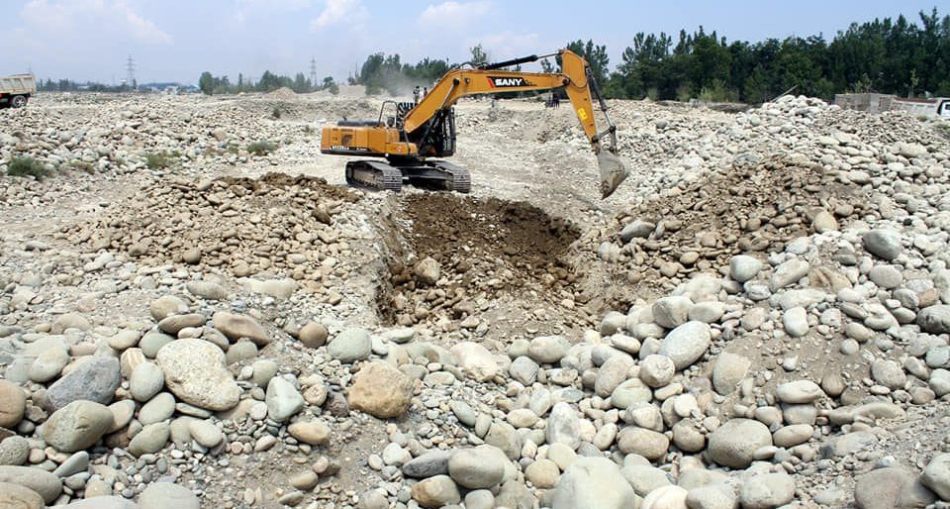
In response to the applicant’s concerns, the NGT constituted a five-member joint committee to investigate the matter. The committee’s report, filed in January 2022, acknowledged the serious violations taking place, including the dumping of waste on river banks, discharge of untreated sewage, and unregulated illegal mining activities.
To address the sewage pollution, the authorities have proposed the construction of several modular sewage treatment plants (STPs) to treat the untreated waste flowing into the Doodh Ganga. These STPs, with a total capacity of 12.25 million litres per day, are expected to be commissioned within 18 months under the AMRUT-2 scheme. Additionally, the Jal Shakti Department has proposed a comprehensive 125.5 MLD sewerage scheme for Srinagar city, which includes the polluted stretch of the Doodh Ganga. This long-term project, currently awaiting funding from the Japan International Cooperation Agency (JICA), is expected to provide a more permanent solution to the river’s sewage woes.
On the solid waste management front, the authorities have initiated several measures, including the establishment of door-to-door waste collection in all urban local bodies (ULBs) in the region. They have also taken steps to prohibit illegal dumping of waste near the river banks and have identified sites for the construction of decentralized solid waste management facilities in all the ULBs of Budgam district. The state government has approved a decentralized solid waste management action plan for all 76 ULBs in Jammu and Kashmir, with an estimated cost of Rs 191.67 crore. This plan includes the installation of bio-methanation plants, waste management centres, and aerated pit composting plants to effectively manage the solid waste generated in the region.
The NGT has directed JKPCC and the Secretary, Department of Environment, to comply with the order of the Supreme Court within three months and file a compliance affidavit immediately upon the expiry of three months. The Member Secretary, J&K PCC shall take appropriate action for the imposition and recovery of EC, keeping in view the observations made in this order, by duly following the principles of ‘Natural Justice’ within three months, and submit an action taken report before the next date of hearing.
The Tribunal also noted that the show cause notices dated June 29, 2024, filed as Annexure A and B along with the report of the J&K PCC dated July 8, 2024, were issued by the J&K PCC to the Municipal Council, Budgam, and Chadoora, proposing to levy EC of Rs. 372.1761 lakhs and Rs. 141.43 lakhs for illegal dumping of municipal solid waste. However, these show-cause notices neither reflect the period of violation nor the quantity of solid waste for which the show-cause notices have been issued. The Member Secretary, J&K PCC is expected to issue show cause notices with all the requisite details and particulars so that, in the end, the entire exercise may not be vitiated for technical lapse, resulting in benefit to the defaulting body. For illegal Riverbed Mining EC will be calculated separately.
With the rivers’ pollution posing a direct threat to the lives and livelihoods of the local population, the authorities in Jammu and Kashmir are now under immense pressure to expedite the implementation of the proposed solutions and ensure the restoration of these vital water bodies.