by Dhaar Mehak and Shah Faheem Javaid
A survey of 30 vendors across three Kashmir districts explores street food’s profitability, informal operations, gender barriers and employment roles, highlighting its economic importance and cultural contribution despite vulnerabilities.

Street food counts as one of the main highlights of the culture of a(ny) place. Kashmiri street food is equally popular among the locals and has slowly carved its way into the bucket list of tourists visiting the region. The popularity of street food has never witnessed a decline in Kashmir. Even when the new generations prioritise healthy foods, no one is able to resist a bite of the local street food delicacies!
While street food indeed is famous, the question arises: how is the Street food sector of Kashmir faring economically?
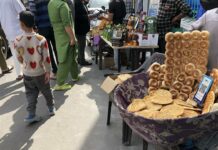
To sketch the premises of this question, we conducted a brief survey of thirty street food vendors across three districts of Kashmir. First of all, it was observed that the street food stalls are often set at places in the middle of hustle-bustle. It includes markets, public parks, local shrines, hospitals, schools, colleges, universities, major government departments across the districts etc. While the item under discussion is known as street food, its preparation, dealing and sales are divided between shops, small establishments and sometimes spots across different streets of the Valley.
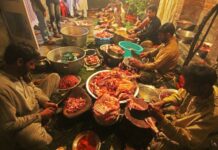
Around 70% of the street food vendors surveyed, fell in the age group 20-40. Child labor wasn’t found common within the sector. Neither were old aged people identified engaging with the activity, save a handful of cases. It was observed that in most of the cases, the owner prepares the delicacy himself and sells it as well. Each establishment was found to be a one-to-two-person venture, in the latter case a helper was found taking care of some basic and preparatory chores. It was also observed that the women of the household help and aid the vendor in making the preparations.
Discussions with the respondents highlight that majority of the people engaged with the activity, constantly look for better and different remunerative activities. Some of them pointed out that not much respect is attributed to this job. A social stigma was identified to be low-key, in its subtle forms associated with the street food vending sector. Some respondents said that they inherit the work from their family; usually not by choice but by compulsion. It was unanimously agreed upon by the respondents that alternate means of employment in the region are limited, pushing them into this very economic activity. Around 65% of the respondents were found out to be lowly educated, not having completed their matriculation. Around 30% fell in the category of clearing higher secondary education. The number of college graduates was found out to be significantly less.
During the survey it was found out that no woman engages as a street food vendor[1]. Kashmiri society has characteristically been stereotypical related to women’s employment. Initially, women’s engagement in the wage economy wasn’t supported. Later, with the increase in the education, women working in offices and establishments has seen a change. However, with activities like street food vending, the trend continues. It is an activity that requires staying on the shop or road for long hours from morning to evening and as such, the Kashmiri households do not find gendered compatibility with the activity.
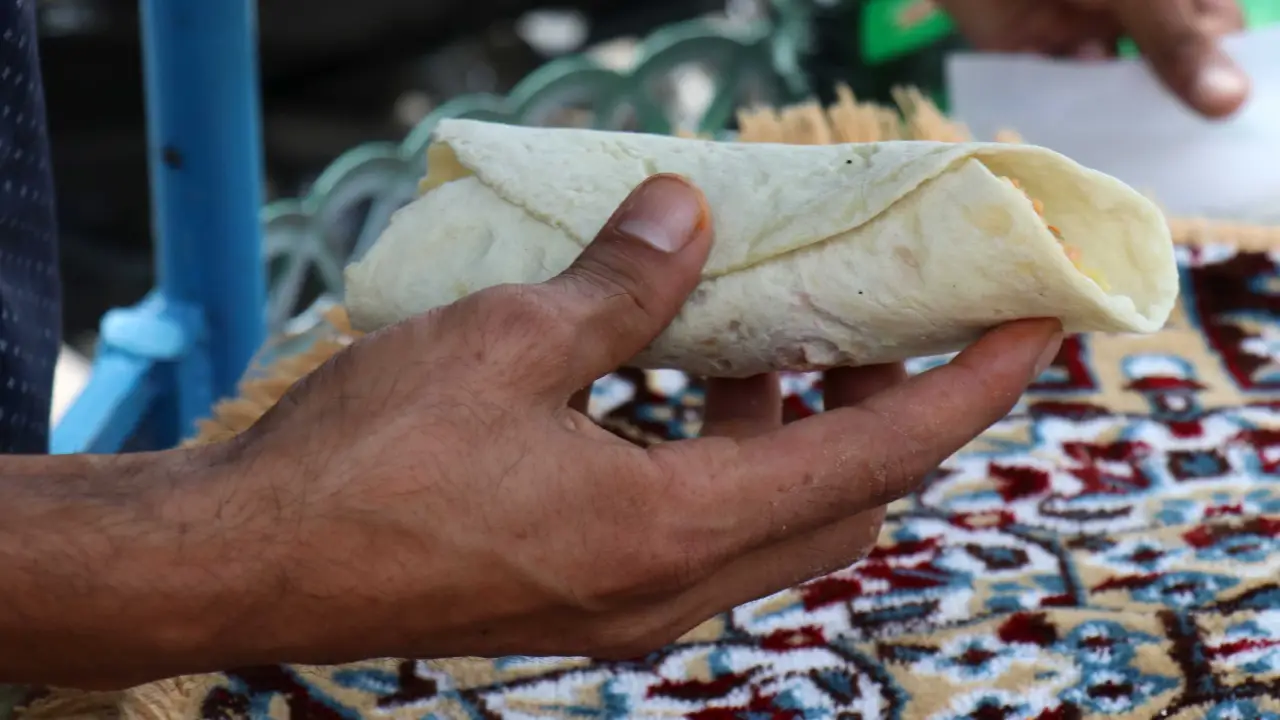
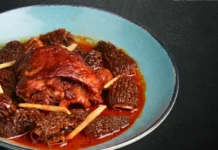
During the survey it was found out that the number of street food activities has gone up by type during the last two to three decades. However, some street foods remain particularly famous thus common. Traditional Monjih-Gaer selling Nadir-Monjih, Porath, Halwah etc. remain particularly common. Tujjih (Kashmiri style barbeque) is universally popular across all districts and especially popular with the young, predominantly men. Pakoras of different kind and Masaleh-schoth, Kruhen & Kinkeh Masaleh, Gaer (chestnuts) combined with Makai (roasted corn) remain popular too. While not indigenous to Kashmir, bhel puri and pani puri have evolved to become a part of the hyped street food of Kashmir. Basrakh, Laayi, Rall-Mill and Karreh populate the list too.
It was found out that 43% of the street food vendors in the Valley operate through semi-permanent/shop looking structures and setups. Around 10% have fixed stalls across streets and public spaces. 27% operate through hand-carts and 20% through mobile vending. The sector is predominantly informal in structure, spirit, regulations and existence. There are no food safety standards and protocols in existence. Nor are the set-ups under discussion on paper regulated by the Food Safety wing of the Food and Drugs Administration (FDA).
It was observed that a few activities including ice-cream vending, fresh fruit and sugarcane juice, fruit salad stalls etc. have a seasonality attached to them in market terms. However, observations from the field highlight that the street food vendors who engage in these activities during the summer, tend to some other street food vending activity during the winters. Often selling tea, kehwa and other season-sensitive items later on. Majority of the respondents were observed working throughout the week; predominantly compelled by the circumstances. As it is, the group under discussion falls under the category of ‘hand-to-mouth’ population. This very characteristic limits their ability to take rest or a day off.

The street food vending sector of Kashmir is a living example of informality being a way of life in the developing pockets of the world. The street food sector is a people’s activity of providing and facilitating tasty and affordable food to fellow humans. At the same time, it is not a miserable activity in profit terms. No respondent was identified making a profit of less than Rs.500 a day. The average profit calculated as Rs.2000 a day. However, the seasonality and multiple fragilities often impediment the process of smooth business. As such, the street food vendors were found out to be vigil, and in active anticipation of any rainy day.
While the sector suffers from many problems and issues common to informal set-ups and social stigmatizations in developing world, it is actively acting as a cushion for a big number of people. It safeguards multiple families and provides adequate income for them to live a comfortable life. At the same time, it is actively contributing towards keeping an important part of the Kashmiri cuisine culture alive, dynamic and thriving.
(Mehak teaches at the Islamic University of Science and Technology, Awantipora, Jammu and Kashmir. Ideas are personal.)