by Ruqaya Akhter
Jammu and Kashmir’s tax revenues have grown substantially, but the region remains grant-dependent and trails major states in fiscal strength
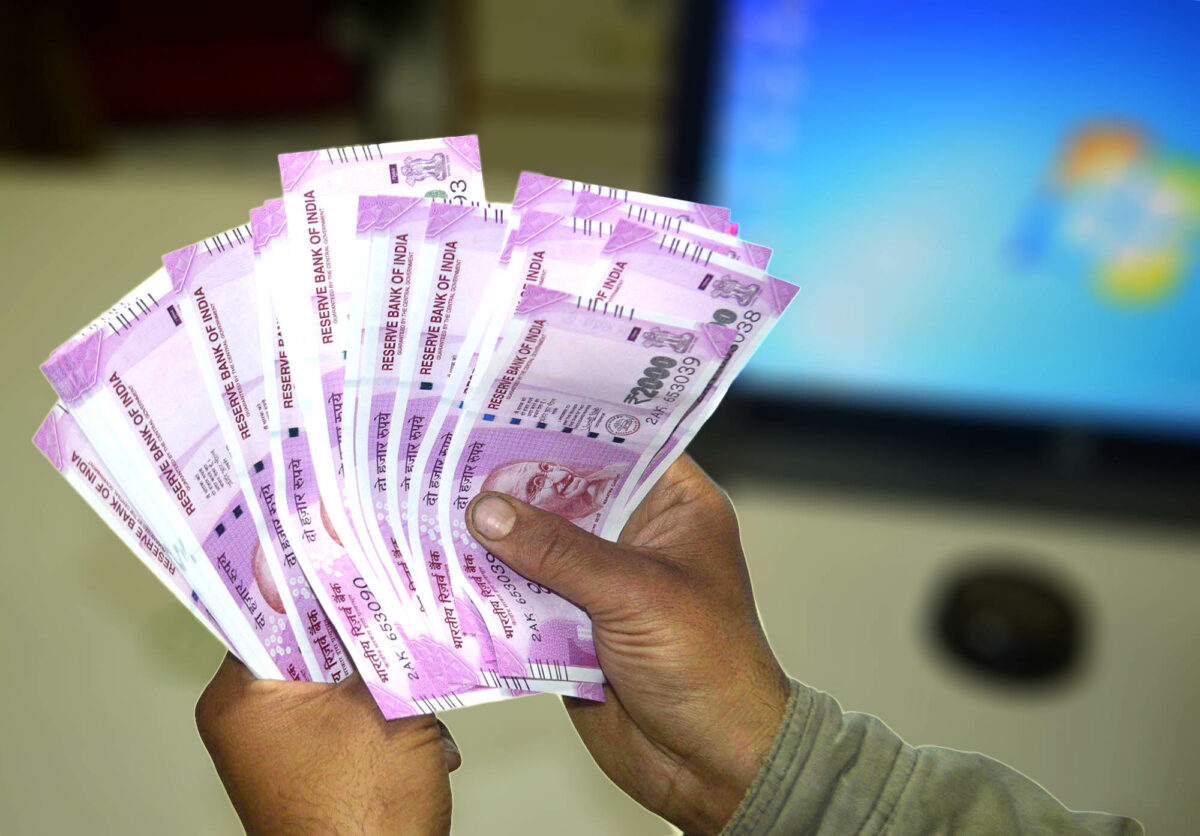
Own Tax Revenue (OTR) is one of the clearest indicators of a government’s internal economic strength. It reflects how much revenue a state or Union Territory raises through taxes such as GST, excise, stamps, motor vehicle taxes, and VAT, without relying on central transfers. For Jammu and Kashmir, the long-term trend in OTR since 2004-05 reveals a mixed but encouraging picture: substantial growth in collections, yet continuing underperformance when compared with larger and more industrialised Indian states.
According to the Reserve Bank of India, J&K’s OTR stood at Rs 1,400 crore in 2004-05. It rose gradually to Rs 3,483 crore by 2010-11, Rs 5,832 crore by 2012-13, and Rs 6,273 crore in 2013-14. Thereafter, growth accelerated. OTR reached Rs 10,797 crore in 2017-18, Rs 11,707 crore in 2021-22, Rs 12,335 crore in 2022-23, Rs 16,073 crore in 2024-25 (budget estimate), and is projected at Rs 20,700 crore in 2026-27. This marks nearly a fifteen-fold increase over two decades.
At first glance, these numbers suggest remarkable progress. However, a deeper comparison with other states shows that J&K still remains a relatively low tax-yielding region. In 2013-14, Maharashtra collected Rs 1,08,598 crore, Tamil Nadu Rs 73,718 crore, Karnataka Rs 62,604 crore, Gujarat Rs 56,372 crore, and Uttar Pradesh Rs 66,582 crore. Even smaller states such as Himachal Pradesh and Goa reported comparable tax mobilisation relative to their economic size. By contrast, J&K’s Rs 6,273 crore reflected a narrower tax base and structural constraints.
The latest years show improvement, but the relative gap persists. In 2024-25 (budget estimates), Andhra Pradesh is projected at Rs 1,09,789 crore, Gujarat Rs 1,48,950 crore, Karnataka Rs 1,89,893 crore, Maharashtra Rs 3,42,919 crore, Tamil Nadu Rs 1,95,173 crore, and Uttar Pradesh Rs 2,70,432 crore. J&K’s Rs 16,073 crore remains modest in comparison, especially given its strategic importance and rising consumption base.
Why has J&K historically lagged?
First, the region has a limited industrial base. States with strong manufacturing sectors, logistics hubs, petrochemicals, automobiles, IT, and exports naturally generate larger GST, stamp duty, and commercial tax flows. J&K’s economy is more dependent on services, government expenditure, tourism, horticulture, and agriculture. These sectors are valuable but often generate lower and more seasonal tax revenues than large-scale industry.
Second, prolonged political uncertainty and security disruptions over many years affected private investment and business expansion. Tax systems grow strongest where enterprise grows steadily. Periodic shutdowns, uncertainty, and slower industrialisation constrained the tax base.
Third, terrain and geography matter. Mountainous regions face higher transport costs, scattered settlements, and lower urban agglomeration effects. Tax buoyancy is generally stronger in dense urban economies than in difficult terrain.
Fourth, a large share of the economy historically remained informal. Informal retail, cash transactions, and unregistered enterprises reduce the effective tax net. The rollout of GST and digitisation has gradually changed this.
Yet the recent story is more optimistic than many assume.
J&K’s post-2019 fiscal numbers show a clear rise in tax effort. Official budget documents indicate that GST has become the dominant source of own tax revenue. In 2026-27, State GST is estimated to contribute around 63 per cent of total own tax revenue. This is significant. It means tax collections are increasingly linked to market transactions, consumption, business formalisation, and compliance rather than only legacy taxes. Recent official statements also show GST collections rising from Rs 7,272 crore in 2022-23 to Rs 8,128 crore in 2023-24 and Rs 8,680 crore in 2024-25.
That trend reflects three developments: the expansion of digital payments and e-invoicing, greater formalisation of trade and services, and growth in tourism-linked consumption and urban demand.
Tourism deserves special mention. With record tourist arrivals in recent years, hotels, transport, restaurants, retail, handicrafts, and related services contribute indirectly to tax collections through GST and fuel demand. A vibrant tourism economy can become a major fiscal lever if supported by infrastructure and year-round diversification.
Still, one must distinguish between rising collections and fiscal self-reliance. J&K continues to depend heavily on grants from the Union Government. PRS budget analysis notes that in 2026-27, around 65 per cent of J&K’s revenue receipts are expected to come as grants-in-aid from the Centre.
This dependence does not imply weakness alone. It also reflects J&K’s special developmental, security, and infrastructure needs. However, from a public finance perspective, stronger own tax revenue gives greater autonomy, flexibility, and resilience.

So what should policy focus on next?
The priority is broadening the tax base, not merely increasing rates. Encouraging enterprise formation, tourism value chains, warehousing, food processing, handicraft exports, and IT-enabled services will naturally raise collections.
Second, urban governance reforms in Srinagar, Jammu, and emerging towns can increase property-linked revenues, registrations, and local economic activity.
Third, logistics corridors, industrial estates, and cold-chain infrastructure can convert horticultural strength into taxable value-added chains.
Fourth, compliance systems must remain citizen-friendly. Technology-driven enforcement works best when accompanied by simplified procedures.
Finally, growth in OTR should be evaluated relative to GSDP, not only in rupee terms. A rising OTR-to-GSDP ratio would signal genuine fiscal deepening.
J&K’s own tax revenue journey from Rs 1,400 crore in 2004-05 to over Rs 20,000 crore projected today is a story of progress. But compared with India’s leading states, the region is still in a catch-up phase. The next decade will determine whether J&K remains grant-dependent or emerges as a stronger self-sustaining regional economy powered by tourism, services, formalisation, and productive investment.
(The author is an Economics research scholar at the University of Kashmir. Ideas are personal.)