by Sahil Mehraj
India’s exam system profits off artificial scarcity and youth anxiety, failing millions as coaching industries grow while actual employment remains scarce.
You are fourteen years old. The light outside your window is the colour of an unripe fruit; it is 5:40 AM, and your mother is already up, as is the tea, and the fear: her fear first, before it becomes yours. On the desk lies a pile of modules, brick-like and bearing the coaching institute’s logo, offering a promise of a future through a lottery-ticket-like process – statistically, mathematically, barely.
You have yet to learn that you are not a student. You’re one of about 15 lakh units the machine will process this year. Before you’ve opened a single page, it has already decided to select fewer than two for every hundred of you. They haven’t told you that. Instead, they’ve told you the opposite. This is a fair contest that the fittest shall survive, that if you just work hard enough, the seat is yours. And this is the lie upon which every other lie in this system is founded.
Here is the truth: India was not incapable of building enough good schools, enough IIT seats, enough jobs. It was capable of building exactly as many as it wanted, and then invented a new set of ethics – merit, diligence, natural selection – to explain the gap between how many futures exist and how many children are asked to dream of one.
A machine made to reject 98 people so that 2 may be called geniuses is not a fluke of scale. It is a matter of design. Once that is clear, you cannot blame only yourself, or only your scores. You must blame the design.
Systemic Exclusion
Three hundred kilometres from your coaching centre, in a village that will never trend anywhere, another child sits in a classroom with one teacher for five grades. Some years, no teacher at all – the post has sat vacant since a recruitment scandal made a minister famous, then infamous in court. This girl isn’t being rejected by the machine. She was never entered into one. That was done earlier, by the government, silently.
Government school enrolment in India has fallen from 71% in 2005 to 49.24% in 2024-25. 87,430 schools – mostly government-run – have shut down since 2017-18.
Psychological Toll
You are sixteen now. You sleep five hours, then four, and the night before the test that decides which “batch” you’ll be sorted into, you don’t really sleep, you just close your eyes. Your rank is posted publicly, in font sizes built to humiliate. Your percentile is not what you know. It is what you’re worth, because everyone around you has silently agreed to make it so.
This is the cruellest trick the system plays: it teaches a child that a statistic – where you landed among 180,000 people on one Sunday – is a verdict on your soul. It is not. It has been dressed up as a verdict on the rest of your life, and that is not education. That is psychological manipulation, and it is profitable.
Profiting Fear
Kota’s coaching economy is estimated between Rs 3,500 and Rs 7,000 crore a year. Allen Career Institute alone posted Rs 2,277 crore in revenue and Rs 429 crore in profit in FY23, from 1.27 lakh students in a single academic year.
A company’s profit rises exactly in proportion to how many children believe they’re running out of time. If that fear vanished tomorrow, the business wouldn’t survive the year. The fear is not a side effect of this industry. It is the product.
Human Cost
At least 29 students died by suicide in Kota in 2023 – the highest toll in eight years. Studies on these cases found the deaths clustered predictably around the days fortnightly exam results were declared.
That line should ring loudest in this piece. A tragedy that repeats on a schedule stops being a tragedy. It becomes a routine cost, already priced in.
Broken Meritocracy
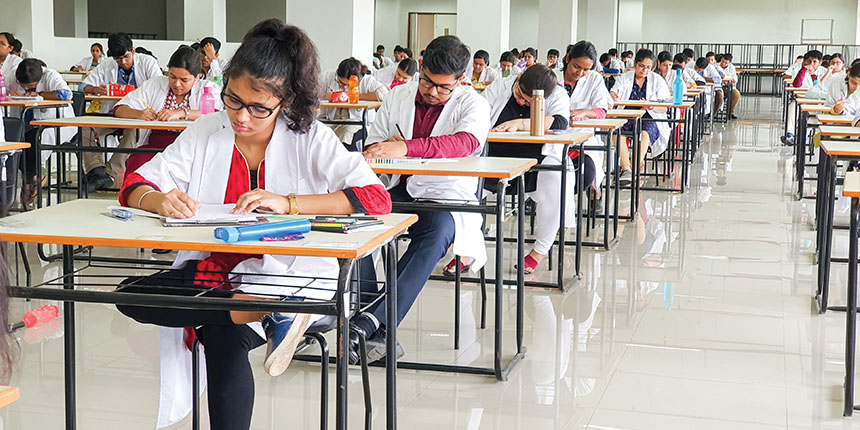
The day of your test arrives. Elsewhere in the country, 1.87 lakh people sit in identical rooms, watching the same clock.
Of the 1.87 lakh who took JEE Advanced 2025, 54,378 qualified, and 18,188 got an IIT seat. Run the funnel from JEE Mains – roughly 15 lakh candidates – to final admission, and fewer than 1 in 100 gets what was promised to all of them.
Here is the crime hiding in that arithmetic: a system that can seat only 1% and still calls itself a meritocracy has redefined merit to mean luck with good posture. When 180,000 exhausted seventeen-year-olds are separated by fractions of a percentile, the gap between the one who made it and the one who didn’t is not effort. It is rounding.
Illusionary Success
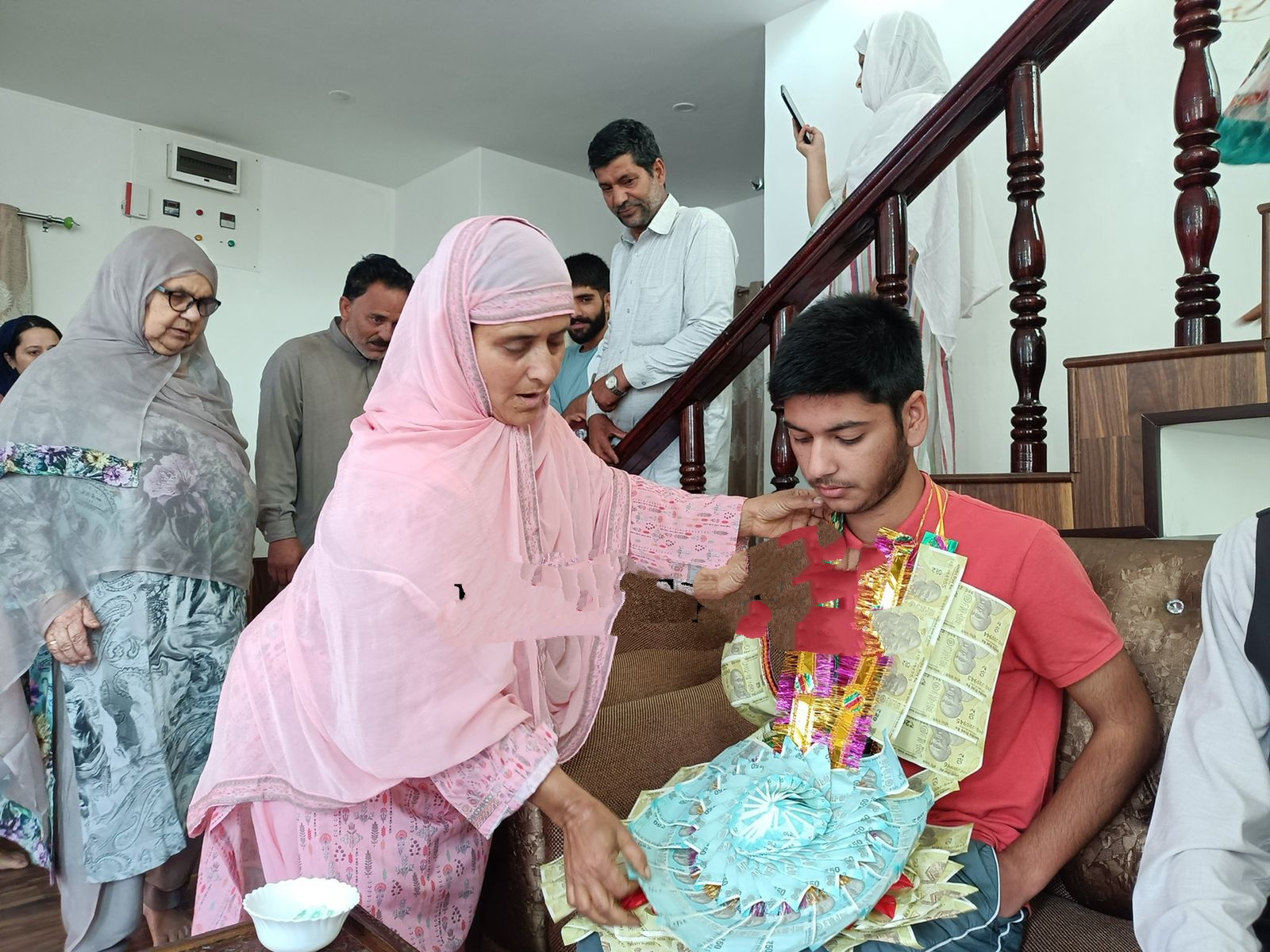
Suppose you succeed. Suppose your mother cries the good kind of tears for the first time in three years. You are supposed to be happy now. You are not.
Two in every five IIT graduates in 2024 went unplaced. Nationally, 83% of engineering graduates and 56% of all fresh graduates had no job offer in 2025; only 42.6% of Indian graduates are considered employable. Graduate unemployment stands at 11.2% – over three times the national rate. In one year, over 46,000 graduates and postgraduates in Haryana applied for sanitation jobs, and 12,000 professionals competed for 18 peon posts in Rajasthan.
Reread that slowly. A postgraduate – the supposed final winner of a twelve-year war – applies for a peon’s post. Not one such person. Twelve thousand of them, for eighteen chairs.
It was never where they said it would be. Not the seat, the degree, or the medal on your mother’s mantelpiece. The prize was never guaranteed – because it was always supposed to be waiting on the other side of the finish line, and there may be nothing there at all.
Flawed Architecture
The starved village school, the coaching company’s profitable fear, the exam that crowns only 1%, the degree that doesn’t convert into a livelihood – all of it shares one structural feature, and it is the one word this system has taught you never to say aloud: design.

The government benefits, because a citizen who blames only their own effort never asks why a nation of 1.4 billion still funds barely 18,000 IIT seats. The coaching industry benefits, because your fear is the product it sells you a cure for. And the culture benefits most cruelly of all, because a world that insists you just didn’t try hard enough never has to look at the system, or at itself, at all.
This was never a story about individual failure. It was always about a small number of exits being protected, and a very large number of children taught to feel that scarcity as a personal verdict instead of a policy choice. Once you see it clearly, you cannot unsee it. And you are not required to accept it quietly.
You are still fourteen, on another morning just like the first one. The tea is still hot. The fear is still real. But you know something now you didn’t know on page one: the machine was manufactured, not born. Anything people built, people can rebuild.
(Author is a twelfth class student. Ideas are personal.)