High-Altitude Unrest
Violence in Ladakh highlights unresolved local demands and the urgent need for inclusive negotiations
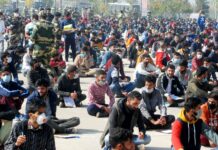
The unrest in Ladakh in late September 2025 underscores the delicate balance between governance, local aspirations, and strategic imperatives in one of India’s most isolated and ecologically challenging regions. What began as a 15-day hunger strike by climate activist and innovator Sonam Wangchuk unfortunately ended in violence, claiming four lives and injuring scores, revealing the high stakes of unmet expectations in a small, politically conscious population.
Ladakh’s significance extends far beyond its stark desert landscapes and high-altitude terrain. It is a frontline region bordering China, where tens of thousands of troops maintain a tenuous peace along the Line of Actual Control. While military negotiations and confidence-building measures have gradually reduced the risk of cross-border conflict, unrest at home demonstrates that strategic security cannot be divorced from the local political and social compact. The region has a long border, the LoC, with Pakistan.
The region’s demands are straightforward but consequential: statehood, inclusion under the Sixth Schedule, the establishment of a Public Service Commission, and parliamentary representation for both Leh and Kargil. These are not symbolic entreaties; they reflect practical realities of governing a dispersed, resource-scarce population that survives amid harsh winters, limited arable land, and extreme climatic conditions. The hunger strike and subsequent protests were a stark reminder that promises delayed or half-fulfilled carry a human cost.
Negotiation remains the most viable tool for sustainable governance in Ladakh. The Centre’s High-Powered Committee has already delivered tangible reforms, from increased reservations for Scheduled Tribes to language recognition and local employment initiatives. Yet, the pace of delivery and the perception of political obstruction fuel distrust. For small populations like Ladakh’s, where every measure of autonomy and representation directly impacts livelihoods, even minor delays or ambiguities in negotiation risk escalation.
History, from the 1989 LBA agitation to the grant of UT status in 2019, shows that Ladakh’s residents have long sought recognition of their unique social, cultural, and ecological context. Governing such regions demands patience, clarity, and flexibility—a willingness to accommodate local demands while balancing national imperatives. Violence in Leh is a tragic illustration that failure to negotiate inclusively, even in a strategically critical frontier, can unravel years of careful political and security planning.
Ultimately, Ladakh presents a lesson for policymakers: strategic regions are not just borderlines to be defended, but living communities whose grievances, if ignored, can become crises. Real security lies not only in military deployments but in consistent, empathetic negotiation that honours promises and empowers local populations to thrive amid adversity.
(The editorial appeared in the magazine that hit markets on September 26, 2025.)