SRINAGAR: A US airman shot down over Iran was rescued after more than a day behind enemy lines in what officials and media reports described as a complex and high-risk operation involving deception tactics, intense search efforts and a reported firefight, as the ongoing conflict entered a new and volatile phase.
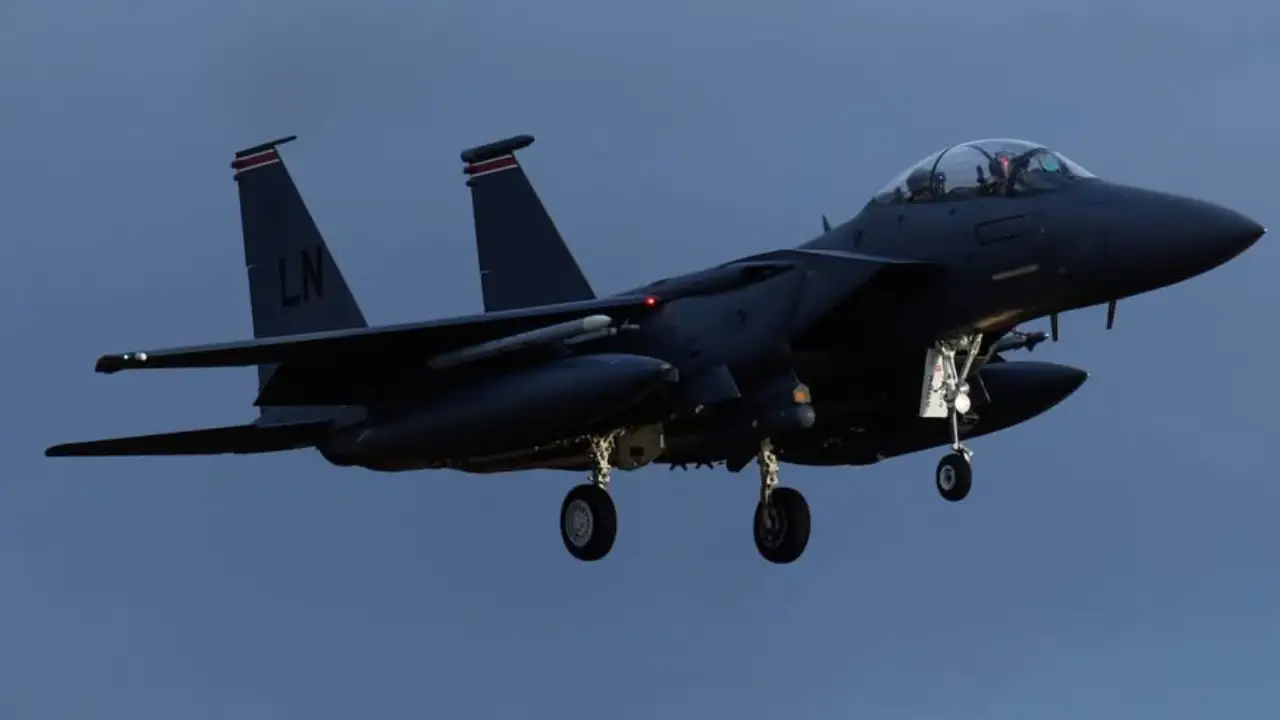
President Donald Trump announced early Sunday that the aviator, whose F-15E Strike Eagle was brought down on Friday, had been recovered “safe and sound,” saying the U.S. military deployed “dozens of aircraft” armed with heavy weaponry to extract him from mountainous terrain deep inside Iran. He described the officer as “seriously wounded” but said he was expected to recover.
According to the Associated Press, the rescue followed a frantic search in a remote region where the airman had been evading capture for nearly two days, while Iranian forces and even local civilians mobilised to locate him after Tehran publicly called for his capture. Iran had reportedly offered a financial reward for information leading to the airman, intensifying the urgency of the US effort.
Details emerging from US officials, cited by AP and other outlets, indicate that the Central Intelligence Agency mounted a deception campaign to mislead Iranian authorities, spreading false information that the missing serviceman had already been located and was being moved on the ground. The tactic, officials said, helped “confuse Iranian officials” and buy time for search-and-rescue teams to close in.
Additional reporting by Time Magazine provides a clearer picture of the airman’s survival. Citing US officials, the publication said the officer trekked up a rugged ridgeline rising to about 7,000 feet and concealed himself inside a narrow mountain crevice, using his Survival, Evasion, Resistance and Escape (SERE) training to avoid detection for over 24 hours. During that time, he activated an emergency beacon that allowed US forces to track his position even as Iranian units attempted to locate him.
The magazine further reported that the recovery effort involved hundreds of personnel, special operations forces and multiple aircraft, including MC-130J transport planes positioned for extraction. However, the mission encountered technical complications at a critical moment. US officials cited by Reuters said at least one aircraft malfunctioned, forcing American forces to destroy equipment on the ground to prevent it from being captured.
Accounts of the final moments of the rescue remain contested, but Al Jazeera reported that a “heavy firefight” broke out as US forces moved in to retrieve the airman. Its correspondent, John Hendren, said what had been planned as a rapid “get-in and get-out” mission became prolonged under enemy fire, extending into daylight and increasing the risk to personnel. “In the end, they managed to spirit that airman out of the country … but it didn’t come without injuries,” he reported.
Iranian state media, meanwhile, claimed its forces shot down multiple US aircraft during the operation, including helicopters and a transport plane, although US officials cited by Reuters said some of the losses were due to malfunctions rather than enemy fire. One newsgatherer said the US operations were based on Israeli inputs.
The incident itself marks a rare moment in modern US military operations. According to AP, the downing of the F-15E is the first confirmed instance in more than two decades of a US warplane being shot down by enemy fire, the last occurring during the 2003 Iraq War.
Iranian media also reported that another aircraft, an A-10 Thunderbolt II, went down during the same period, though Washington has not confirmed the cause.
The rescue of the downed US airman inside Iran involved an unusually complex combination of special operations forces, intelligence deception and improvised logistics deep in hostile territory, according to accounts reported by the New York Post, citing details from The New York Times and other outlets.
The report said elite US commandos, including SEAL Team 6, were deployed as part of a high-risk mission that unfolded over nearly two days, during which American and Iranian forces raced to locate the injured weapons systems officer after his F-15E Strike Eagle was shot down. The officer, described as “seriously injured,” reportedly evaded capture in the Zagros mountain range, climbing a 7,000-foot ridge and hiding for roughly 36 hours with only a handgun for defence while US surveillance and strike assets operated overhead.
According to the report, US forces used armed MQ-9 Reaper drones to create a protective perimeter, striking Iranian units that approached the airman’s position. A source cited in the account described a relentless pursuit on the ground, with American forces targeting those attempting to close in on the stranded officer.
In a parallel effort to disrupt Iranian search operations, the Central Intelligence Agency reportedly carried out a diversionary campaign, planting false intelligence that the airman had already been rescued and was being moved out of the country. The tactic, also cited in earlier reporting by US officials, was aimed at drawing attention away from the actual recovery effort.
The operation extended deep into Iranian territory, with US aircraft reportedly landing near Isfahan, a region known for critical military and nuclear infrastructure. A temporary forward airstrip was established to support the extraction, underscoring the scale and urgency of the mission. However, mechanical complications disrupted the plan, with at least two MC-130J transport aircraft becoming stranded at the site. The aircraft were subsequently destroyed by US forces to prevent them from being captured, the report said.
Additional aircraft and helicopters were deployed to stabilise the situation, while special operations helicopters provided close air support and force protection. Reports indicated that Iranian and local militia elements attempted to approach the area, triggering exchanges of fire as US forces secured the extraction zone.
The final phase of the mission was described as a large-scale daylight operation involving dozens of aircraft, after US intelligence narrowed the airman’s location to a specific mountain crevice using an emergency beacon. The officer was ultimately extracted and flown out of the country for medical treatment, reportedly to Kuwait, after a mission that lasted several hours once the recovery phase began.
Despite the scale and intensity of the operation, US officials cited in the report said there were no American fatalities among the rescue team, though equipment losses were significant, including destroyed aircraft and reportedly downed drones. The mission followed an earlier rescue of the second crew member shortly after the aircraft was hit, in a separate operation that also came under fire.
Military analysts say the episode underscores both the scale of the ongoing air war and the continuing threat posed by Iran’s air defence systems despite weeks of sustained strikes. Retired US Air Force Brigadier General Houston Cantwell told AP that the rarity of such incidents is notable given the intensity of operations, describing it as “an absolute miracle” that more aircraft have not been lost.
Historically, US aircraft losses linked to Iran have been infrequent but significant. During Operation Eagle Claw, a failed hostage rescue mission, mechanical failures led to a deadly mid-air collision, killing eight US servicemen. The current episode, however, reflects a confrontation with a state military capable of targeting advanced aircraft and contesting rescue operations.
Al Jazeera, citing regional analysts, said the capture of the pilot would have been a major strategic gain for Tehran. “It was a major test for the American military because they really don’t want to leave any of their servicemen behind enemy lines,” Amin Saikal of the Australian National University told the network.
Instead, the airman’s survival in a mountain crevice, his ability to evade capture using training and technology, and a rescue mission combining intelligence deception, air power and ground coordination have turned the episode into one of the most dramatic recovery operations of the conflict so far, even as the broader war continues to escalate.