UN News: A sharp escalation in Israeli military operations and settler violence across the occupied West Bank is forcing mass displacement, shutting schools and disrupting essential services for tens of thousands of Palestinians, the UN humanitarian coordination office, OCHA, said in its latest update issued on Friday.

According to OCHA, four Palestinians, including a child, were killed by Israeli forces between November 25 and December 1. Their deaths have pushed the number of Palestinians killed in the West Bank this year to 227, nearly half of them in the Jenin and Nablus governorates. Large-scale operations in Jenin and Tubas last week alone affected more than 95,000 residents.
OCHA reported that in Tubas, extensive raids, curfews, and bulldozing of roads and water networks caused significant destruction to homes and public infrastructure, cutting water to nearly 17,000 people and displacing many families. Settler violence has remained at persistently high levels. So far this year, the agency has documented 1,680 settler attacks across more than 270 Palestinian communities – an average of five incidents each day – coinciding with what it described as one of the most violent olive harvest seasons on record.
While the West Bank remains under the strain of increasing pressure from raids and settler activity, Gaza is confronting a different but equally severe humanitarian emergency as winter approaches. Airstrikes, shelling and daily controlled demolitions are still being reported near the “Yellow Line”, the deep military corridor where Israeli forces are deployed across more than half the Strip. Shifts in this line last week triggered displacement from eastern Gaza City, while winter rains compounded already bleak living conditions.
More than 774,000 displacement movements have taken place since the ceasefire came into effect in October. Over the past week alone, over 20,500 movements were recorded, driven by flooding, lack of shelter and continuing insecurity. Agencies warn that repeated displacement, overcrowded shelters and winter temperatures are increasing risks for children, older persons, people with disabilities and female-headed households.
Collapsed Healthcare System
The health system remains close to collapse. Although 42 facilities have reopened or partially resumed operations since the ceasefire, more than 60 per cent of Gaza’s health service points remain non-functional. The World Health Organisation estimates that more than 16,500 patients – including 4,000 children – require urgent medical evacuation because the specialised care they need is unavailable inside the Strip.
Childbirth in Gaza has become a daily struggle for survival, with at least fifteen women giving birth each week outside any health facility, often without a trained midwife, pain relief or the most basic medical supplies. Some women deliver entirely alone; others depend on neighbours with no medical experience. Before the fragile ceasefire began in October, the UN reproductive health agency, UNFPA, estimated that 55,000 pregnant women were trapped in what it described as a cycle of displacement, bombardment and acute hunger, with no reliable access to care.
The consequences have been grave. Premature births, miscarriages and stillbirths have risen sharply, driven by severe malnutrition, exhaustion and unrelenting fear. Around 130 babies are born each day in Gaza, more than a quarter by caesarean section, while one in five infants arrives too early or underweight. Many require specialised care that is now rarely available. UNFPA says it is supporting twenty-two health facilities, including five hospitals, and has deployed 175 midwives across the Strip in an effort to stabilise maternity services.

At Al-Shifa Hospital, once Gaza’s largest maternity centre and now largely in ruins, the agency’s representative, Nestor Owomuhangi, described its continued operation as “nothing short of extraordinary”. Midwives recount harrowing stories of delivering babies in besieged neighbourhoods with improvised tools. One midwife, Sahar, used a kitchen knife heated over a fire to cut an umbilical cord and wet wipes as bandages. On another occasion, drones circled overhead as she tried to reach a woman in labour; by the time she arrived, the baby had already been born, blue and struggling to breathe, with no incubator available.
Although UNFPA has helped ensure that most births still occur in some form of facility, Mr Owomuhangi warned that eighteen births each day take place far from hospital care, often with tragic outcomes. Sahar recalled a recent case in which a woman haemorrhaged after delivery. Without blood supplies, transport or a doctor, there was no way to stop the bleeding, and the mother died, leaving behind her newborn. UNFPA continues to deliver medicines, reproductive health supplies and dignity kits through Egypt whenever routes open, and provides cash assistance, hygiene items and a helpline for women and young people. Mr Owomuhangi said the agency will continue bringing supplies “until every birth in Gaza can happen safely.”
Food Security
Food insecurity is deepening. The UN Children’s Fund said that in October, two-thirds of children under five consumed only two or fewer food groups, placing the entire under-five population at risk of acute malnutrition. Even though food assistance has expanded, shortages of fuel, cooking gas and cash continue to limit access to varied diets.
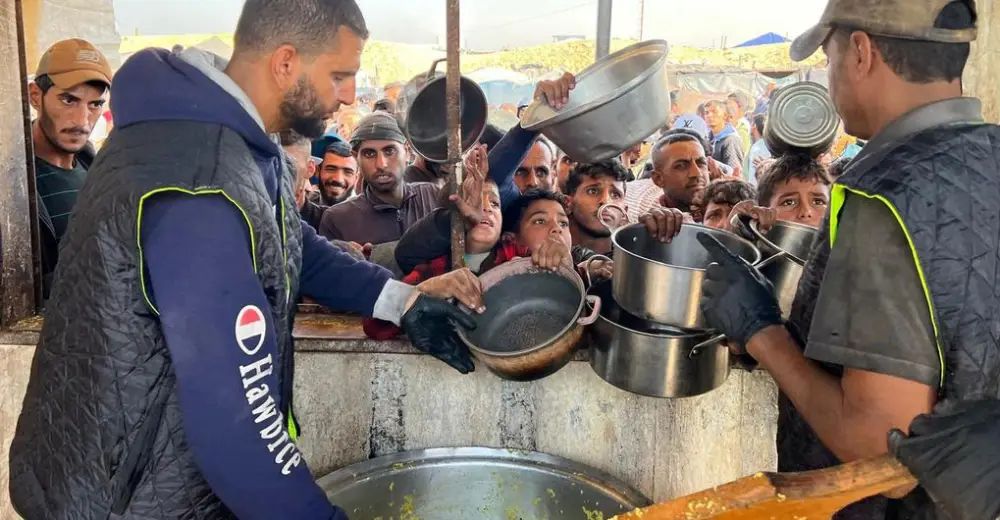
The physical destruction in Gaza remains immense. The UN estimates that more than 80 per cent of buildings have been damaged or destroyed. Clearing the debris could take at least seven years, even under stable access and adequate funding conditions.
Humanitarian financing remains severely insufficient. As of December 4, only 40 per cent of the required four billion dollars for the 2025 response plan for Gaza and the West Bank had been received. Despite the funding gaps, the UN continues to coordinate missions inside Gaza. On Wednesday, six out of seven planned missions were facilitated by Israeli authorities, allowing humanitarian teams to collect fuel, medical supplies, diapers, winter clothing and hygiene kits from the Kerem Shalom and Zikim crossings.
Repeated Displacements
Against this backdrop, families in Gaza continue to speak of the human cost of repeated displacement and the fragile calm that followed the October ceasefire. Many families remain without a roof over their heads, sleeping in the open through cold nights. Ahmad and Sabah, parents of seven children, described fleeing multiple times from neighbourhoods across the Strip. Their family has endured severe medical and personal losses, including the death of a child from hepatitis due to a lack of medicines.
The International Organisation for Migration said that more than 639,000 people have been recorded travelling north from southern Gaza since the ceasefire, with many pushing further into areas such as Jabalya and Beit Hanun. Many are still living in tented or collective sites, makeshift plots of open land or damaged buildings offering little protection. The IOM has delivered more than 660,000 hygiene and shelter items over the past two months and provided more than 11,000 tents, but agencies warn that the onset of winter makes the need for shelter and warm clothing urgent.
Last winter, more than a dozen people, including infants, died of hypothermia. Aid workers say similar deaths can be prevented this year if sufficient supplies reach communities ahead of worsening winter conditions.
As the humanitarian situation deteriorates, the UN human rights office has raised an alarm over mounting pressure on Palestinian civil society. The office condemned an Israeli raid on 1 December on the Union of Agricultural Work Committees, an organisation licensed under Palestinian law with decades of experience supporting farmers and rural communities. Israeli forces raided its offices in Ramallah and Hebron, vandalised property and detained staff, OHCHR said. People inside the buildings were reportedly blindfolded, handcuffed and forced to lie on the floor for several hours. Eight men were detained.
The organisation is one of six Palestinian NGOs labelled “terrorist” by Israeli authorities in 2021 under legislation the UN considers overly broad, lacking in evidentiary basis and prone to unjustly restricting civil society. The raid followed weeks of harassment and public incitement by settlers during what OHCHR described as the most violent olive harvest season on record. The rights office documented 167 settler attacks affecting 87 communities by mid-November.
The UN said the shrinking physical and civic space for Palestinians is accelerating as settlement expansion continues. Ajith Sunghay, head of OHCHR in the occupied territory, reiterated that international law remains unambiguous: Israel must end what the UN considers its unlawful presence in the occupied territory and remove settlers in line with the conclusions of the International Court of Justice. He added that as an occupying power, Israel is obligated to respect and protect Palestinian rights, including livelihoods and freedoms of expression and association.
As winter advances across the region, UN agencies warn that the convergence of escalating violence in the West Bank, widespread destruction in Gaza and severe funding shortages threatens to push already stretched Palestinian communities into a deeper humanitarian crisis.