Yashwant Sinha, the former Finance and Foreign Affairs Minister, is now a full-time Kashmir activist. Speaking to Kashmir Life for its personal history series Yadain, he reflected on his long association with the region and the concerns that continue to shape his engagement. Babra Wani distils the conversation
KASHMIR LIFE (KL): You have served as the Finance Minister in 1990, when Kashmir was going through one of its worst phases. How did you manage public spending in those difficult days?
YASHWANT SINHA (YS): Nothing much was happening here. It was a difficult time, a complete turmoil. It started when VP Singh was the Prime Minister. Central grants were flowing, but the situation was such that little could be utilised. And after the mass migration of Kashmiri Pandits, who became refugees in their own country, the burden on the Centre only grew. If the grants for Jammu and Kashmir had defaulted, the people would have been in trouble. So, we tried to accommodate the financial demands of the erstwhile state.
KL: You already shared a personal bond with Kashmir. How did that connection first emerge, and what shaped it in those early years?
YS: My association began when I was an IAS officer in the Industry Ministry. Handloom and handicrafts were under my charge. I remember Ashok Jaitley was the Director of Industries here. We used to stay at the government guest house by the Jhelum and discuss how to revive the crafts sector. Later, before I left the bureaucracy, my family and I used our last LTC (leave travel concession) to come here as tourists. We even trekked through snow without proper clothes. My wife was very worried, we stayed in a dak bungalow overnight, ate and enjoyed. That trip was my last as a civil servant.
Later, when I became the Finance Minister in 1991, I was dealing with Jammu and Kashmir. Even though I did not get a chance to visit this place because the country was navigating one of its toughest economic crises, Kashmir itself was going through a rough patch.
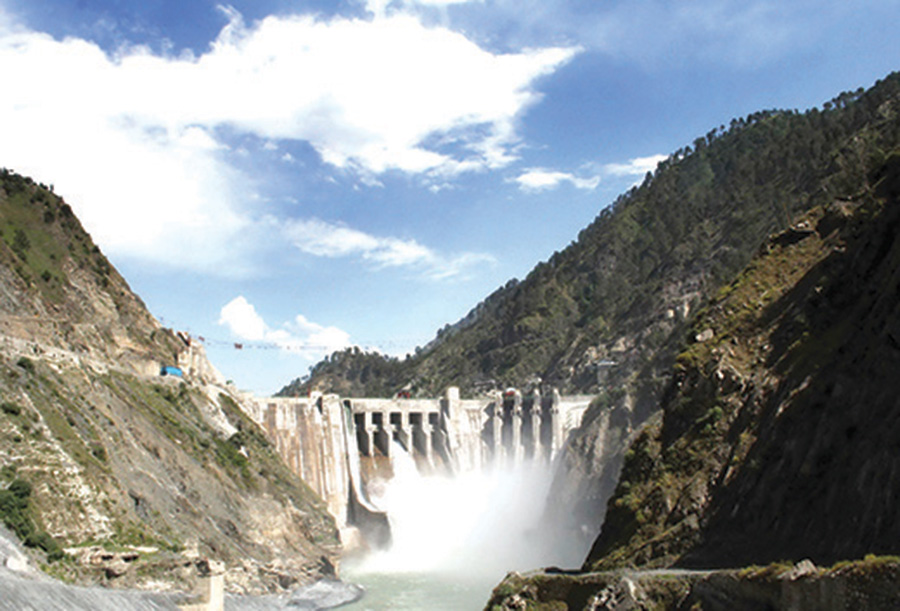
Then, in 1998, when I returned as Finance Minister again, Farooq Abdullah was the Chief Minister. That was when I finally visited Kashmir to attend a public function. I still recall the visit vividly: Farooq himself flew the helicopter, taking us through two mountain ranges and over a river valley, pointing out the site of the Baglihar dam. He was both pilot and guide that day, an experience I remember with great clarity.
Later, in 2002, when I moved to the External Affairs Ministry, Pakistan made repeated attempts to internationalise the Kashmir issue. We strongly countered these efforts. At almost every international conference, Pakistani leaders would raise the Kashmir issue, and we had to respond firmly and consistently.
After we left office in 2004, I continued to engage with the issue as a Member of Parliament, especially through Track II initiatives with Pakistan. Naturally, Kashmir remained central to those discussions as well. What struck me, however, was the deep deficit of understanding on the other side. Once I told my inerlocutors to write their issues and grievances with respect to India, and I will write mine. And we will try to bridge the gaps. They, however, showed little interest.
I recall meeting Prime Minister Nawaz Sharif as well. Even during these interactions, despite ongoing conversations and Track II efforts, there was little substantive progress. Naturally, the issue of Kashmir remained central and one of those historical disputes where both Pakistan and India have altered their positions.
KL: You handled the External Affairs Ministry during the Vajpayee era, considered the most happening phase for Kashmir and Indo-Pak relations. Can you tell us something about that era?
YS: As Finance Minister, I was a member of the Cabinet Committee on Security, which included the Prime Minister, Home Minister, External Affairs Minister, Defence Minister, and Finance Minister. When I later moved to the Ministry of External Affairs, I continued on the Committee and also became its spokesperson, regularly briefing the media after meetings.
I recall the period before the 2004 elections, when a SAARC Summit was held in Islamabad. Ahead of the conference, National Security Advisor Brajesh Mishra and I travelled to Islamabad first, as we were concerned that Pakistan’s leadership might raise the Kashmir issue in the multilateral forum, which could have caused embarrassment. We were reassured by the Pakistani side that they would not bring it up, after which we advised Vajpayee to attend.
Vajpayee was warmly received at the airport by Pakistan’s Prime Minister, Mir Zafarullah Khan Jamali, a gracious gesture that set a positive tone. The summit included both multilateral and bilateral meetings, including discussions at the level of President Musharraf. On January 6, 2004, a carefully drafted joint press statement was issued.
For the first time, Pakistan explicitly committed that it would not allow its territory, or areas under its control, to be used for violence against India. It was also agreed that both sides would resume the composite dialogue process.
Soon after, our government demitted office following the elections, and Dr Manmohan Singh’s government continued the dialogue, leading to the development of the “four-point formula.” However, history did not favour a resolution. President Musharraf’s abrupt departure from office halted progress, and the process was left incomplete.
KL: What was the four-point formula, and where did it come from?
YS: It was a peace framework discussed informally between India and Pakistan, aimed at making borders in Jammu and Kashmir “irrelevant.” It was reportedly negotiated by the Indian interlocutor and his Pakistani counterpart, with the approval of both governments. The exact details were never made public, but it was widely seen as a proposal for lasting peace. However, before it could materialise, political changes halted the process, leaving the formula unrealised.
KL: Vajpayee began with an open and positive approach, and Manmohan Singh initially tried to build on it. But during UPA-II, there was a clear rollback. How do you see that shift today?
YS: Vajpayee ji approached the issue along two distinct tracks. The first was the internal dimension, strengthening the relationship between the Government of India and the people of Jammu and Kashmir. The second track was engagement with Pakistan. He tried to push both forward simultaneously. His famous formula of Insaniyat, Jamhooriyat, Kashmiriyat struck a chord with people, and the work built around that vision continued to gain goodwill.
To the extent that it is one of those strange events of history, Vajpayee got a hardliner like LK Advani, the then Home Minister, to talk to the Hurriyat in Delhi. So, he was talking to the Hurriyat because he wanted to embrace all elements and see that genuine progress was made.
And even today, if I am involved in Jammu Kashmir, my guiding light is the Vajpayee formula, which unfortunately has been abandoned by the BJP itself. Because I am convinced that if we follow that formula, then we will be able to find a genuine resolution here.
On the Pakistan front, he was equally committed to normalising relations and building a durable peace. That was the spirit behind his historic bus journey to Lahore. The dialogue that followed eventually culminated in the January 6, 2004, joint statement.
But this progress unfolded against a backdrop of escalating tension. Terrorist attacks, including the one on the Indian Parliament, led both countries to mobilise their forces along the border and the Line of Control for ten tense months, and troops stood face-to-face. A single miscalculation could have triggered a catastrophe, but fortunately, that moment never came. Later, when I took over in the External Affairs Ministry, we gradually started withdrawing those forces. Vajpayee came to Srinagar and said, “I extend my hand of friendship to Pakistan.” We started taking unilateral measures to normalise relations with Pakistan. Later, Pakistan responded.
A great deal of progress was achieved during that period. A ceasefire was secured all the way up to Siachen. Cross-border transport links were revived in Rajasthan and Punjab. We even opened the Line of Control for movement, which is way ahead of Uri.
Even though progress was made, and everything seemed to be getting better. Unfortunately, we demitted office. When Manmohan Singh came, he continued on the same track. But then Musharraf lost office in Pakistan.
And there is a joke in the context of India-Pakistan. People say that the best chance of peace between India and Pakistan is when there is a BJP government in India and there is a military government in Pakistan. I do not know how far it is true. Because there is a BJP government today in Delhi, but it is of no use.
KL: Post-2018, you left the party, but you didn’t leave Kashmir. What held you back?
YS: In 2016, after Burhan Wani’s killing, a civil society group at the India International Centre invited me to join a delegation to Jammu and Kashmir led by me. When we arrived, we went straight from the airport to meet Syed Ali Geelani. The media followed us to his gate, and the footage of me walking towards his house led to me being portrayed as a “villain” across the country.
Despite that, the meeting was positive. We had a meaningful conversation, and although he wanted to discuss the history of Jammu and Kashmir, I reminded him that, as a former Finance Minister, I knew that history well. On the same trip, with schools shut due to the unrest, people urged us to intervene. We returned to Geelani and requested that he allow schools to reopen. Acting as intermediaries between him and the administration, we succeeded, which remains a moment of great satisfaction for me.
Since then, I have continued to visit and meet people in Kashmir, trying to keep my engagement alive even as I approach 90. On this visit, we met Omar Abdullah, but his authority is limited, with most power concentrated in the unelected Lt Governor. We did not attempt to meet the LG, knowing it would lead nowhere; real decisions still lie in Delhi. Ultimately, only public sentiment and pressure can bring change, because at present, no one in Delhi or elsewhere seems truly concerned.
KL: How did your engagement with Jammu and Kashmir evolve after 2019, especially following the state’s conversion into a Union Territory and the rollback of constitutional assurances like Article 370 and 35A?
YS: Yes, we continued our engagement. The injustice that was already happening with Jammu and Kashmir multiplied manifold when a full-fledged state was reduced to a UT. It was unprecedented. With the removal of Article 370 and 35A, many people told us they now feel a profound sense of loss, particularly a loss of identity, alongside other injustices.
Still, whenever we came, we spoke directly with the people. Their greatest relief, and ours, was simply that someone was willing to listen. I am not in government, so I cannot claim to go back and change policy, but I can listen, understand, and ensure that our report reflects the realities on the ground and what the future may realistically hold.
KL: How many people do you think are interested in Kashmir, or is it just you?
YS: No, there are a lot of people. You often hear about the “silent majority,” but that is not what I am referring to. What I see is a large number of activists across India who remain genuinely interested in Kashmir. They visit, hold seminars in Delhi and elsewhere, and keep the conversation alive.
I remember speaking at an event in Hyderabad after one of my visits. Justice Chelameswar of the Supreme Court had spoken just before me, and when he learnt that I would be speaking on Jammu and Kashmir, he stayed back to listen. That, in itself, showed the level of interest among serious thinkers.
There have been many occasions when we returned from Kashmir, met political leaders with our reports, and urged them to remain engaged. Several NGOs are also doing consistent work on this front. So, I do not believe there is any reason to feel despondent about public opinion in India. It may not always be as vocal as it ought to be, but the concern is very much present in the minds of thoughtful Indians.
KL: You have been deeply involved with Jammu and Kashmir and would have read the mood on the ground. People say the political class, directly or indirectly, supported what happened in August 2019. Is that a fair assessment?
YS: Not everyone was pleased with what happened. This Government in Delhi does not just rely on majority support; it often leans toward majoritarianism. And that is why the actions it took reflected a majoritarian impulse rather than a consensual one.
But laws are passed in Parliament on the basis of the majority. So, the law was passed despite opposition from the other parties. And that is unfortunate.
I have been a student of political science; to me, democracy has always meant neither majoritarianism nor majority, but consensus. There must be a consensus. We must proceed based on consensus.
I can give countless examples from my time in the Vajpayee government, when we could have pushed things through with a majority, but we chose not to, because we sought agreement with the opposition.
Today, that process has disappeared. There is no serious discussion. When was the last time the government convened even an all-party meeting on Jammu and Kashmir? Because the people sitting in the government probably think that if everything is fine here, then why go and dig up the graves? And it is possible that the majority of the people in this country also believe that everything is very good, hunky-dory here, which is so far away from reality.
KL: How do you see the future of Jammu Kashmir’s politics and its social fabric, once a thriving society and a vibrant polity?
YS: I remain optimistic. It was a major mistake to reduce the status of Jammu and Kashmir to that of a UT, and the Government of India will eventually have to reverse that decision. Once statehood is restored, and if the National Conference government, which has been elected here with a strong majority, takes full charge, they will once again become the real rulers of Jammu and Kashmir. The Governor’s role will return to that of a constitutional figurehead.
At that point, genuine progress on the ground, welfare measures, and development initiatives must be implemented seriously. The elected government should also raise, firmly.
KL: What is the source of your optimism?
YS: My optimism comes from a simple truth: if you continue to commit injustice, it can never become a permanent or sustainable state of affairs. You cannot keep doing one injustice after another. Jammu and Kashmir had its problems even before it was reduced to UT, but look at the situation today, people are openly demanding their statehood back.
But we must also be clear that merely restoring statehood will not resolve every issue. Statehood is only the beginning. The real solutions will start after statehood is restored. First, the people must get back what was taken from them. Only then can the deeper political, administrative, and social issues be addressed in a meaningful way.