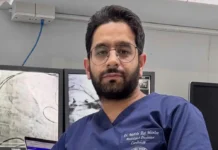
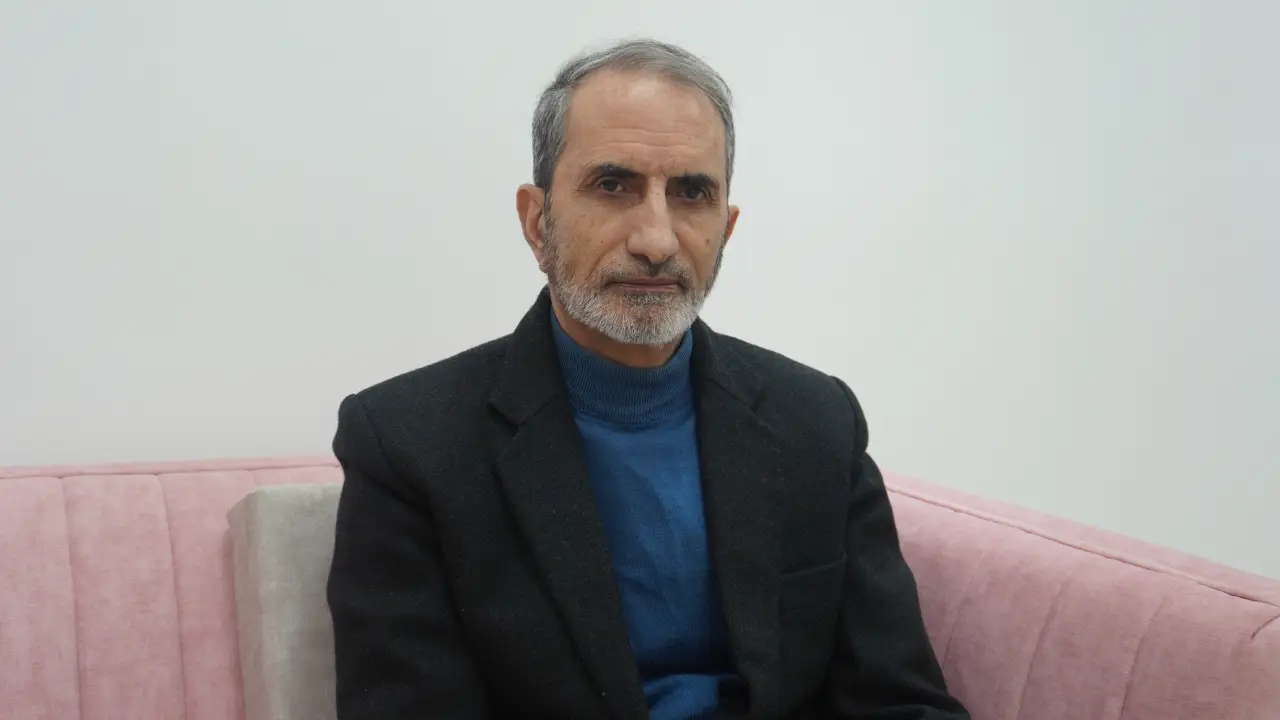
Kashmir carries a basketful of challenges that strain its very heart, observes noted cardiologist Dr Nisar Ahmad Tramboo in conversation with Syed Shadab Ali Gillani. Afreen Ashraf distils the discussion.
KASHMIR LIFE (KL): How fragile is the heart, and how difficult is it to treat it?
DR NISAR AHMAD TRAMBOO (NAT): Treating heart disease can be both difficult and easy at the same time. If we look at the situation worldwide, heart disease is increasing, especially among young people. This rise is mainly due to changes in lifestyle. Factors such as unhealthy diet, poor living habits, smoking, stress, and pollution all contribute to heart disease.
KL: Why are heart diseases in Kashmir increasing rapidly?
NAT: This problem is not confined to Kashmir. Across India, cases of heart disease have risen sharply over the past decade, driven largely by lifestyle choices, smoking, chronic stress, and physical inactivity. It is crucial to understand that cardiovascular risk does not increase linearly. When one or two risk factors are already present, adding another does not merely add to the danger; it multiplies it.
This makes prevention imperative. Smoking and unhealthy diets, particularly junk and oily foods, must be avoided. Instead, diets should emphasise dry fruits and leafy vegetables. In Kashmir, the traditional consumption of hakh is a healthy practice worth reviving. Alongside dietary changes, reducing salt intake, exercising regularly, limiting dependence on mechanised transport, and maintaining a healthy body weight are essential steps in lowering heart disease risk.
KL: In Kashmir, recent years have seen a disturbing rise in heart attacks among young people, even those who exercise regularly, go to the gym, and appear physically fit. Why is this happening?
NAT: Heart-disease risk factors must be addressed at every age. People should remain conscious of their body weight and overall health, with regular blood tests to monitor cholesterol and triglycerides. Diabetes and blood pressure must be closely tracked, and a family history of heart disease should never be ignored.
Sudden death is not always the result of a heart attack alone; dangerous heart rhythm disorders are a major cause. To reduce these risks, routine cholesterol checks and timely medical consultation are essential. Investigations such as echocardiography and coronary CT angiography can help detect underlying coronary artery disease.
Importantly, moderate arterial blockages of around 30–40 per cent can be more dangerous than severe ones. These plaques are rich in lipids and have thin caps, making them prone to rupture and trigger heart attacks. Such conditions should not be overlooked; early detection and treatment is critical.
KL: What is the main difference between a major and a minor heart attack?
NAT: In a major heart attack, a coronary artery is completely blocked, cutting off blood supply to the heart muscle and causing rapid tissue damage. In a minor heart attack, the blockage is slightly less, around 90–95 per cent, allowing limited blood flow and reducing the extent of damage. Major heart attacks are more severe and demand immediate medical intervention.
In an emergency, doctors begin with an ECG and basic blood tests, readily available across the Valley, to determine the severity of the attack. Treatment is initiated with blood-thinning medicines. If a cath lab is promptly accessible, angioplasty or primary angioplasty is performed to reopen the blocked artery. Where such facilities are unavailable, especially in peripheral areas, patients must be given blood thinners and clot-busting (thrombolytic) drugs immediately to restore blood flow, followed by urgent referral to a higher medical centre for definitive care.
KL: If a patient cannot reach the hospital on time, what measures should attendants take to avoid further complications?
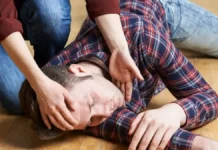
NAT: In cases of sudden cardiac death, CPR should be given immediately, but it should be performed by someone who is properly trained in CPR. Anyone who experiences chest pain, especially if they have risk factors for heart disease, should reach the hospital as soon as possible.
KL: Sometimes patients confuse stomach pain with heart pain. What should they do?
NAT: In some stomach conditions, the lower part of the food pipe gets irritated due to acid reflux. This can cause chest pain and a burning sensation, which may feel like heart pain. Second, in some cases, people mistake a heart attack for stomach pain. So, in both situations, consulting a doctor is very important.
Coronary artery disease is broadly of two types: stable and unstable. In stable disease, chest pain or breathlessness occurs during walking or physical exertion, signalling an underlying heart problem that requires cardiology consultation. In unstable disease, chest pain persists even at rest, without any physical activity. Both conditions are serious and demand immediate medical attention without delay.
KL: Heart disease becomes more common during winter. What is the link between cold weather and increased cardiac risk?
NAT: Heart disease severity increases during winter, with more hospitalisations even among patients with stable coronary artery disease. Cold temperatures play a key role. In winter, blood vessels constrict, raising blood pressure and increasing the risk of heart attack and stroke. By contrast, in summer, sweating leads to loss of water and sodium, often lowering blood pressure and reducing the need for medication.
KL: Are men more vulnerable to heart disease than women?
NAT: Women are relatively protected from heart disease until menopause due to protective hormones during their reproductive years, which lowers their risk compared to men. However, this protection is not absolute. Women with diabetes or those who smoke, including practices such as jajeer in Kashmir, remain at risk. After menopause, this hormonal protection declines, making women as vulnerable to heart disease as men.
KL: What are the medical conditions or factors that increase the chances of heart disease?
NAT: Apart from family history, heart disease can occur due to conditions like diabetes, high blood pressure, and high cholesterol. Besides, a sedentary lifestyle significantly increases the risk.
KL: Is stress a cause of heart attacks?
NAT: Extreme stress can trigger a heart attack, as sudden emotional shock may precipitate an acute cardiac event. Conversely, suffering a heart attack can itself become a major source of stress. Effective stress management is therefore essential. Patients may require psychiatric consultation or therapy, and doctors carefully review psychiatric medications, adjusting or discontinuing those that could adversely affect cardiac health.
KL: Fat and obesity are often discussed as factors in almost every disease.
NAT: Obesity has become an epidemic, often beginning early in life with the onset of insulin resistance. It causes widespread inflammation, affecting nearly every organ. Over time, obesity significantly increases the risk of major illnesses, including diabetes, cancer, dementia, and joint disorders, making it a leading driver of chronic disease.
KL: Are heart diseases hereditary?
NAT: Heart disease, especially heart attacks at a young age, can be hereditary. If one family member develops heart disease early in life, other members, such as siblings, should undergo screening. This includes basic blood tests, checking body weight, blood sugar levels, and cholesterol levels.
KL: What is the state of technology in Kashmir for the treatment of heart disease?
NAT: Fifteen years ago, most cardiac patients had to be referred to SKIMS or even outside the state. Today, cardiovascular care has advanced significantly. Private hospitals are equipped with modern technology, and the Government Medical College in Anantnag now has a cath lab, offering services such as angioplasty, stenting, and pacemaker implantation. In Srinagar as well, medical colleges and private hospitals provide high-quality cardiac care. The Golden Cardiac Scheme has further improved access, enabling patients who once could not afford treatment to receive timely and effective care.
KL: What do stents, pacemakers, and open-heart surgery simply mean?
NAT: A stent is used to treat blocked arteries. It is a small, mesh-like, drug-coated tube that opens the blockage without major surgery or general anaesthesia, allowing most patients to return to work within a week. Severe blockages may require bypass surgery, which involves opening the chest under anaesthesia and using a graft to reroute blood flow. Hospitalisation typically lasts about two weeks, followed by another two weeks for recovery.
Open-heart surgery is performed for conditions such as leaking heart valves or holes in the heart. It is more complex and requires a longer recovery period.
KL: What is the success rate of a pacemaker?
NAT In cases of severe heart block or rhythm disorders, a pacemaker may be required. Pacemakers are highly effective, though they involve specific risks and benefits. After implantation, patients must adopt long-term lifestyle changes, including quitting smoking, following a healthy diet, and taking prescribed medications lifelong. No special restrictions are needed in daily activities. Routine contact with electrical switches or household appliances is safe, and patients can lead a normal life, much as they did before pacemaker implantation.
KL: Does using a mobile phone cause any specific risk for heart disease?
NAT: Mobile phones don’t directly affect the heart, but excessive use can strain the mind. Too much screen time may increase stress, trigger depression, and disrupt brain hormones. Limiting screen time and spending more time reading books is beneficial.
KL: Heart conditions, like a congenital hole in the heart, can occur in newborns. Are we equipped to diagnose and treat such cases effectively?
NAT: Yes, we now have the necessary facilities. SKIMS Soura has been active in this field for 15 years, with contributions from SMHS, private hospitals like Nora, and GMC Anantnag showing good results. Advanced treatments once only available out of state are now accessible locally, almost free of cost.
KL: What are the causes of a heart hole?
NAT: Heart holes, or congenital defects, are present from birth and don’t always worsen with age. A small ventricular septal defect (VSD) may shrink or heal over time, while larger VSDs have lower recovery chances. Atrial septal defects (ASD), on the other hand, usually neither worsen nor close on their own.
KL: Do traditional foods like NunChai, Wazwan, and mustard oil increase heart attack risk?
NAT: Wazwan, rich in animal fats and deep-fried, is fine occasionally but should not be eaten frequently. Nun Chai is safe if consumed in moderation due to its salt content. Mustard oil is best used cold-pressed and unrefined; moderate use is acceptable, though some studies link it to heart risk.