Sheikhgund village in Kashmir’s down south transformed itself into a smoke-free community through collective action, local leadership and national recognition, showing how grassroots resolve can curb tobacco, drug abuse and eventually cancer, reports Saqlain Ashraf and Muazam Mohi Ud Din
Kashmir is one of the cancer hotspots, and one of the reasons for smoking. The government taxes it heavily, makes good money, and runs a parallel de-addiction campaign. There have been endless official campaigns against the crisis, but to no avail.
In the crisis of rising tobacco usage across Jammu and Kashmir, one small village in south Kashmir has chosen to walk against the tide, and, remarkably, has succeeded.
Sheikhgund is a quiet village of just over 200 households, home to nearly 1,000 residents, located about 21 kilometres from Anantnag town, in the shadow of the Mughal-era Achabal Garden. Until recently, it was grappling with the same problems confronting many rural communities in Kashmir: increasing tobacco use, early signs of drug abuse among youth, and a growing sense of social unease.
Now, Sheikhgund tells a different story, one shaped by collective resolve, community leadership, and an audacious decision to become smoke-free.
A Pledge
The turning point came in November 2024. On an autumn day, villagers gathered inside their local mosque, not for a sermon, but for a conversation that would redefine their future. After hours of discussion, they took a collective pledge: tobacco would no longer be sold in Sheikhgund, and smokers would be encouraged and supported to quit.
It was not a symbolic gesture. It was a binding social contract.
The meeting ended with a unanimous decision to ban the sale of cigarettes and all tobacco products within the village and to personally engage with those struggling with addiction. What followed was a grassroots movement that relied not on force or fines, but persuasion, peer pressure, and moral responsibility.
In Spotlight
Sheikhgund’s quiet revolution might have remained a local story had it not caught national attention.
In the 130th episode of Mann Ki Baat, Prime Minister Narendra Modi mentioned the village by name, describing its effort to confront rising tobacco, cigarette, and drug-related problems.
“I learned about Sheikhgund village of Anantnag, where tobacco, cigarette and drug-related problems were increasing rapidly,” the Prime Minister said. “Taking note of all this, Mir Jaffar became deeply concerned and took the initiative to eradicate the problem. He united both the youth and elders of the village to stand against this menace.”
The Prime Minister noted that the initiative had led local shopkeepers to stop selling tobacco products and described it as an example of how community-driven efforts can raise awareness about smoking and drug abuse.
For Sheikhgund’s residents, the mention was transformative.
“The Prime Minister naming our village gave us pride,” a villager said. “It felt like our small effort was being seen at the national level.”
The recognition strengthened their resolve, encouraging residents to deepen their commitment to social reform. On social media, users praised Sheikhgund’s collective stand, calling it a rare and commendable example of grassroots change.
The Man
At the centre of this initiative is Mir Jaffar, a 31-year-old private school teacher and social activist. Soft-spoken but determined, Jaffar said the campaign was born out of fear, fear for the future of the village’s children.
“When we first began talking about this, things were already going downhill,” he said. “Tobacco use was increasing, and drugs were slowly entering the community.”
Before acting, Jaffar approached the Uttarsoo police station, urging officials to conduct awareness programmes. The station house officer confirmed that drug peddlers were active in the area and that police were tracking supply networks.
“That conversation made us realise we could not wait,” Jaffar said.
The village decided to start with smoking, which Jaffar describes as a gateway to addiction.
“We believed that if young smokers quit, they would be less likely to fall into drug abuse,” he said. “And if someone came here looking for drugs and could not even find cigarettes, they would think twice.”
The Initial Resistance
Change did not come easily. Smoking has been part of the routine for ages. Till 1947, one of the major exports from Kashmir was opium, though there were not many opium eaters. Kashmir had the tradition of Charas-e-Takiya, socially recognised spots where a few people would smoke cannabis.
Long-time smokers resisted the effort, dismissing health warnings with bravado. Some argued that decades of smoking had not harmed them. Others opposed the campaign for personal reasons. Fortunately, the village had never witnessed a case of cancer in the last many decades. They were talking about a tumour case that had nothing to do with cancer.
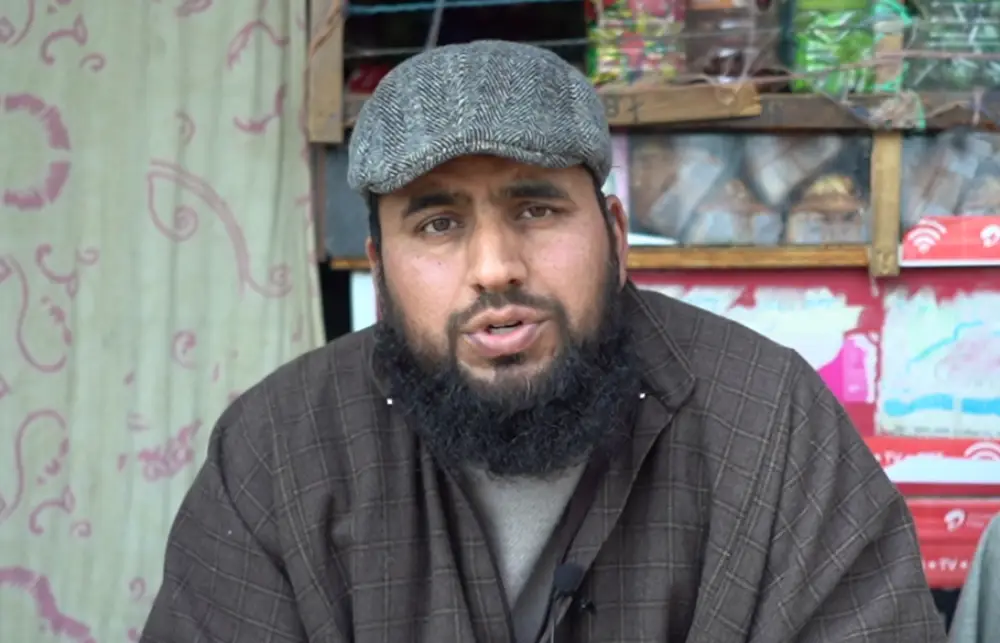
“There were people who said, ‘We have been smoking for 20 or 30 years. Nothing happened to us. What will happen now?” Jaffar recalled. “And there were also people who opposed me because of old grudges.”
Volunteers began visiting homes, counselling smokers and those suspected of drug use. But opposition soon intensified. Some volunteers withdrew after facing criticism and intimidation.
“That was the first time I felt this initiative might stop,” Jaffar said. “But I had initiated the idea, and I had no second option. I continued pursuing people to quit the mess.”
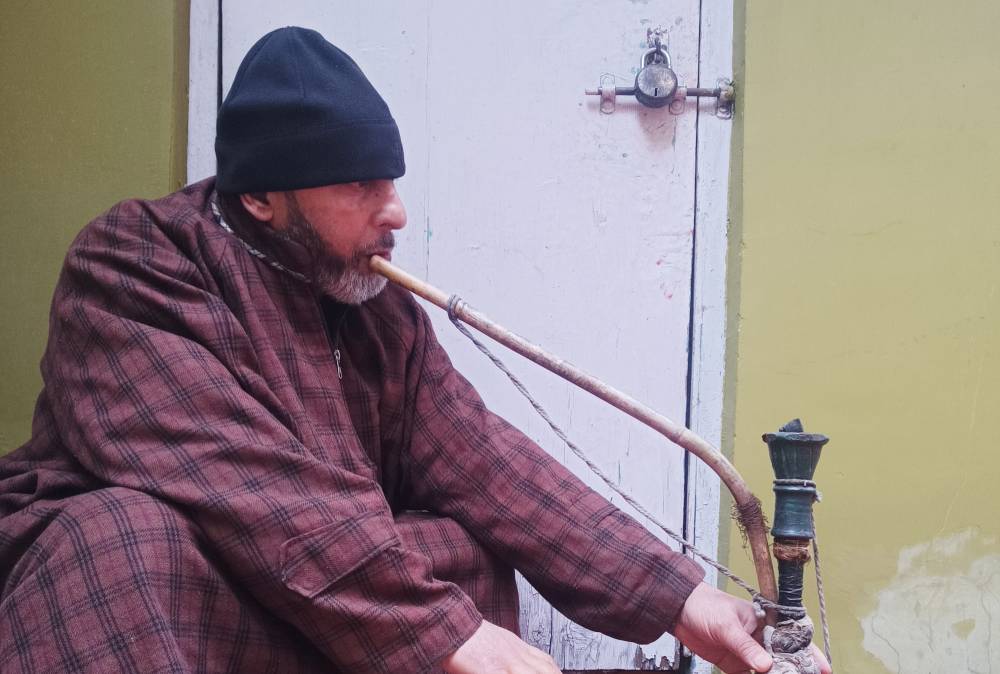
Even today, Sheikhgund is not entirely tobacco-free. A small number of residents continue to smoke, and opposition has not vanished. “But we will work on them as well,” Jaffar admitted quietly. The village shops do not sell tobacco products, and most of the households have either hidden or broken the jajeer, the traditional Kashmiri hookah.
The Change
The Prime Minister’s Mann Ki Baat mention proved to be a decisive moment.
“One of my relatives who used to say this was a waste of time called me after the speech,” Jaffar said. “He said it would be a shame for him to continue smoking now.”
Another smoker quit shortly afterwards. According to Jaffar, more than 70 per cent of smokers in Sheikhgund have given up tobacco since the initiative began.
The village is now seeking official recognition as a tobacco-free village, hoping that formal status will help complete what community action has started.
The impact of the campaign is evident in individual stories.
A 25-year-old former smoker, who requested anonymity, said he had smoked for nearly eight years before quitting after repeated counselling.
“He made me realise that smoking was not just my habit, it affected my family,” he said. “Eventually, I felt convinced and quit.”
Quitting required discipline, he said, but spending more time with his family helped.
“Earlier, I used to spend more than Rs 100 a day on cigarettes,” he said. “Now that time and money go to my family.” He is desperate to put his message to others: “Smoking wastes both time and health. Quitting is possible.”
Even senior citizens responded.
“There were people who had smoked for 40 to 45 years, and thankfully, they also quit,” Jaffar said.
Abdul Aziz Bhat, an 80-year-old former smoker, said he consumed nearly 250 grams of tobacco daily for four decades before quitting a year ago. “Thanks to the guidance of these young people, I quit,” he said.
Retail Help
Equally crucial was the role of local retailers and shopkeepers.
Acting collectively, they removed cigarettes and tobacco products from their shelves, despite the fall in their sales and margins.
“I have not sold any tobacco-related items for the past year,” said Tariq Ahmad Mir, a 30-year-old shopkeeper. “People from nearby villages now know these products are not available here.”
He acknowledged the loss of income but said the trade-off was worth it.
“There is a loss, but there is also profit, the profit of protecting hundreds of people’s health. That matters more.”
A Region at Risk
Sheikhgund’s success stands in stark contrast to the broader public health crisis in Jammu and Kashmir. According to GATS-2, 35.2 per cent of men and 5.1 per cent of women in the region smoke tobacco, putting overall adult smoking prevalence at 20.8 per cent.
The government told the Rajya Sabha in December 2025 that 23.7 per cent of adults aged 15 years and above in Jammu and Kashmir consume tobacco in some form. This is significantly below the national average of 28.6 per cent recorded in the Global Adult Tobacco Survey-2 conducted in 2016–17.
The costs, however, are huge. “We collect a GST of Rs 15.91 crore on cigarettes alone every month,” one official privy to the trade revealed. “It means, Jammu and Kashmir is spending Rs 872.78 crore on cigarettes, of which the state collects a 28 per cent tax to the tune of Rs 190.92 crore, a year.”
The officer pointed out that there are other tobacco products which require to be tackled separately.
The tax regime is changing. From February 1, 2026, India has overhauled the indirect tax regime on tobacco products: the earlier 28 per cent GST slab and compensation cess on cigarettes, pan masala, gutkha and tobacco have been replaced with a restructured tax framework. Under the new system, these products generally falling under the ‘sin’ category attract 40 per cent GST (with bidis at 18 per cent), and the GST compensation cess has been discontinued.
Besides, the government has reintroduced central excise duty on tobacco products and a Health and National Security Cess on pan masala, both levied over and above the GST rate, and valuation for many items is now based on the retail sale price (RSP). These changes aim to maintain a high overall tax burden on tobacco while plugging revenue leakage and tightening regulatory compliance.
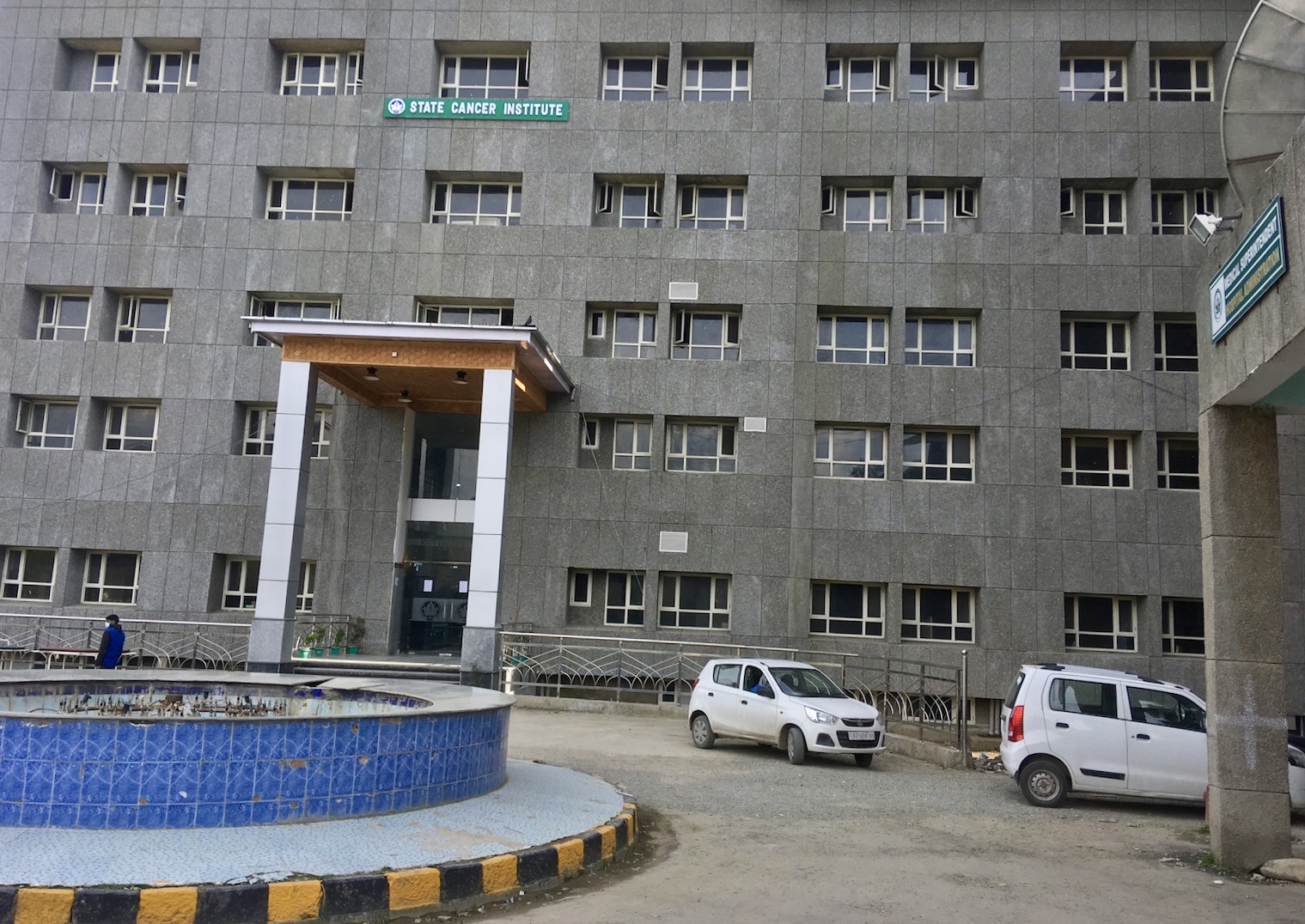
In Kashmir, as in the rest of the country, smoking is linked primarily to smoking. Cancer cases continue to rise. In 2024 alone, 14,112 new cancer cases were reported in Jammu and Kashmir, an average annual increase of nearly 3 per cent. About 38 new cases are diagnosed daily, with lung, breast, esophageal and stomach cancers most common. Over the past five years, more than 67,000 cases have been recorded.
Lung cancer is the second most common cancer among males, accounting for 16 per cent of all cases, officials said. An estimate suggests that there are more than 50000 cases of lung cancer in Jammu and Kashmir.
A Call for Accountability
Jaffar believes community action must be matched by institutional seriousness.
“When a policeman smokes in a public place, how can he tell others not to?” he asked. “Hospitals display ‘No Smoking’ signs, yet even health workers smoke there.”
The activist insisted that the Cigarettes and Other Tobacco Products Act, 2003 (COTPA) must be enforced rigorously across Kashmir.
Choosing the Future
The defining moment for Sheikhgund came when a young boy fell into drug abuse, an incident that devastated the village.
“That was when we thought: either we act now, or we lose future generations,” Jaffar said.
Smoking, he acknowledges, is hard to quit. Many young men in and around Sheikhgund smoked for 10 to 20 years before giving it up.
“They used to say their lives felt incomplete without cigarettes,” he said. “But they still managed to quit.”
In Sheikhgund, the victory is not total, but it is real. A village has shown that when social conscience outweighs convenience, and when community stands firmer than addiction, change is not only possible, it is contagious. Long live Sheikhgund.