Neeraj Misra, Deputy Director General (Northern Region) of the Bureau of Indian Standards (BIS), explains how the national standards body is shaping consumer safety, strengthening industry quality, and expanding its presence in Jammu and Kashmir. Participating in KL’s Consumer Rights with BIS series, the expert conversation was rendered in text by Babra Wani
KASHMIR LIFE (KL): Does the Bureau of Indian Standards have any idea about the gold requirement in Jammu and Kashmir?
NEERAJ MISRA (NM): The Bureau of Indian Standards is not responsible for collecting or analysing data on gold consumption. Its mandate, as defined by the government, is to ensure that gold sold to consumers meets the declared purity and caratage. Our role begins at hallmarking and the point of sale, where we verify purity and safeguard consumer interests.
KL: BIS does not handle consumption data, but based on your market experience, how do you view Jammu and Kashmir’s gold market?
NM: Based on my experience, I can say that after Amritsar, Srinagar ranks next in North India in terms of gold consumption. I oversee Jammu and Kashmir, Leh-Ladakh, and six districts of Punjab, and our observations show that Srinagar functions as the main hub for gold consumption and jewellery manufacturing in the region.
In Jammu and Kashmir, gold consumption is primarily concentrated in Srinagar. Although I cannot give an exact figure, the scale of activity is substantial. Srinagar is the only city in the Valley with three BIS-recognised assaying and hallmarking centres. It also has between 250 and 280 registered jewellers dealing in gold. There are even more engaged in the silver trade, although that market is smaller in volume.
For a city of Srinagar’s size, this number of registered jewellers is impressive. Excluding the large manufacturing hubs such as Rajkot in Gujarat, Maharashtra, or Kolkata, Srinagar qualifies as a significant regional centre for the manufacture and trade of gold jewellery.
KL: Jammu and Kashmir’s gold markets differ in nature and preferences. What succeeds in one region may not in another. How do you view these distinctions?
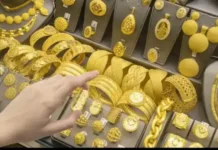
NM: In Kashmir, especially in Srinagar, there is a strong demand for studded jewellery, such as Polki. Our assessment also shows significant consumption of gold coins in Srinagar. In contrast, in Jammu, the demand for studded jewellery or gold coins is minimal. Even in parts of Punjab, this trend is not observed. The preferences are clearly distinct.
For BIS, this poses a particular challenge: how to check the purity of studded jewellery and ensure that customers receive fair value. When stones are embedded, the weight of the gold can vary, making it more difficult to verify purity. In such cases, consumers depend largely on the integrity of their jeweller.
KL: Kashmir’s gold market is evolving with the entry of national and multinational brands. How has their presence impacted the local trade?
NM: The entry of national brands has transformed markets not only in Srinagar but also in smaller districts. Their strong reputations and consumer trust, especially among Kashmiris familiar with these brands from outside the region, have influenced local preferences. As a result, consumer behaviour, design choices, and purity perceptions have evolved. These companies’ advanced technology and resources ensure precision and reliability. At BIS, we hold awareness programmes to help small and medium jewellers adopt new standards and technologies. Still, the presence of large jewellery houses has significantly reshaped Srinagar’s market, with today’s designs differing markedly from those of a decade ago.
KL: Some gold is crafted into jewellery reflecting local designs. Are these designs created by local artisans or sourced from outside and showcased here?
NM: While we lack exact figures, our inspections show that designs in Srinagar and nearby districts are largely local. The jewellery reflects a distinct Kashmiri character rarely seen in Jammu. In contrast, national and multinational brands offer uniform designs across India. Kashmiri jewellery stands out because it springs from local culture—its forms mirror local imagination, tastes, and emotions, giving it a unique identity.
KL: Are the artisans local artisans or non-natives?
NM: Our findings show that many artisans working in Kashmir today come from Maharashtra and West Bengal, as many local craftsmen have shifted professions or migrated. In Srinagar, local goldsmiths are now roughly equal in number to, or fewer than, those from outside the region. Artisans from Bengal and Maharashtra bring deep traditions and fine skills in refining and intricate carving. This trend is not unique to Kashmir but reflects a wider pattern across India.
KL: Does the silver trade show a similar trend?
NM: Silver follows a different pattern. Artisans from Maharashtra mostly focus on gold refining, while those from Bengal specialise in ornamental carving. Silver craftsmanship, however, remains largely local. In Srinagar, many traditional silver ornaments worn by women are unique to Kashmir and made mainly by local artisans, with only a few Bengali craftsmen learning the craft. In contrast, the gold sector has seen a major influx of skilled workers from other states. Yet in both gold and silver, a clear trend has emerged—more people now buy hallmarked and insured gold, reflecting rising consumer awareness and trust in certified purity.
KL: In Kashmir, weddings are inseparable from gold—every celebration, big or small, includes it in some form. Given this, could you explain what caratage truly means and how it differs between the gold people wear and the gold they keep as an asset?
NM: Caratage indicates gold’s purity. Measured on a scale of 1,000 parts, 22-carat gold equals 916 parts per thousand, or 91.6 per cent pure, while 18-carat equals 750 parts, or 75 per cent purity. Jewellery is made in various caratages—9, 14, 18, 20, 22, 23, and 24. In Kashmir, 18-carat gold is most common, whereas 22-carat dominates elsewhere in India. Gold bought as an asset, such as coins or bars, is refined to 99.99 per cent purity by authorised refineries and preferred for investment or liquidity, while jewellery represents cultural and personal wealth.
KL: In Kashmir, most jewellery is 18-carat, but with gold prices now around Rs 1,20,000 per tola, many jewellers say customers can no longer afford higher purity. Has this price surge caused a drop in the caratage of jewellery being sold?
NM: That is correct. Recently, BIS amended its standards to permit hallmarking of 9-carat gold. Earlier, only jewellery of 14 carats and above could be hallmarked, but with prices crossing Rs 1,20,000 per tola, jewellers’ associations from Maharashtra, Gujarat, and other states sought relief, saying demand had dropped sharply. The revision aims to make jewellery more affordable while maintaining certified purity. At today’s rates, 9-carat gold costs roughly Rs 40,000 to Rs 45,000 per tola, based on its gold content. The move reflects a shift towards lower-carat jewellery driven by affordability. Much of the trade now revolves around reprocessing or reselling old gold, a trend seen across India, including Srinagar and Jammu and Kashmir.
KL: BIS has become more active and visible in recent times. Is this increased presence limited to Srinagar, or does it now cover other districts of Jammu and Kashmir as well?
NM: Our regional office is based in Jammu, but gold testing—or assaying—is carried out through BIS-recognised hallmarking centres across several districts. When a jeweller in Srinagar, for example, wants jewellery hallmarked, they submit an online request at a recognised centre, detailing caratage, weight, and ornament type. The process, taking five to six hours, involves melting, XRF testing, fire assaying, and annealing. Once cleared, the jewellery is stamped with a Hallmark Unique Identification (HUID) number.
BIS currently operates six hallmarking centres in Jammu, two in Udhampur, one each in Kathua and Samba, and three in Srinagar. We also hold awareness sessions for jewellers and consumers and conduct regular inspections to ensure compliance.
Nationwide, hallmarking is mandatory in 361 districts where at least one BIS-recognised centre exists. Wherever such a centre operates, non-hallmarked jewellery cannot be sold. Exemptions apply to traditional forms such as Polki and studded jewellery, pieces under two grams, and small jewellers with annual turnovers below Rs 40 lakh.
In Srinagar, consumer awareness has grown significantly. Even small jewellers are voluntarily hallmarking their products. Around 95 per cent of gold jewellery sold in Srinagar today is hallmarked, except lightweight and traditional designs exempted under BIS rules.
KL: If Srinagar’s Sarafa Bazaar jewellers are well linked with BIS systems, why there are disputes with authorities still occur?
NM: Whenever BIS detects irregularities—such as fake HUIDs, unhallmarked ornaments, or gold of lower purity—it takes legal action as per regulations. In Srinagar, compliance has improved sharply: failure rates in purity tests have dropped from about 25–30 per cent in 2023 to around 5 per cent today. Between 2023 and 2025, BIS conducted four search-and-seizure operations and several random checks across the city. Some cases are in court, while others were resolved through reapplication or verification. Though a few dishonest traders remain, most comply with standards. Awareness, however, is still low in parts of Downtown Srinagar, where unhallmarked jewellery is occasionally sold. BIS has stepped up sampling there to ensure a transparent and trustworthy trade environment.
KL: Gold sales are higher in Kashmir, yet there are only three hallmarking centres in Srinagar, which do not represent the entire region. Why is that?
NM: BIS does not directly set up hallmarking centres; individuals or associations establish them, and once they meet technical standards, BIS grants recognition. We provide guidance and technical support, but local initiative is key. Jammu has six centres due to stronger local participation, while Srinagar has three, the newest opened last year. Interest is now growing in Sopore, Baramulla, and nearby districts. BIS aims to expand hallmarking access to smaller towns and villages so that even remote communities can buy certified, authentic gold.
KL: Gold is soft and requires alloying with metals like copper, silver, or zinc to gain strength and durability. Could you explain this process and how it relates to the growing popularity of diamond and platinum jewellery?
NM: All studded jewellery is tested for purity under BIS standards, but two main challenges remain. Once crafted, it is hard to separate the weight of pure gold from that of the stones, and accurate testing often requires minor scraping, which can damage the piece. Larger ornaments allow limited sampling, but smaller items like rings make this difficult. Most studded jewellery, whether 18 or 22 carat, is hallmarked. BIS assesses purity through sampling or scrapping—at the manufacturing stage for large jewellers and directly for smaller ones. Despite advances, testing studded jewellery remains a complex technical task.
KL: What is the consumption level of platinum jewellery in Jammu and Kashmir?
NM: Platinum jewellery has minimal presence in Jammu and Kashmir, accounting for less than one or two per cent of the market. Only a few exclusive stores stock it, while demand overwhelmingly favours diamond-studded gold, especially for weddings. From the BIS perspective, hallmarking currently covers only gold and silver, not platinum. The metal is still under study, and discussions are underway to consider extending mandatory hallmarking to silver jewellery as well.
KL: With gold prices climbing steadily, do you think silver or other metals could eventually replace gold in Indian weddings or investments?
NM: Gold is inseparable from Indian sentiment and tradition. Despite rising prices, people prefer lighter or lower-carat jewellery rather than switching to silver or other metals. Jewellers now offer 14- and 9-carat options to keep gold affordable, but buyers still choose gold for its emotional, cultural, and aesthetic value. Its place in weddings and investments remains unmatched.

KL: As an expert, what guidance would you offer ordinary consumers on buying gold jewellery safely and making informed choices?
NM: Every buyer should take three simple steps. First, purchase only from BIS-registered jewellers who display the BIS logo and registration certificate. Second, check the Hallmark Unique Identification (HUID) number on each piece—every item, even a pair of earrings, has its own code. Verify it through the BIS Care mobile app, which shows the caratage, type of ornament, and hallmarking centre. Third, always ask for a GST bill. It ensures legal protection—if purity falls short, BIS can secure double compensation for the difference. Follow these three steps—buy from a BIS-registered shop, verify the HUID, and get a GST bill—to ensure your jewellery is authentic and protected.