While installing a rooftop solar power plant, what are the issues one must look at, Syed Musaib explains to Lilac Ali
KASHMIR LIFE (KL): Despite massive solar spending, 75MW installations and 27,000 solarised homes, Kashmir remains power-starved, raising the question: why has solar adoption stayed so limited?
SYED MUSAIB (SM): The hesitation is understandable. Kashmir’s long winters, uncertainty about returns, and limited familiarity with solar technology have made many households cautious. Yet the trajectory is unmistakable: solar is the future. Electricity in Jammu and Kashmir still costs relatively little, around Rs 4 to Rs 4.25 per unit, which has softened the urgency to shift. But that equation may not hold for long.
The government has already considered premium tariffs for peak evening consumption; though currently deferred, such charges could rapidly make rooftop solar financially attractive.
At the same time, subsidies are unusually generous. Under the PM Suryaghar Yojana, the aim is to solarise one crore homes by 2027, and in J&K subsidies cover nearly 65 percent of the cost of a 3kW system, reducing the expense to about Rs 1.6 lakh, significantly lower than in many other states where similar installations often exceed Rs 2 lakh. Kashmir also enjoys a structural advantage: most homes already have usable rooftops, unlike many plains regions where additional mounting structures add substantially to the cost.
KL: Still the numbers remain so low.
SM: Quality is the core issue. Many solar systems fail to deliver the output promised, and those experiences quickly shape public perception. A solar plant is only as strong as its weakest component: panels may come from one manufacturer, inverters from another, while the Balance of System (BOS) includes wiring, mounting structures, converters and protection equipment. If any part is substandard, overall performance suffers. A properly designed and professionally installed system using reliable components should function efficiently for 25 to 30 years. But hardware alone is not enough. After-sales service, maintenance and technical support are equally critical, and this is where many vendors have failed. Much of the distrust surrounding solar in Kashmir stems not from the technology itself, but from poor quality installations and weak service support.
KL: So what should a homeowner actually know before installing a solar system?
SM: Everything. You need to ask questions before you sign anything. Start with the panel grade: panels are classified as Grade A, B, or C, though in practice, there is no way for a consumer to verify what they are actually receiving. It comes down to trust, and trust has to be earned. Check the vendor’s track record. Ask for references and actually call them: see whether they answer and whether their experience matches what you were promised. Look at the company’s credentials and their after-sales commitments. Quality differences between systems are significant, in efficiency, in lifespan, in how they perform over a Kashmir winter.
KL: Walk us through the different types of solar systems: on-grid, off-grid, and hybrid. Which makes sense for Kashmir?
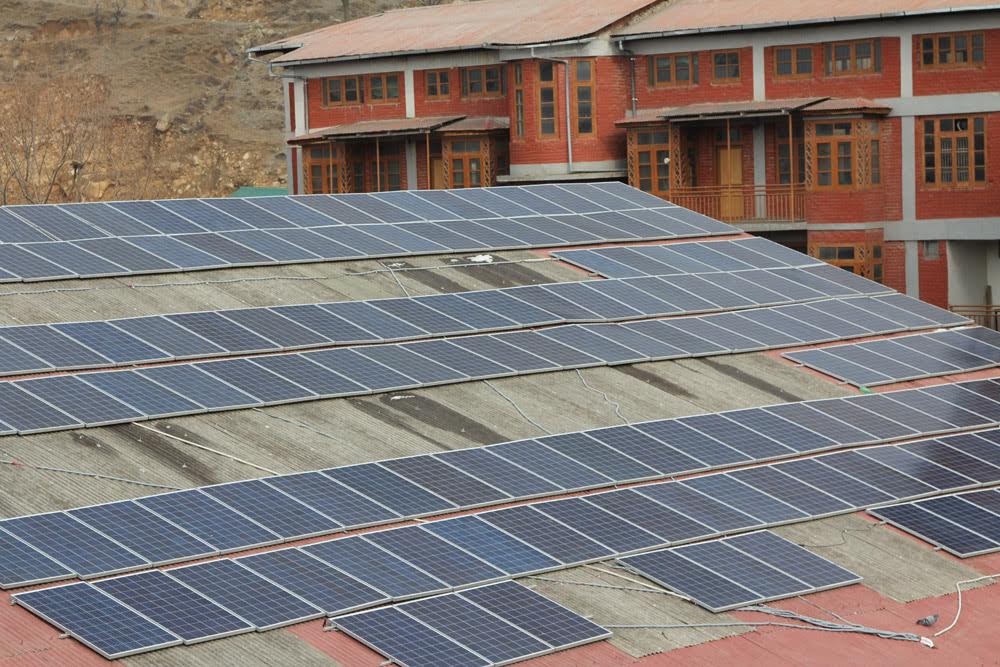
SM: An on-grid solar system operates alongside the electricity grid, generating power during the day to offset household consumption. A 3kW system can typically meet a household demand of around 15 units a day, but only if the grid provides a stable supply for eight to ten hours. The system shuts down when grid power fails, making it the cheapest option but practical only in areas with reliable infrastructure, smart metering and proper wiring.
A hybrid system, by contrast, adds battery storage, allowing power supply to continue during outages while also exporting excess electricity to the grid. Though more expensive initially, hybrid systems are far better suited to Kashmir’s frequent power disruptions.
KL: Who oversees the quality and installation of these systems?
SM: There are guidelines, and the power department does conduct efficiency checks, but they have no reliable way of verifying the actual quality of the components used. That gap is now being addressed. The government has issued a new directive requiring third-party inspection of all solarised installations. If deficiencies are found, the vendor faces blacklisting. It is a step in the right direction.
KL: Kashmir has long winters, cloud cover and less sunlight than Ladakh. Can solar still work efficiently here?
SM: Better than most assume. Solar panels perform best between 18°C and 28°C, temperatures Kashmir experiences for seven to eight months a year. Excessive heat actually lowers efficiency, giving Kashmir an edge over hotter plains. Cloud cover reduces output, but good systems still generate power on overcast days. The key is proper system design based on actual consumption. Too many buyers rely on vendor pitches or subsidies instead of informed planning. Since a solar system is a 25–30 year investment, choosing the right setup from the start is critical.
KL: How does a domestic solar system actually work?
SM: An on-grid system first powers the home and then exports surplus electricity to the grid. If a 3kW system powers a 3kW load, solar meets the entire demand; if consumption rises to 5kW, the extra 2kW is drawn from the grid. A monitoring app tracks generation, while the smart meter records imports and exports.
The future, however, is hybrid systems. These combine solar with battery storage, allowing appliances to run even during outages. For example, a 2.5kW battery paired with a 3kW system can provide roughly 1.5 hours of backup, with longer backup requiring larger storage. Buyers need to understand these basics before investing, and companies must focus on designing systems that genuinely serve consumers rather than simply maximising sales.
(Musaib is Director of CBS Innovations.)