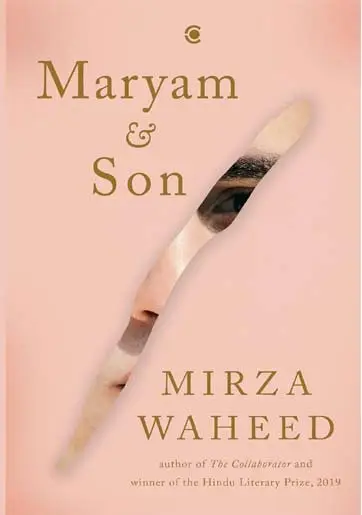
In an email interview with Azra Hussain, Kashmir-born British novelist Mirza Waheed discusses how Maryam & Son approaches terrorism through a mother’s perspective, foregrounding surveillance, loss, Islamophobia, and war’s domestic toll

KASHMIR LIFE (KL): The perspective of a militant’s parents is not one commonly explored. What inspired you to write about such a character?
MIRZA WAHEED (MW): In the aftermath of the Iraq invasion and the emergence of ISIS, we all saw numerous stories of young men who had left their homes for places in Iraq and Syria, many killed, many adrift, some stateless, some in prisons, many in refugee camps. I found myself imagining the mood among their families, inside their homes. I found myself thinking about the parents, grandparents and siblings left behind. What must their daily lives be like? How do they cope with this altered state of life?
In the spring of 2018, I began thinking of one such mother, and Maryam came into being. I think I heard her speak first, and the rest followed. Over the next few years, I tried to inhabit her world. I kept thinking about mothers whose sons disappear, not just physically, but emotionally, the void of no answers. What does love look like when it has nowhere to go? It’s not easy writing women, but I persisted. I also found her to possess a humorous nature, so that was fun to write.
KL: What is your creative process? Is the plot predetermined, or do the characters influence or direct it in some way?
MW: My creative process is probably like that of most novelists. Let the imagination take over, do not be cautious, take risks. The process is quite slow, involving a lot of thinking about characters, their voices, motives, how they might talk and walk. As you write, a time comes, or at least you hope a time comes, when the characters and their world are on your mind every day, all the time. One does have some idea of how a story might end, but it is not written in stone. Putting characters together in a certain way may influence where the story goes. An unexpected scene or a bend in the story is always a special joy. In the case of Maryam and Julian, for instance, the possibility of a kind of romantic liaison came about because they spent so much time together. It was sort of inevitable.
KL: How did being a Muslim immigrant in the UK affect this book? How did your own experiences within that culture shape the story?
MW: I am a Muslim immigrant in the UK, but it is also the longest I have lived anywhere, so my lived experience in Britain may have some influence on how I conceive and think about my fiction. Also, I live in London, which is one of the world’s great multicultural cities; it has its issues like all major cities do, but its diversity is unique. Though multiculturalism in the UK is under fresh attack from the rise of the Reform Party and far-right groups, it remains the nicest way to live and organise society.
As for the novel, crucially, this is the story of a working-class British Muslim woman from London’s suburbs, which is vastly different from my own experience. The fascination and challenge of writing fiction has a lot to do with how different a world from your own you can conjure. If everything were based on or close to a writer’s own life, it would get boring quickly.
KL: How did the current political climate of the world influence this book?
MW: I have been writing this book for several years, and throughout that time I was thinking about such things as the intrusion of the political into the domestic, the impossibility of maternal protection, the surveillance state, the way war and ideology fracture families…
I wanted to make a global, political tragedy feel like a quiet, domestic one. War is not abstract in this novel; it is a mother waiting by a window, folding her son’s clothes, making tea for the man assigned to her case, tasked with tracking her son. The book asks: What happens when a mother’s love collides with state power? What’s left of a doting mother’s heart when she has told her son is not who she thought he was.
KL: There were elements of Islamophobia touched upon in Maryam & Son. Is there a prevalence of Islamophobia in the UK? Does it manifest in ways similar to the ones shown in the book?
MW: There is certainly a rise in Islamophobia in the UK in recent years, like in many other countries across the world. If the story of the mother of a terror suspect did not show any prejudices and suspicion directed at her and her family, it would be a rather odd, dishonest portrayal. Some instances of Islamophobia in the UK and elsewhere are, in fact, worse than shown in the novel. But what interested me more was surveillance as both institutional (cameras, files, dossiers) and intimate. The officer watching Maryam, Maryam watching herself. The novel explores what happens to a working-class Muslim woman under surveillance when her son disappears.
KL: How do you think the experience of writing and the reception of your earlier works impacted this book?
MW: I cannot think too much about how my books are received after some time. I am not trying to suggest I do not care, of course I do, like most writers – but when I am embarking on a novel, I am more concerned with how I make these new characters ring true. What is their world like? What drives them mad, or what do they love? Perhaps subconsciously, all the writing one has done before may reach into and impinge on what you are writing now, but then you are writing a new story, inventing a new world. You are, of course, the same writer who wrote that debut novel several years ago, but you are also a different writer writing this fresh book. I suppose with each book, you are an ‘experienced’ and a new writer at the same time.
KL: Was it daunting to add a romantic aspect to the story?
MW: It was challenging, fascinating, terrifying and thrilling, all at the same time. I did several revisions. At her most vulnerable moment, Maryam experiences a resurfacing of her feminine self, a human craving for warmth and protection. She finds herself drawn to the very man whose job it is to pursue her disappeared son.
KL: Dilawar’s life post-disappearance is shrouded in mystery. Why was that choice made?
MW: It is not Dilawar’s story; it is Maryam’s story, what happens to her after her son Dil disappears. How she responds, how her sisters and mother deal with it, and how the extended family reacts. While it was tempting to add a subplot, I was aware I did not want to write yet another radicalisation story. Haven’t we had many of those already? The novel does not offer the reader the comfort of innocence or the resolution of guilt. By leaving that gap open, I aimed to make the reader sit with the same ambiguity that Maryam does. But also, to feel her strength, pain, and capacity for love.
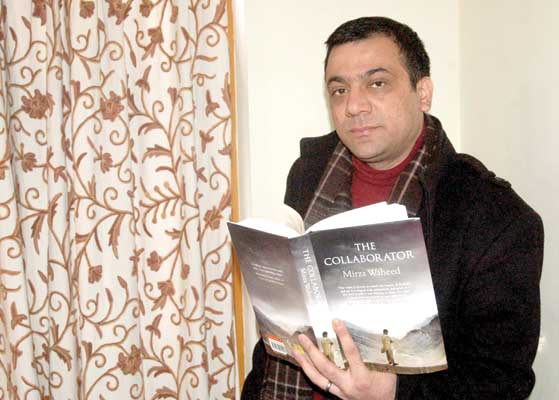
KL: Do you think there is a stronger presence of Muslims in UK politics than before? If so, why do you think that has happened despite the greater Islamophobic narrative?
MW: This is an interesting question, but it is not really something the novel deals with. This novel is not about political representation. It is about the terrifying, agonising gap between the child a mother raises and the adult the world suspects him to be. It is about what happens to a mother’s love when her son’s face becomes a symbol of war on the evening news. That is a different kind of politics, the politics of the intimate, the aftermath of a war as seen inside a family home. I can be concerned about such things as love, family, home, and sisterhood. Motherhood.
KL: Throughout the years, there have been countless Dilawars lost to terrorist groups. What do you think radicalises a person like Dilawar?
MW: Wars, invasions, denials of basic dignity and sovereignty, personal loss and grievance, radical ideological movements, religious extremism, there are all sorts of reasons why people get radicalised. But let us not delve too much into this, really, because it is Maryam Ali’s story. Her life, her agency, her refusal to let the authorities dictate her story, her sad, fierce and beautiful struggle to reclaim her life and not be defined forever as her son’s mother.
This is a novel about the families left behind, not the radicalisation journey itself. Maryam & Son focuses on the witness, the person who is left behind to ask the impossible questions. How does a mother grieve a child who may have done terrible things, a child she may never have truly known? It is a story of a life lived under suspicion and one woman’s defiance of the binaries of our times.