Dr Javaid Iqbal Bhat explores the ‘narrative purity’ in Roop Krishan Bhat’s stories, addressing displacement, illness, death, and rediscovered gratitude
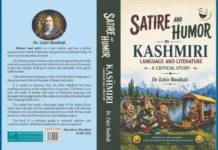
In the introductory pages of his new collection of short stories, Zindagi chei Kamaal, Roop Krishan Bhat, quoting Hari Krishan Koul, affirms that the art of the short story has diverged away from the story per se into the blurry realms of metaphor, allegory, and other imaginary literary categories. The story has dissolved into oblivion under the pressure to sign into parallel meanings. Or is it the reader’s curiosity to procure more than what is in the story? The groping inside the penumbra.
Instead of keeping the story the focal point, the main concern, without embroidering or adding, perhaps unnecessarily, literary frills, many short story writers have flown tangentially away from the story’s purity. Though short stories from masters in the Western tradition, like Edgar Allan Poe, Kurt Vonnegut, or those by Chekhov or Tolstoy, are rich in symbols and metaphors, Bhat, like the veteran Hari Krishan Koul, has put his faith in the purity of story or Kath, as he likes to remind us. Kath, as it was told and heard in the past, before the invasion of laser-beam analysis.
His stories are smooth, direct, and yes, the stories, before anything else, tell a story. There are no Delphic utterances. If you have just finished reading Hriday Kaul Bharti, you feel like entering a spring field of colours and breeze while going through Bhat’s stories. You don’t need a Kashmiri dictionary to begin with, if you are wondering what I mean to say.
15 Stories
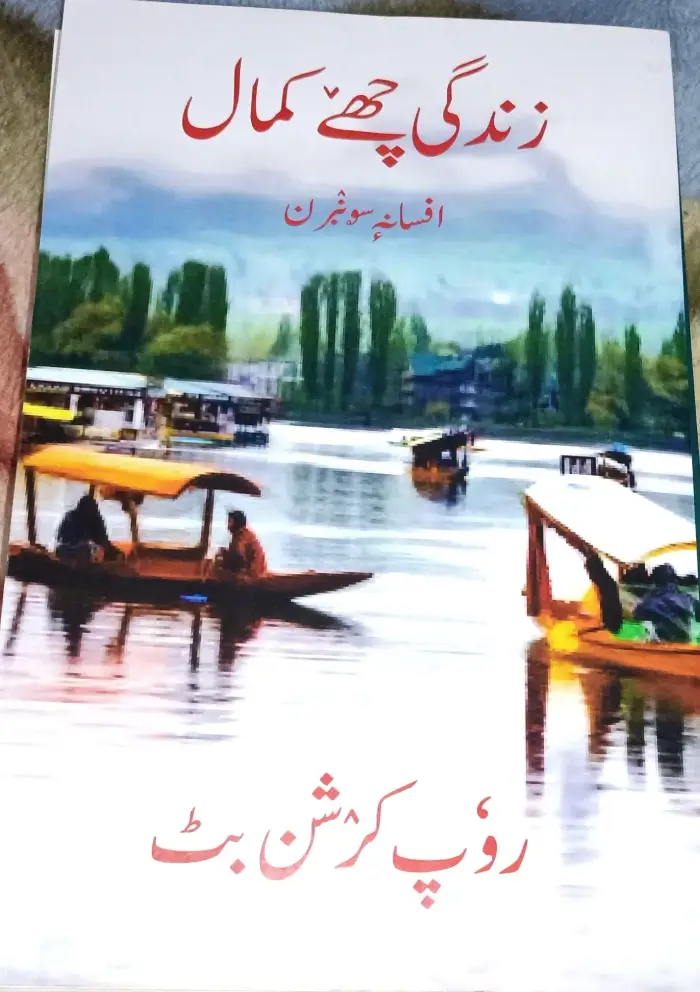
Zindagi chei Kamaal has 15 stories spread over 176 pages. The first and the longest story is Zindagi che Kamaal. The narrator follows Mohammad Sultan from his humble beginnings in a houseboat in Kashmir to Dubai and Berlin, and then back to Kashmir. He later becomes famous, as his business expands and he becomes rich, by the abbreviated name MS. His second marriage to the daughter of his German benefactress does not happen without travails and impediments. The story ends with his felicitation by the government in Kashmir and a boat trip on the Dal. He picks up water from the lake and wonders about the beauty of life.
Most stories end on a mixed note of hope and despair.
Two stories deal with the years of COVID-19. A doctor is unable to meet his family, both because he is fastidious in his care for patients and also because he is cautious lest his family members catch the infection. The story reminds readers of the years of disease that covered the whole globe, uniting human beings in their fragile nature and dividing them due to the intimate distance created by government protocols mandated for safety.
The Migration
Some stories deal with the pain of exile from Kashmir. Sheetal wakes up early in the morning in the story Naev Reh Thaal and picks up the thaal, a plate mostly in the use of Kashmiri Pandits. She goes to her mother-in-law’s room. Kantaji, the mother-in-law, is glad to see the thaal with walnuts, milk, and other items. She soon turns unhappy. She misses the presence of some flowers that she used to pick from Ghaffar’s courtyard in Kashmir. There is naev reh thaal in alien environs, but actually it is not, for Kantaji. The thaal preserves the shradda, the faith, but the absence of some items revives memories of life outside Kashmir.
Stories like Daag, Money Plant, and Hazoor Saeb draw the reader to the pain of separation. Prof Rakesh Kumar, the narrator’s childhood friend, has lost his wife, and the narrator could not come to Rakesh’s home. Finally, he comes and holds Rakesh in his arms and is informed about the whole story of Reshmi’s death, how breast cancer took away her life.
Hazoor Saeb reminds the reader of a common scene nowadays, with family members scattered across different towns and cities of India and the world. The main character, Hazoor Saeb (born after a thread was tied at the shrine of Hazoor Saeb), has raised her sons and a lone daughter. All do well in life. Hazoor Saeb falls ill and is in the hospital. Just when she is about to die, all her siblings arrive from different places. Hazoor Saeb only longs that they had all met like this before, together, amid the warmth of the family.
Harsh Life Realities
Paenin Paenin Khushi, another tale in the collection, draws one to the life of a lady sitting on a bench in a park, with another man next to her. The latter gets curious about her life and the palpable joy and contentment on her face. The lady has retired and is receiving a pension, but her two children are waiting for her death because her husband made a will stating that the children would get the property only after their mother’s death.
The curious part of the story comes when the man asks her about the warmth and contentment on her face. To this, the lady replies that she too was, like the man, piling up money and property until one day she fell ill and witnessed sick and decaying human beings in the hospital. That was the day she refused to yield to the temptation of accumulation and reinvented herself as a thoroughly grateful human being. What is she then doing in the park? Waiting to give fruits to the patients in the hospital across the road.

Bhat has provided an addendum on the theme of “Kashmiri short story outside Kashmir after 1990.” It is true that when one speaks of Kashmiri short stories, attention very often moves inward. We reel out name after name from Kashmir. However, the short story is alive outside Kashmir as well. And why should it not be?
Displacement, often seen as exile within the community, provides rich soil in which to nurture a good story. He outlines the names of short story writers, mostly belonging to the Kashmiri Pandit community, and their contributions. From a research point of view, this essay is important as a chronicle of the writers and their corpus. Together with the supplementary essay, the book infuses a delicate calm and is contemporary in the way it casts its characters and stories.
(Reviewer is an assistant professor at the University of Kashmir (South Campus). The review is web-special only.)