For centuries, Srinagar has been Kashmir’s singular city, celebrated for its sophistication, exclusivity, and adab. Yet beneath its urbane pride lies a vibrant hybridity, shaped by cultural exchanges across civilisations and eras, writes Sameer Hamdani in his new book on Srinagar, the Shahr-e-Kashmir
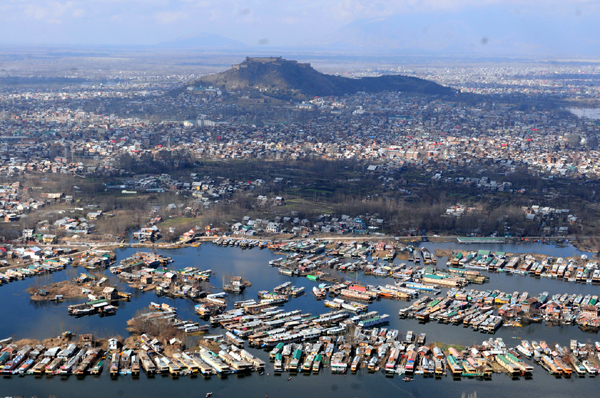
Historically, for the people of Kashmir, Srinagar is the only city in their land. There are innumerable villages, and there are many historical towns, but there is only one shahr, one city: Srinagar. To be an inhabitant of the shahr brings with it all the privileges, comforts and biases that a sedentary urban life bestows. The city suggests it is all-knowing, like an aagur (the source of a spring), the fountainhead of knowledge; and it parades its sophistication. It is the marker of culture, as well as cultural spaces, and also the mannerisms that define culture, adab.
Even in medieval times, the city was seen as a seat of culture, designed to impress, as opposed to a rural landscape portrayed as not only inherently rustic but also as something primitive and rather simple. The Sanskrit poet Kshemendra (d. 1070), who studied under the greatest aesthete Kashmir ever produced, Abhinavagupta (c. 975–1025), decries those unversed in the subtleties of his craft as ‘… newly-arrived, overawed bumpkin in the depths of the big city…’
The Medieval Morbidity
Kshemendra was a prolific writer whose plays, with their biting satire, seem to be specially designed to showcase medieval Kashmiri society as a culturally and socially morbid space. But his remark is also a commemoration of the poet’s roots, located as they are in an urbane courtly circle. What Kshemendra insinuates gradually transformed into the mood of the city, where the inhabitants of Srinagar believe that the only suhbat (company) that deserves to be cultivated is the city.
In the nineteenth century, a poet from Srinagar, Mulla Hakim Habib al-Lah (1852–1904), whose main genre was writing religious elegies, composed his Greist Nama (Book of Village Life), a not-so-polite satire on why to avoid the suhbat of someone from outside the shahr. This work, which would certainly offend modern sensibilities, starts on a note of imparting nasihat (counsel):
“Hearken, to my counsel; count the ills that are there,
If you take to companionship, someone from a village
Their souls are different: this one from the city, and the other from a village,
Never will the two be bound together: one sweet, the
other bitter and venomous.”
Habib’s imagery is filled with dominant tropes of nineteenth-century urban life that seek to belittle those from outside the city because of their mannerisms. In another, earlier work of the same name, we see a more extreme dehumanisation of rural existence.
Degrading The Periphery
In a lengthy masnavi, Pir Maqbool Shah Kralwari (1820–1877) depicted the villager as someone devoid of humanity: immoral, irreligious and animal-like. Surprisingly, the composer of this older Greist Nama was himself a villager. Seen as one of the leading Kashmiri lyricists of the nineteenth century, Kralwari, like Habib, hailed from an upper-class Muslim background. But while Habib’s misgivings are essentially reductive, with the spatial geography of the city serving as the marker of class and culture, Kralwari seeks to frame his narrative as that of an urbanity, defined by interlinked bloodlines that connect him to the city culture despite being a non-resident. As someone from the upper class, Kralwari’s social positioning sets him apart from his peers in the village, identifying him as their superior.
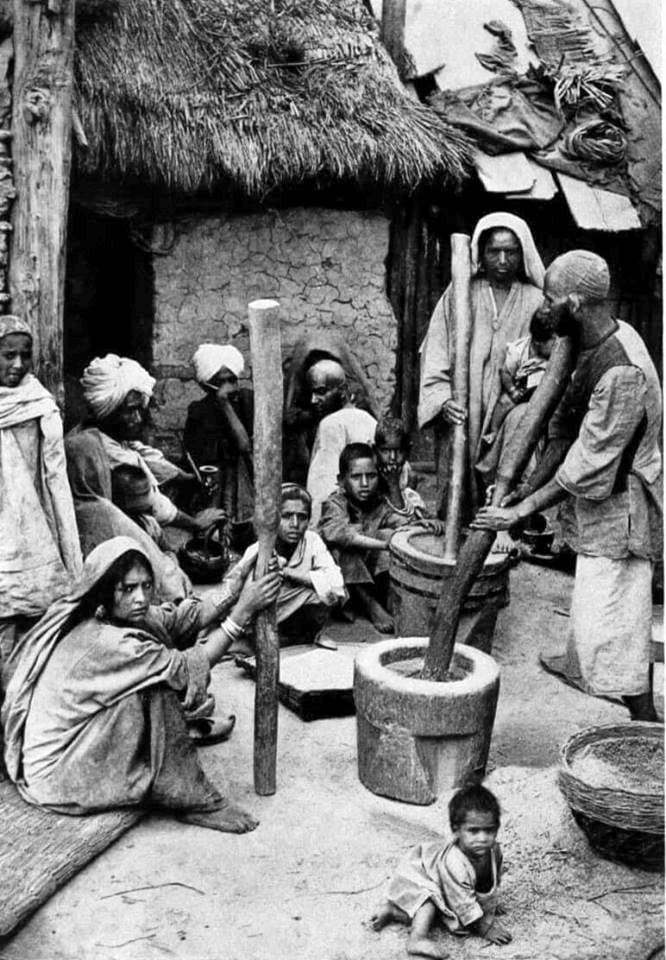
Essentially, the suhbat that both Habib and Kralwari promote is both discriminatory and exclusive. Often, in the past, as well as today, this exclusiveness remains the mood, the mizaj, of the city. However, discrimination apart, the city still continues to draw people who make it their home. And in a generation or two, the newcomers adopt the mannerisms of the city, they become the people of the city, their roots hidden if not entirely forgotten.
The Other Side
But then, there is another side to Srinagar. It is also a city that thrives and promotes cultural and social synthesis and sustains a vibrant community life. A city that is still rooted in cross-culturalism despite the loss of recent decades, which saw the unravelling of the social fabric of the city. The architecture, crafts, cuisine, clothing, and aesthetics of city life are clear examples of the cultural hybridity that stands at the heart of the city’s culture. Seemingly unique, a deeper examination lifts the veil to showcase how diverse cultures, both from the Indian plains, as well as regions as diverse as the Tibetan highland, Central Asia and even further afar from the Roman and the Hellenic worlds, have left their footprints on the everyday life of the city.
This process of exchange, which could be experienced on the streets and the river of Srinagar, till very recent times, was only to be interrupted by the emergence of the modern nation-states of India and Pakistan. One may wonder at this incongruous independence, which resulted in a disruption of how people and cultures had interacted for generations.
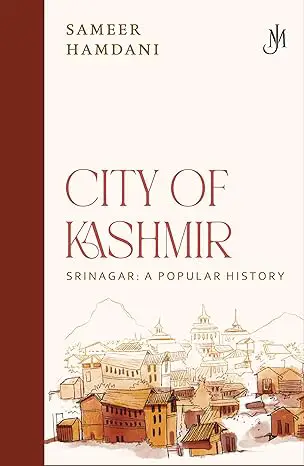
(Excerpted with permission from City of Kashmir: Srinagar, A Popular History, by Kashmir’s architectural historian, Sameer Hamdani. The book was published by Hachette India recently.)