In a world defined by political turmoil and uncertainty, Mirza Waheed’s Maryam & Son, his first novel set outside Kashmir, follows the story of a mother caught between grief and denial, and the reality many immigrant families in Europe are experiencing today, writes Azra Hussain

Mirza Waheed’s Maryam & Son offers a much-overlooked part of the lives of children radicalised, the fate of their parents. Following the story of a mother torn between grief and denial, Waheed portrays the confusion and fear that comes with not only losing a child, but losing them to terrorism. Much of the young man Dilawar’s story is left untold, his memories eclipsed and discoloured by his present choices, and the mother, Maryam, is left alone, unable to cope with his disappearance. The book sheds light not only on the cold nature of such an investigation but also on the conflicting emotions felt by the people going through the process.
A remarkable moment in the story occurs when federal agents visit Maryam’s quaint flat on Homecroft Street in London to search Dilawar’s room. Waheed succinctly captures Maryam’s indignation – the feeling of humiliation she feels at being ‘put in her place,’ as he writes. Although just one such occurrence of many in the book, it signifies a monumental change in Maryam’s life, one defined by the loss of control and gradual unravelling of her life as she knows it.
Cultural Representation
The book does a great job of representing immigrant culture and the presence and prominence of South Asians in the United Kingdom, mingling with the general atmosphere of the country to show its multicultural, diverse nature. The mix of British dialect with Urdu gives the book a touch of linguistic depth, making the dialogue more engaging and realistic than simple English would. The choices Waheed makes with the way the characters speak make them seem lifelike, as if one is witnessing a real conversation rather than reading off a page.
The deliberate choice not to include Dilawar’s perspective is a great one, accentuating the greater theme of uncertainty that the book seeks to convey. The characters trapped in these circumstances seem to be in, as Maryam says, a limbo of sorts. She finds herself caught in circumstances that really cannot be helped – a son radicalised and gone, federal agents knocking at her door, and the judgment of her extended family. A sense of frustration and anger permeates her thoughts, helping the reader place themselves in her shoes.
Maryam’s fear of judgment over things beyond her control is completely understandable, not just to people in such situations but to minorities in general. Her reaction to her pictures being in newspapers with headlines reporting on her ‘disruptive’ behaviour is incredibly justified. The act of publishing a picture in which her head is covered is a move that goes unnoticed, neither by Maryam nor the reader. Despite not addressing it head-on, the prevalence of Islamophobia is noticeable.
A Budding Romance
Another fascinating addition to the story is that of the agent Julian Chapman, a man bound by duty but ultimately sympathetic to Maryam’s plight. Although being used to facing parents whose children embark on a similar journey, his inability to remain objective when faced with the grieving yet dignified Maryam leads to the development of a relationship doomed from the start.
Chapman’s own helplessness and emerging doubts about the system he is supposed to serve provide a far more interesting and nuanced view of federal investigations. The complicated relationship between Julian and Maryam, people essentially at opposite ends of the spectrum, draws the reader in and leaves them flipping to the next chapter with bated breath.
The Swordsman
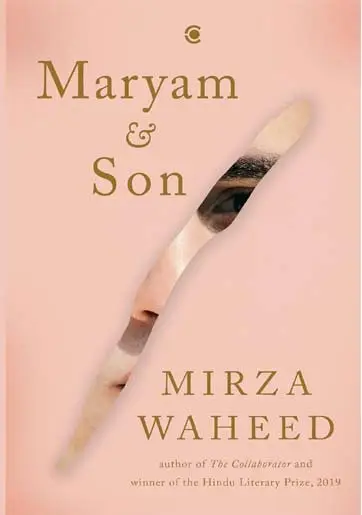
For as much as he is simultaneously focused on and ignored, Dilawar is an intriguing character – a child shut off from the rest of the world, spending most of his time on his computer, vulnerable and lonely enough to fall into a trap that many others unfortunately do. As Maryam pores over the album containing his childhood memories, she recollects to both her siblings and to Julian stories and events that she believed shaped him into the person she hoped him to become. It is painfully obvious that, much like any other parent, she fails to reconcile the so-called “Swordsman” seen in grainy footage with the child she raised. Despite being absent throughout the story, his presence haunts every page, every word, every letter of the book.
Most of the book goes over Maryam’s initial shock, leading to denial, to gradual but hesitant acceptance of the choices Dilawar made not only for himself, but for her as well. Reading stories of suicide bombers and militants rarely makes one think of the plight their family is facing, and that aspect of recruitment and radicalisation is shown in uncomfortable, devastating detail.
The Family
An important element of the story is that of the unbreakable bond between siblings, shown through the constant support and love Maryam receives from her younger sisters. Despite being mostly abandoned by her extended family, her sisters remain a comforting presence beside her, grieving Dilawar and comforting Maryam in their own ways. Her mother, frail yet stern, will remind the reader of their own grandparents.
The ultimate message of the book is hard to pinpoint, not because it is pointless, but because it has a lot to say. Reading through it prompts the reader to ask questions that they may have never considered before, encounter situations previously unthinkable, and find themselves in a place unimaginable. For as much as the book is a work of fiction, it undeniably remains, for many families, an unfortunate reality.