Harinder Baweja’s memoir travels through Kashmir’s decades of conflict, revealing intimate grief, political ruptures, covert operations and institutional failures, portraying a region where violence, memory, and state power continually reshape everyday life, writes Zaid Bin Shabir
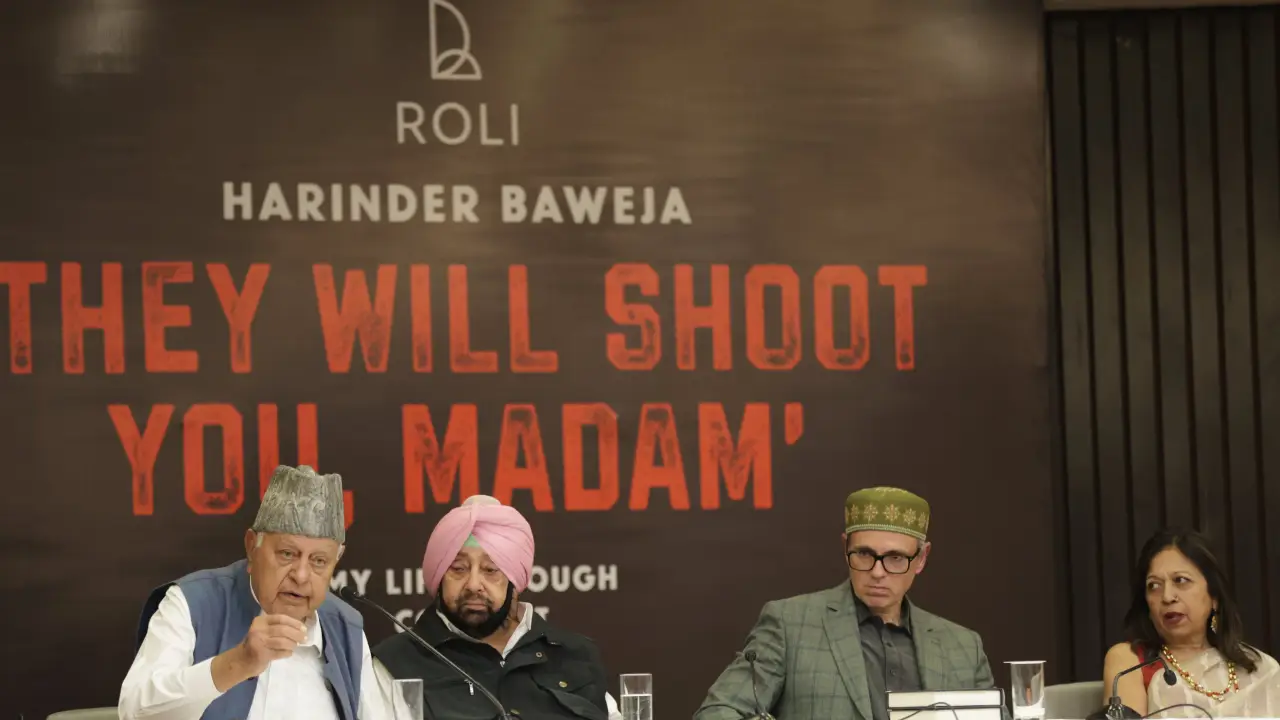
Kashmir is where Harinder Baweja’s new memoir, They Will Shoot You, Madam, opens its deepest veins. Early in the book, she offers a line that becomes essential to understanding the valley’s long and bruised history: “Peace has multiple interpretations.” In conflict zones, she writes, peace is not a neutral aspiration but a negotiation sometimes shaped by the compulsions of the ground, at other times by the ideological appetite of those in power. Nowhere has this pendulum swung more violently than in Kashmir right from the 1990s to the Narendra Modi era, where Article 370, Kashmir’s constitutional scaffold, was recast as the very obstacle to peace.
A veteran journalist, Baweja’s book, spanning four decades of conflict reporting, reminds us that covering a war is not an intellectual exercise but something that grinds through the body: physically, psychologically, and emotionally. Baweja draws readers into this turbulence with the clarity and fatigue of someone who has lived its costs.
The memoir chronicles her encounters with Kashmir’s private griefs: of seeing Pandit families living wretched lives in tents in Jammu, young men choosing guns over futures, and homes shattering after deaths of loved ones.
She recalls Kashmiri men stepping out only after slipping a scrap of paper with their home address into their pockets, so that, if shrapnel or a stray bullet found them, their bodies would at least return to the right door. But the image that haunts most is of a five-year-old begging his mother to lift the heavy tombstone under which his father lay, convinced he would come home if the stone was removed.
Through these apertures of memory, violence, and the grotesque ordinariness of violence, Baweja’s Kashmir emerges raw, intimate, and wounded.
Kashmir’s Many Wounds
For more than three decades, Baweja has returned to Kashmir as a witness who has walked through its many political seasons, including the ideological churn of the late 1980s, the militant 1990s, the mass unrest of 2008 and 2010, the 2016 summer of Burhan Wani and the post-2019 landscape that is thick with triumphant state power. The chapters weaved around Kashmir are sustained by an unflinching stare at a place where rage, alienation and remembrance all live side by side.
She often collapses the distance between grand politics and private devastation. A single killing can shut markets, silence villages, and renew the region’s sense of siege. Her account of 2010 is unsparing. It speaks of a summer in which every funeral created another protest and every protest created another funeral, where an entire generation learned to carry its dead while inventing a language for fear.
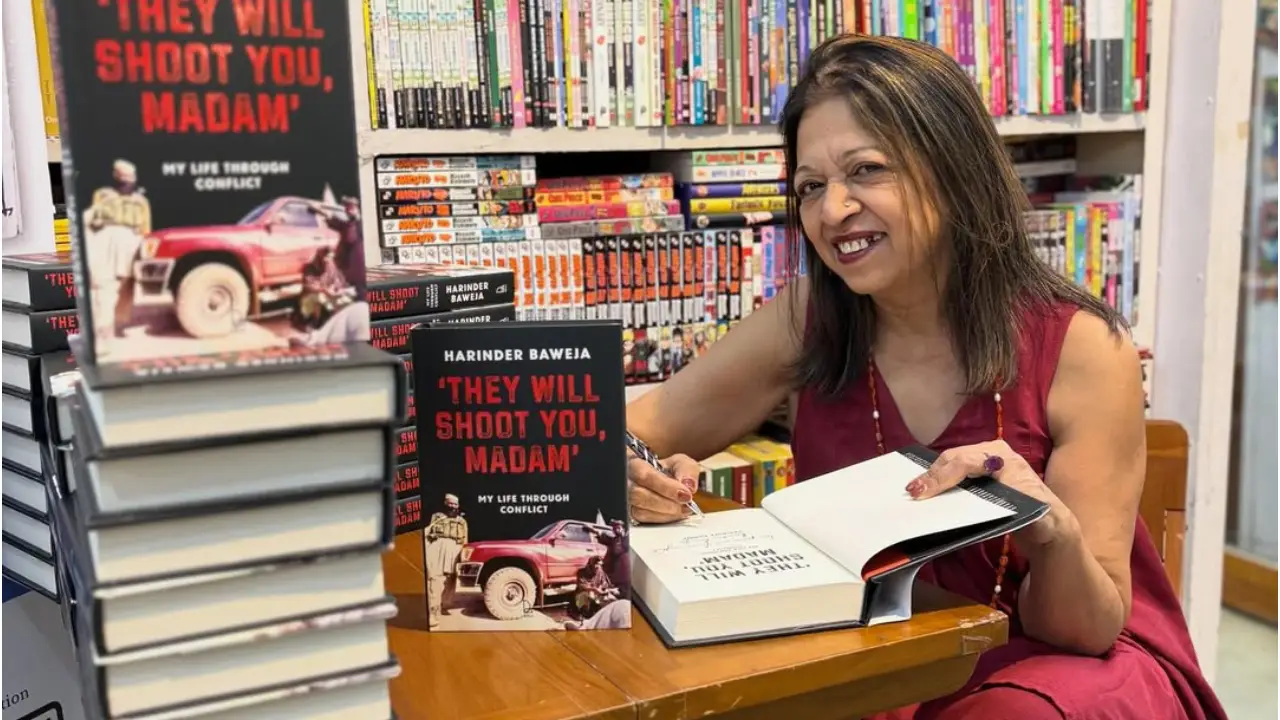
When Baweja crosses into Muzaffarabad, the capital of Pakistan-occupied Kashmir (PoK), the hostility tightens. Men chant “Indian dog, go back,” and she describes it without theatrics, just a contained fury. She observes the rehearsed rhetoric of azaadi, the nervous glances of officials, and the contradictions of a place that speaks of freedom while policing speech. She notices militants hovering at the edges of refugee camps, the Pakistani officers bragging about how their boys can defeat India and the way fear manages to cross borders far more easily than people.
Her meeting with Jagmohan in 1990, an encounter she momentarily feared was spiralling into a kidnapping, foreshadows the insurgency that would soon erupt. The memoir then moves through decades like the 2016 unrest, the deepening alienation of Kashmiri youth, Delhi’s political theatre, and the suffocating securitisation that followed August 2019. The power of these sections lies in their refusal to flatten Kashmiris into archetypes. They appear in all their contradictions, right from grieving, resilient, and cynical to hopeful, aspirational, and exhausted.
Baweja portrays a region where confrontation with the state is woven into daily ritual. Her reporting becomes a counter-archive, lingering on names and circumstances, and the state too quickly collapses into dossiers. She lays bare the narrative machinery on both sides of the Line of Control (LoC) where Pakistan romanticises azaadi, India refuses to confront the scale of alienation, and the world largely remains indifferent to what continuous militarisation does to a population’s psyche.
One episode in 2016, after Burhan Wani’s killing, starkly illuminates the difference between being a Kashmiri and being merely in Kashmir. Baweja, her Kashmiri photojournalist and driver, leaves Srinagar before dawn to visit Wani’s village, manoeuvring past shuttered roads and simmering anger.
But the revelation arrives on their journey back. When protestors block the highway with a young boy’s dead body and chase them with stones, they flee into an army cantonment. Baweja is offered shelter instantly, but her Kashmiri colleagues are deemed “security risks” who might “study the layout” and “return tomorrow to pelt stones”. The moment freezes what the system inscribed into everyday life that summer, which became synonymous with fear, mistrust, and the impossible question of how a force meant to protect civilians can win the trust of those it automatically suspects.
Covert Wars
From there, Baweja widens her lens. Her instinctive pull toward places most recoil from, Punjab’s burning alleys, Pakistan’s fraught terrain, and Afghanistan’s shifting battlefields, makes her memoir not just reportage but a four-decade pursuit of history at the moment it cracks open. The nickname Bullet Baweja, given half in awe and half in disbelief to Baweja, speaks to the costs she absorbed along the way.
One of the book’s most consequential revelations is again rooted in Kashmir. It is about a near-forgotten covert operation that preceded the attacks of 26/11. Engineered by SM Sahai, then Jamuu Kashmir Police’s Inspector General (Crime), it was too sensitive to be committed to files. Baweja recounts how Kashmir, often portrayed merely as a theatre of violence, was also an intelligence battleground where cops, militants, and insurgent networks intersected in volatile and unpredictable ways.
At the centre stands Mukhtar Ahmed, a Kashmiri cop. Once an autorickshaw driver in Kolkata and grieving his brother’s killing by militants, he joined the Police for Rs 1500 a month. From a jail cell, he infiltrated Lashkar-e-Taiba (LeT), now banned, built trust with hardened operatives and even caught the attention of Zaki-ur-Rehman Lakhvi, the outfit’s co-founder. Baweja uses Mukhtar’s story to underline a truth Kashmiris know too well: ordinary lives are swept up in extraordinary geopolitics and discarded just as easily.
Then there is Kesar, a Kashmiri militant who had crossed into Pakistan and was ready to return and be a part of the police. With tacit military clearances to re-cross the LoC and a visa facilitated by a recommendation from Syed Ali Shah Geelani, he became the courier who physically transported Indian SIM cards that were stitched into a diary to a Lashkar camp. This detail lifts Baweja’s memoir into a new register.
The conclusion Baweja draws is chilling. The intelligence on those SIM cards existed, warnings were issued, and yet everything failed. Three numbers used during the 26/11 attacks were the same ones flagged in Sahai’s Top Secret memo, which was only recalled on the night of the attacks, once the mayhem had begun.
Conflict’s Machinery
Her account is blunt. Kashmir was both the origin of a remarkable intelligence breakthrough and the place where institutional apathy snapped the chain. That duality and ingenuity were undone by indifference, threaded through her writing on the region.
Perhaps the most disturbing part of the memoir is how those who risked their lives in covert operations were treated. Mukhtar, instead of being honoured, was arrested for alleged militant links, another example of how Kashmiri operatives become expendable once they outlive their utility. In contrast, Lashkar’s masterminds Lakhvi, Hafiz Saeed and others remain shielded by Pakistan’s deep state, fathering children in jail cells, meeting ISI officials, and orchestrating operations with impunity.
Baweja writes with restraint, almost clinically, which is why the revelations hit harder. She focuses on the architecture of conflict that includes how Pakistan engineered militant ecosystems, how Indian intelligence misread or ignored credible leads, and how Kashmir remained the pivot of a geopolitical struggle that cost hundreds of lives.
The book builds an urgent thesis on how Kashmir’s conflict cannot be understood without acknowledging the unseen wars waged in its name and fought not just by militants or armies but by ghosts in the intelligence underworld, double agents, and disowned assets. Baweja captures this dark theatre with rare access and moral clarity.
In a time when writing on Kashmir often leans toward trauma, Baweja reminds us of how of insurgency and the logistical sinews that allow violence to leap from a jail cell in the valley to Mumbai’s Taj Hotel.
They Will Shoot You, Madam is a searing excavation of the hidden gears that have shaped some of South Asia’s bloodiest decades. Baweja steps into the noise of conflict and returns with accounts that tremble with unbearable truth that becomes impossible, by the end, to look away from.