A Kashmiri novel follows an ostracised boy’s journey from stigma to sovereignty, blending folklore, faith, and language preservation, writes Asrar Syeed

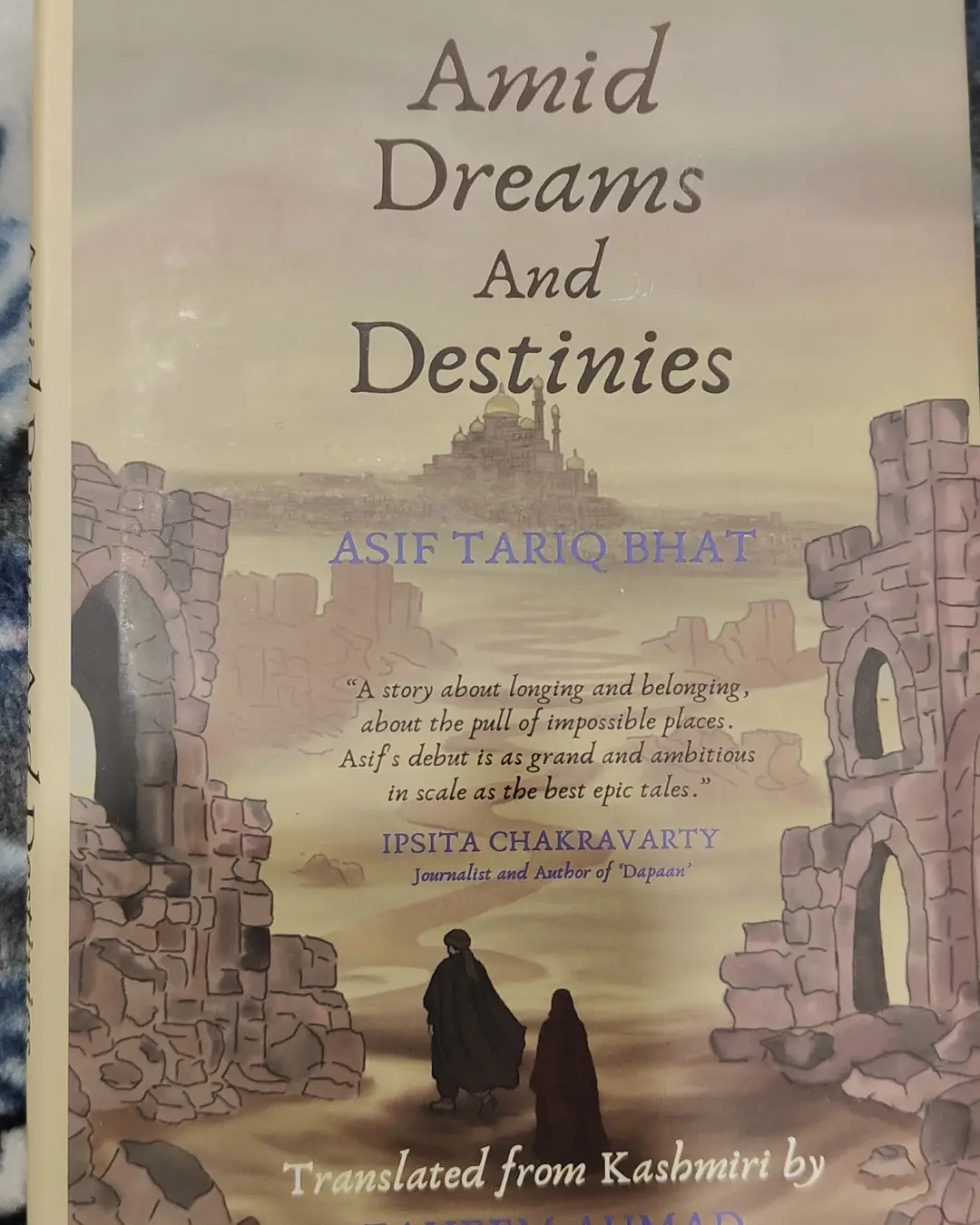
At a time when scholars and cultural activists warn of the gradual erosion of the Kashmiri language from everyday life, the appearance of a novel rooted firmly in native idiom and imagination feels both timely and necessary. Asif Tariq Bhat’s Khwaban Khayalan Manz, recently translated into English by Faheem Ahmad, is more than a coming-of-age story. It is an assertion that Kashmiris can still carry complex narratives, moral inquiry and mythic imagination with ease.
The book is slim in size yet ambitious in scope. Despite its brevity, it delivers a layered tale that moves between realism and allegory, exploring superstition, social exclusion, faith and resilience. At its centre is Arham, a boy marked by tragedy even before he understands the meaning of loss.

Arham’s mother dies while giving birth to him, and the community he grows up in quietly brands him ill-omened. Instead of compassion, he receives suspicion. Instead of belonging, he faces avoidance. From childhood, he was made to feel responsible for a death he did not cause. Through this premise, Bhat sharply critiques a society that allows superstition to override empathy and religion to be replaced by irrational fear.
The novel opens with Sacred City, where Arham hears of Muqadas, a holy place said to rob travellers of peace until they reach it. The description captures his imagination. For the lonely boy, the city becomes both a destination and a metaphor, a promise of meaning, perhaps even redemption. Conversations with Mir, a town baker from a family of travellers, deepen the allure. Muqadas is described as a place where the call to prayer enchants the heart, where the spiritual and the earthly converge.
Living largely alone with only his camel for company, Arham has already travelled to distant towns. Yet Muqadas feels different. It is no longer wanderlust but purpose. The problem, however, is survival. In a town that distrusts him, who will offer him work?
Battling Rejection
What follows is one of the novel’s most compelling stretches. Arham teaches himself multiple crafts, sculpting, carpentry, colour-making and perfumery, refusing to surrender to social rejection. These passages foreground labour and dignity. Hard work becomes his answer to fate, a quiet defiance against those who have written him off.
Still, prejudice trails him. In one painful episode, he temporarily runs a colour-maker’s shop. A customer, startled by his appearance, panics and flees. The incident shatters him, and he retreats to the corridor to avoid frightening people. The scene is understated yet devastating, a reminder of how discrimination, based on looks, rumour or inherited stigma, slowly erodes self-worth. Bhat does not overstate the moment; the simplicity makes it more effective.
The narrative then takes on a more fable-like quality. Exhausted during a journey, Arham camps near a thicket and stares into a fire. In the flames, he sees the vision of a beautiful girl and, entranced, walks into the blaze, suffering severe burns. He is rescued by a passing caravan that refuses to abandon him, fearing misfortune. Ironically, the same superstitions that once harmed him now ensure his survival.
A New Life
While travelling in the caravan, he meets Isra, an apprentice to the Hakeem who treats his wounds. Their relationship introduces tenderness into the otherwise solitary narrative. When the caravan reaches the drought-stricken city of Tamseel, another twist unfolds. Upon seeing Arham’s face, thunder cracks and rain finally falls. The king interprets this as a sign of blessing and declares the boy lucky. Overnight, the outcast becomes a symbol of fortune.

The reversal is deliberate. Bhat exposes the absurdity of labels: the same face once considered cursed is now celebrated as auspicious. Social judgment, the novel suggests, is often arbitrary and fragile.
Even in the palace, Arham refuses an unearned reward. He insists on working in the city’s darsgah before accepting payment. This insistence on earned dignity reinforces the book’s moral centre: destiny may shape circumstances, but effort defines character.
His bond with Isra deepens, and her story broadens the novel’s social canvas. She reveals that she was bought as a child and exploited, her life controlled by others. Through Isra, the narrative touches on gendered vulnerability and the quiet violence inflicted on girls under the guise of tradition or necessity. Her presence grounds the allegory in harsh reality.
Throughout, the novel remains linguistically anchored in Kashmir. Words such as Hakeem, weanpeynd, and Kun Faya Kun retain their cultural texture. Even in translation, the rhythms of Kashmiri thought are evident. This is one of the book’s greatest strengths: it does not dilute itself for universality. Instead, it trusts that the local can speak to the universal.
The Rise
In its final movements, the story edges further into parable as Arham’s journey leads to unexpected sovereignty. The boy once shunned by neighbours rises to kingship, a symbolic culmination of endurance over stigma. The arc may feel improbable, but it functions as a moral resolution rather than strict realism, consistent with the novel’s blend of folklore and philosophy.
Khwaban Khayalan Manz ultimately succeeds because it balances message with narrative. It critiques superstition without preaching, celebrates faith without sentimentality, and foregrounds labour, compassion and self-belief. At the same time, it stands as an act of cultural preservation. By choosing to write such a story in Kashmiri, Bhat helps keep the language alive in literary space.
In an era of urban migration and linguistic shift, when Kashmiri risks retreating from daily speech, books like this remind readers that language is not merely a tool of communication but a vessel of memory and worldview.