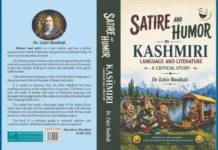
In his The City of Kashmir, Srinagar: A Popular History, Kashmir historian Sameer Hamdani gives a deeply-sourced and effortlessly readable story of the city that flows like Jhelum, writes Syed Shadab Ali Gillani
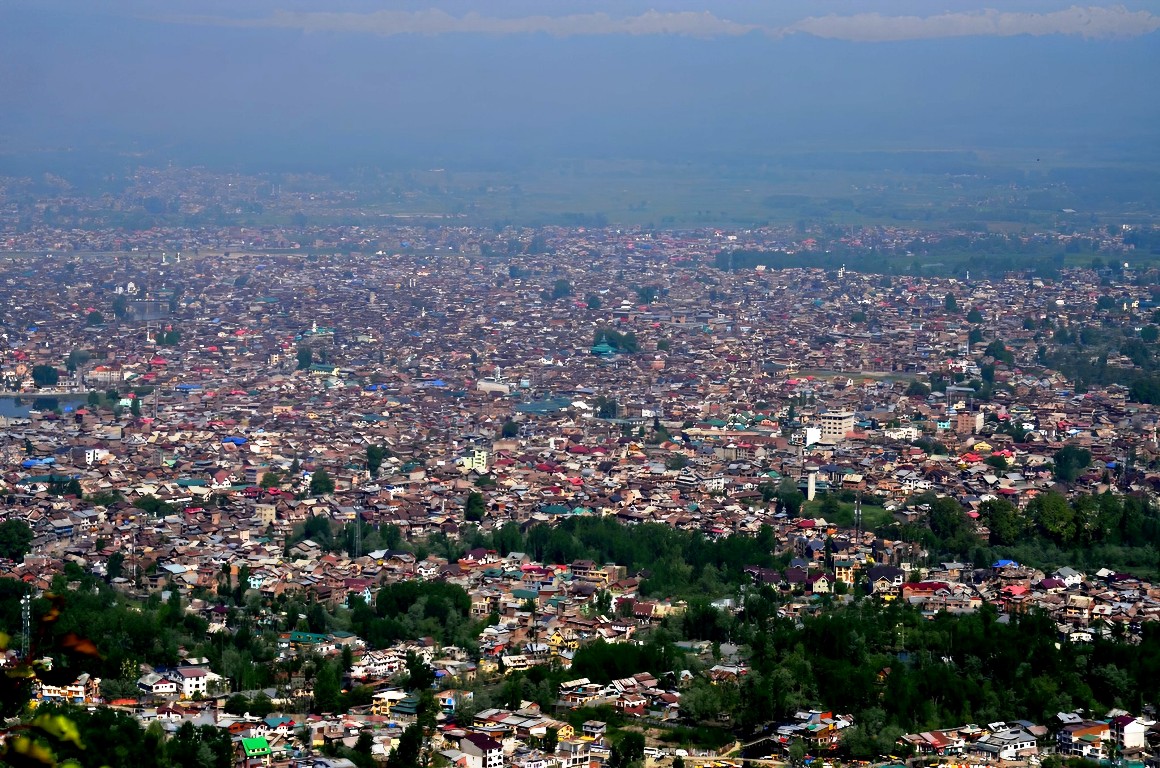
Kashmir’s architectural historian, Sameer Hamdani’s book on Srinagar city opens an unusually intimate door into the layered history of Kashmir. He moves across time with ease, beginning with the story of a Kashmiri ruler whose rise shattered the physical remoteness of his kingdom. The eighth-century king who “came to dominate the Indian plains from his Himalayan kingdom,” a figure whose name in Sanskrit strikingly means “the one whose diadem is taken off.”
Lalitaditya Muktapida appears in these pages not as a distant monarch ornamented by legend but as a ruler whose “brief metallic rise” signalled an unexpected assertion of Kashmiri power beyond the mountains. The author allows this moment to stand as an early reminder of the surprising ways in which Kashmir has touched and unsettled the subcontinent’s imagination.
The Mughal Era
Then the book travels forward to the Mughal period, in which the author recounts, almost cinematically, the year 1073 when the French physician François Bernier “slipped into Kashmir,” accompanying Nawab Danishmand Khan, a Mughal noble of Iranian descent. The Nawab was among a select entourage to accompany Emperor Aurangzeb into Kashmir. This was the emperor’s first visit to Kashmir.
As the imperial party left Shahjahanabad, the streets of the capital “were rife with rumours.” Some whispered that the journey was merely a pretext for a westward march to recapture Kandahar from the Persians. Others speculated, more ominously, that court physicians had prescribed the trip due to concerns about the emperor’s health. The Venetian Niccolò Manucci attributed the entire idea to RoshanAra Begum, the emperor’s favourite sister, who had wished to orchestrate a grand spectacle and “parade her new status as the healing lady of the imperial harem.”
Mukhdoom Sahab
Equally compelling is the chapter The Saint of the City, which turns to the spiritual heart of Srinagar. If anyone could claim to be the city’s patron saint purely through devotion and popularity, it would be the Suhrawardiyya Sufi, Shaykh Hamza Makhdum. A non-native, Hamza came from Tujjar village in Sopore and made his way to the city very young, enrolling in one of its religious institutions. His life as a novice “revolved around work, worship, and study,” and as his reputation for piety and scholarship grew, the political landscape of Kashmir underwent dramatic shifts.
Authority passed from the Shahmiri dynasty to the Chaks, who were Shia Muslims. The author notes that the patronage earlier enjoyed by Sunni Sufi establishments shifted to the Shia elite. Every act of omission or commission became interpreted through sectarian eyes, and a competing centre of influence quickly emerged: the Sunni religious class. Hamza became the leading face of the Sunni resistance to Chak rule, his rising authority inseparable from the undercurrents of resentment that defined the time.
In Srinagar, Hamza was responsible for establishing the Suhrawardiyya order as a major spiritual force. When he died, he was buried on the foothills of Koh-i-Maran beside a small mosque where he had spent most of his life in prayer. Legends credit Emperor Akbar with constructing a shrine over his grave.
What is documented, however, are endowment deeds bearing the seals of Emperor Shah Jahan and Princess Jahanara Begum, which show that the shrine was “extensively favoured by the Mughal royalty.” These deeds provided lands for its maintenance and provisions for its attendants and devotees. Later, when Sardar Atta Muhammad Khan, Kashmir’s Afghan subedar, rebelled against his Kabul overlord, he minted coins in Srinagar in the names of both Hamza and Shaykh Nooruddin Reshi, Kashmir’s patron saint. Over time this modest shrine evolved into an expanding complex patronised by Mughal nobles, Afghan administrators, Kashmiri merchants and countless ordinary people. From its elevated height, it “dominates the city landscape while offering protection to the devotees below.”
The Identity
The most engaging chapter is Chai, in which the author turns to the everyday sensory life of Srinagar. Three objects, kanger, pheran and the samovar, he writes, are enough to represent life in Kashmir. The first offers warmth and comfort, but Samovar reflects something more subtle: the Kashmiri capacity for transforming pleasure into ritualised daily life. The samovar has in Kashmir shifted from a luxury to something deeply utilitarian. For those familiar with the city, the poet Mehmood Ghami’s simple invitation to drink tea signals the beginning of sohbat, of companionship and comfortable conversation.
The author explains that, unlike other Eastern cultures where tea drinking is governed by elaborate ceremony, in Srinagar, “sharing a cup of tea is an act devoid of any ceremony.” There were nuances of adab, of course. Slurping one’s tea might be considered an unforgivable faux pas in refined circles, though in other settings the same sound was an expression of enjoyment, a signal to the host to pour more. Some people turned their cups over when done, others placed a hand over the cup or simply said so. Depending on the company, one might drain the cup entirely or leave a little behind to show one had had enough.
Today, noon chai remains the traditional tea brewed in a samovar. Although almost everyone acknowledges that the samovar is a Russian invention of the eighteenth century, Kashmiri samovars differ from Russian ones, being made of copper rather than brass.
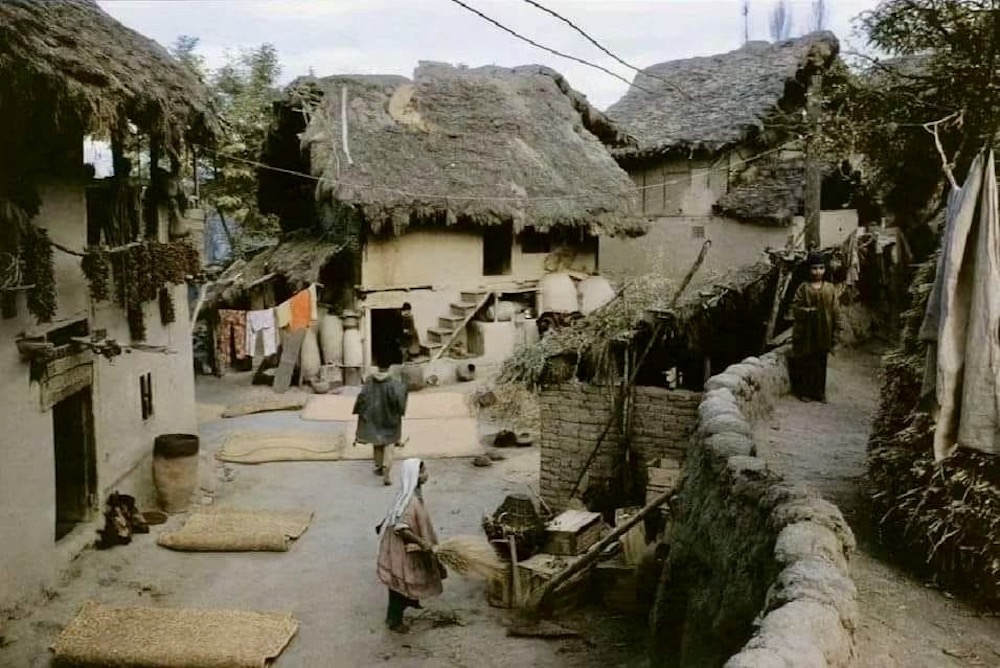
Although some people believe that the city’s deep attachment to tea derives from colonial habits, the book asserts that the enjoyment of tea was widespread much earlier. Everyone in the city drank it, and while slurping was frowned upon among the refined, for labourers “suffering the indignities of daily life, the squalid living conditions, the poly-ventilated wooden hovels,” the loud sound offered fulfilment and even made the tea taste better. What was frowned upon in the city was welcomed with relish in the countryside. Both Muslims and Hindus claimed mastery over brewing the perfect samovar, though differences appeared in how they drank it.
A Hindu woman would hold the handleless cup using the long sleeve of her pheran to protect her hand from the heat, something Muslims did not generally do. The city’s daily rotation of teas included noon chai in the morning, at noon and in the evening, along with kahwa, sheer chai and Mughal chai.
Finally, the book notes a charming episode from the twentieth century, when a local baker was sent by the Maharaja of Kashmir to Europe to learn the craft of cakes and biscuits. His bakery, now the famous Ahdoos, remains one of Srinagar’s most recognised places for visitors.
The Satire
The book moves from imperial journeys to Sufi mysticism, from medieval kings to Afghan merchants, from sectarian politics to slurped tea. And throughout, the author does not force a grand argument. Instead, he lets the city reveal itself through its people, its rituals, its landscapes and its long memory.
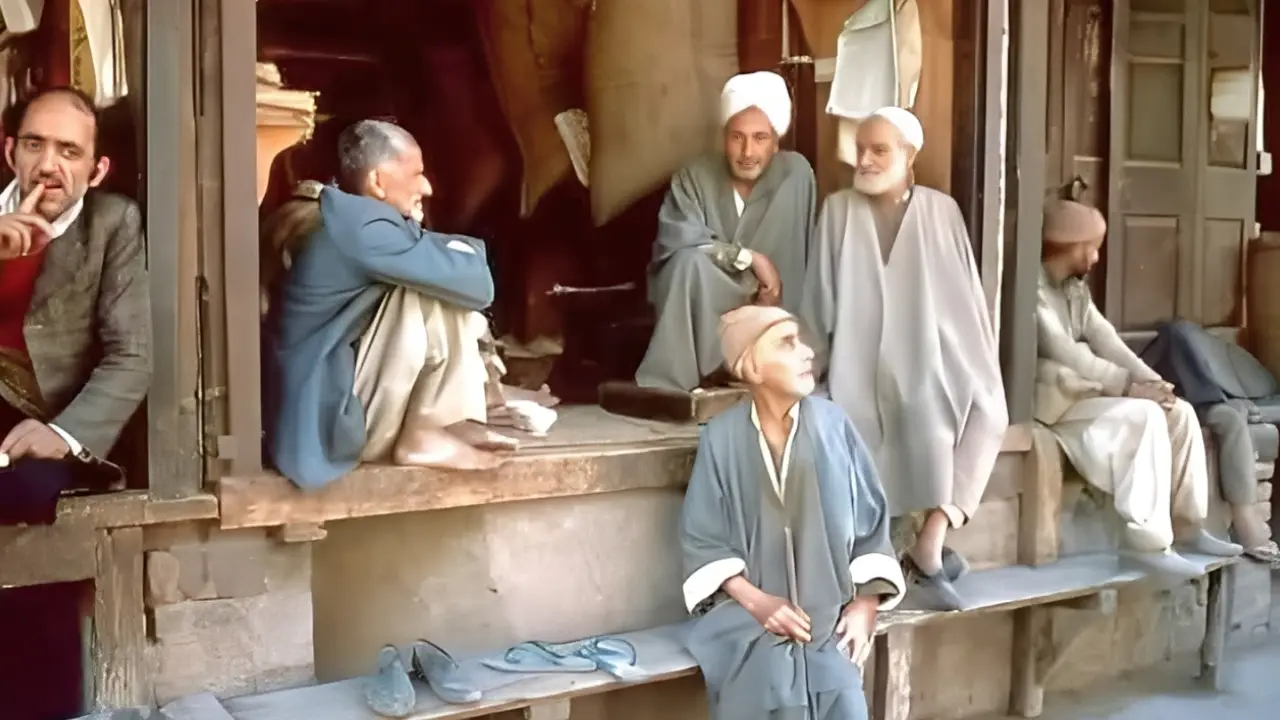
Perhaps the most fascinating chapter in its social insight is Tanz (Satire). The book explores street humour in a city “caught in a peculiar flux between genuine individual pieties and often imagined, at times enforced, collective morality.” In this tension, humour emerges as a powerful equaliser capable of cutting through hierarchies of class and privilege. The author writes that the older mahalas of Srinagar still retain a wicked, quick-witted satire. In a city that prized civility and politeness in social exchanges, tanz functioned as the street’s way of gently puncturing ego, pretension and hollow displays of status. It remains sharp, free of guile, especially among the young. Middle-aged men join in, and at times even the elderly cannot resist.
Traditionally, this humour originated from the pend, the small wooden ledge in front of shops. Early mornings and late evenings, men (only) gathered on the pend and exchanged gossip. Conversations would “weave a life of their own,” migrating from the pend to the lane, from the lane to the chowk, and from there to the qadal. Occasionally, irreverently, the humour even found its way into the hammams of city mosques, much to the annoyance of the pious, who came only to pray.
This mode of humour belonged fundamentally to the mohalla baradari, the neighbourhood brotherhood that dominated the city’s social fabric in the eighteenth and nineteenth centuries. At a time when rulers cared only for maximising revenue, leaving citizens in cycles of fortune and poverty, the baradari became a vital institution, offering relief, companionship and mutual support in times of distress and celebration.
Street ownership was decisively male. The humour was never crude: there was no verbal abuse, no sexual innuendo. It could belittle or lampoon the pretensions of the city’s elite but never to humiliate. Those targeted either ignored it or, if brave, engaged, though few dared, for the intensity of Srinagar’s street wit was formidable.
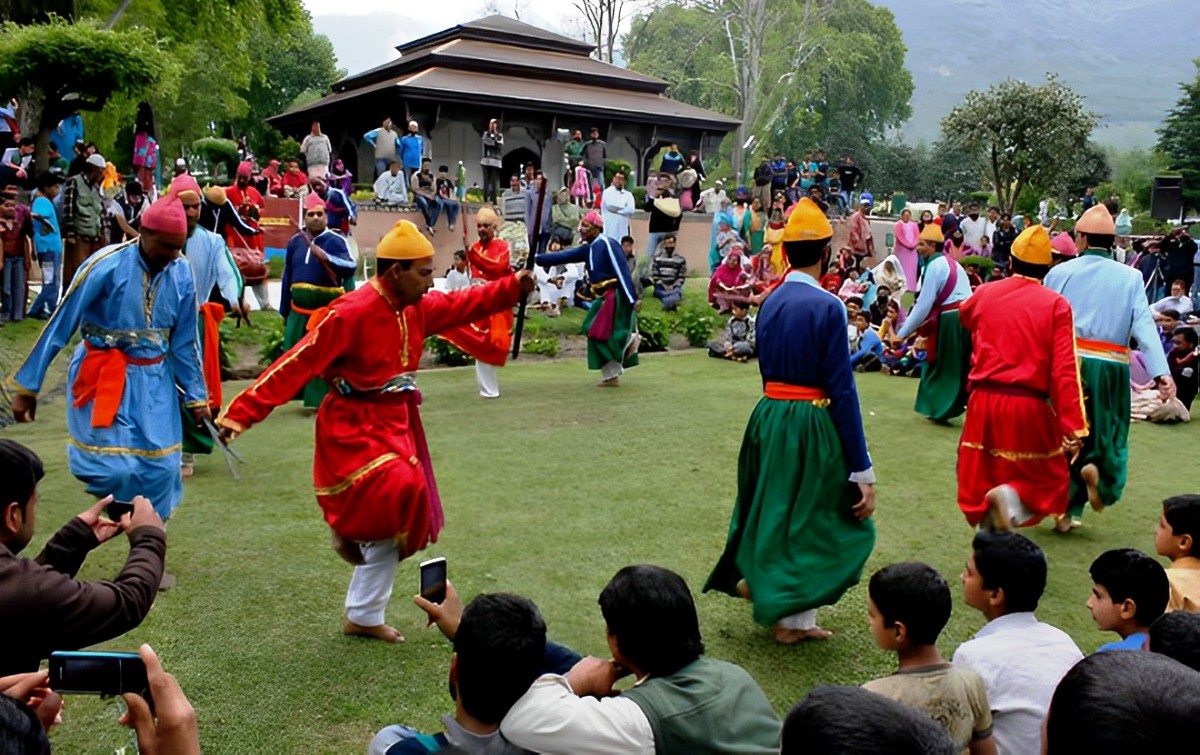
Sometimes the humour even seeped into elite assemblies and diwankhanas. For the city’s wealthy, culture was defined by delicacy of manner, refined speech and cultivated fortitude. But many in Srinagar saw through the performative nature of this elite tehzib, mocking its artificiality with pointed satire. In tracing these movements of humour, the book becomes a study of Kashmiri resilience about people finding ways to laugh, to equalise, to reclaim their voice through wit sharper than politics at the peak of suppression.
The 1989
In City of Revolt, the author writes in striking detail about the unravelling of Srinagar in 1989. The passage stands out for its clarity, precision, and emotional weight. “So why then did Srinagar unravel in 1989? On the surface, going into the summer of 1989, everything seemed fine,” the book asks.
In February 1989, the Soviet Union completed its military withdrawal from Afghanistan. This was seen as a victory of the Afghan Mujahideen, who were supported by many amongst the Muslim communities of Kashmir. On November 9, 1989, the Berlin Wall collapsed. Earlier in August, Solidarity had replaced the Communists in Poland. That change happening in faraway lands was slowly filtering into the city, and the people were talking. Across the city, people turned on their radios to listen to these events. The unbelievable had happened. And then the winter of 1989 happened.
Sameer has written history not as a sequence of events but as a living landscape of people, emotions, and inheritances. Very rarely does a book offer such an effortless insight into history, written with such clarity and care, and Sameer does it beautifully.