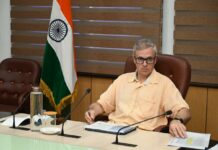
SRINAGAR: In a rare display of unanimity, the political parties of Jammu and Kashmir came together under the leadership of Chief Minister Omar Abdullah to adopt a strongly-worded resolution condemning the April 22 Pahalgam terror attack that left several civilians dead, including a local pony-wallah who fought to protect tourists.
The All-Party Meeting, held in Srinagar on Wednesday, was attended by representatives from across the political spectrum—regional and national—who expressed shock, grief, and a shared determination to uphold peace in the region. The meeting concluded with the unanimous adoption of the “All-Party Meeting Resolution on the Pahalgam Killings”, a document that marks a collective political and moral stance following one of the most horrific civilian attacks in recent memory.
At the heart of the resolution is a powerful condemnation of the “heinous, inhumane attack” that targeted civilians in the Pahalgam tourist belt. Describing the incident as “barbaric” and a “direct assault on the values of Kashmiriyat and the idea of India,” the political leadership of Jammu and Kashmir made it clear that such “cowardly acts” will not fracture the region’s historical ethos of unity and hospitality.
The resolution pledged unconditional support to efforts aimed at bringing the attackers to justice. It also endorsed the steps taken by the Union Government on April 23, while reiterating that “no act of terror can ever weaken our resolve or extinguish our indomitable spirit.”
The Assembly paid homage to Syed Adil Hussain Shah, a local pony handler who was martyred while trying to protect tourists during the attack. Hailed as the “true face of Kashmiriyat,” Shah’s bravery and sacrifice were described as “an inspiration to all” and emblematic of the traditional values of courage and selflessness found among Kashmir’s people.
The resolution also lauded the people of Jammu and Kashmir for their “extraordinary display of moral and material support” to tourists and fellow citizens in the wake of the tragedy. Peaceful demonstrations held spontaneously across towns and villages in the Valley were recognised as a reaffirmation of the region’s commitment to “communal harmony, constitutional values, and the rule of law.”
In a gesture that reached beyond regional borders, the political parties jointly appealed to governments across States and Union Territories to ensure the safety and dignity of Kashmiris, particularly students and travellers living outside Jammu and Kashmir. The resolution asked that they be safeguarded “against any form of harassment, discrimination, or intimidation.”
Finally, the resolution called upon all political actors, civil society organisations, youth groups, religious institutions, and the media to “resist provocations” and “continue working together for peace and development.” The emphasis on calm and collaboration is being seen as an attempt to steer public discourse away from communal polarisation in the aftermath of the attack.
The resolution was adopted unanimously on April 24 in Srinagar, and according to officials present, the atmosphere in the meeting reflected both grief and rare political solidarity.
Chief Minister Omar Abdullah, who convened the meeting, did not issue a separate statement but was seen engaging actively with leaders across the aisle.