SRINAGAR: Home Minister Amit Shah on Friday directed the establishment of a multi-layered security grid along the Amarnath Yatra routes, extensive deployment of drones and CCTV surveillance, QR code-based identification for all local service providers and animals associated with the pilgrimage, and strict regulation of pilgrim movement based on weather conditions.
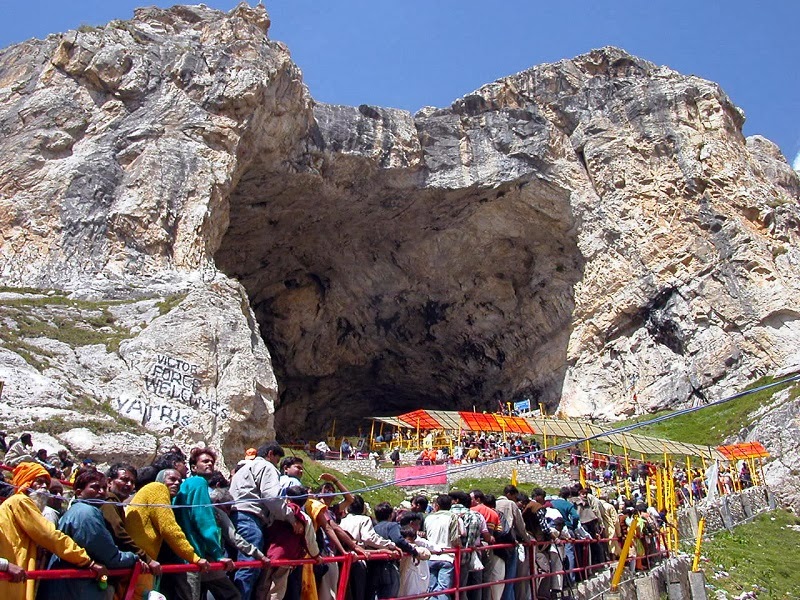
The measures were announced during a high-level review of preparations for the 57-day annual pilgrimage to the Amarnath cave shrine, scheduled to begin on July 3 and conclude on August 28.
Shah directed security agencies to create an integrated and foolproof security architecture along both the traditional Pahalgam route and the Baltal route through close coordination between the Central Armed Police Forces (CAPFs), Jammu and Kashmir Police, Army and other agencies.
He stressed the extensive use of modern technologies, including drones, CCTV cameras, advanced surveillance systems and monitoring tools, to strengthen security arrangements throughout the pilgrimage.
In a significant step aimed at improving monitoring and regulation, Shah ordered the registration of all local persons and animals associated with the Yatra and directed that QR code-enabled identity cards be issued to them. He also called for health screening and fitness assessment camps for ponies and other animals engaged in pilgrimage-related activities.
The Home Minister further directed that the movement of pilgrim convoys should be regulated strictly in accordance with prevailing weather conditions and forecasts to ensure safety along the mountain routes.
He instructed that senior officers of the CAPFs and Jammu and Kashmir Police remain deployed at camp sites throughout the Yatra to oversee security and logistical arrangements on a continuous basis.
Shah also reviewed preparations related to pilgrim registration, accommodation, healthcare facilities and disaster management, and directed officials to ensure that all essential services are in place before the commencement of the pilgrimage.
Security arrangements, he said, should not be confined to the Yatra routes alone. He directed agencies to strengthen security at major tourist destinations across Jammu and Kashmir so that pilgrims visiting other parts of the Union Territory can travel safely.
The review meeting was attended by Lieutenant Governor Manoj Sinha, National Security Advisor Ajit Doval, Union Home Secretary Govind Mohan, Army Chief General Upendra Dwivedi, Intelligence Bureau Director Tapan Deka, Chief Secretary Atal Dulloo, Director General of Police Nalin Prabhat, heads of various CAPFs and senior officials from the Ministry of Home Affairs, Army and the Jammu and Kashmir administration.
The Centre has already sanctioned the deployment of 670 companies of paramilitary forces for the pilgrimage. The forces have begun arriving in Jammu and Kashmir and are expected to be fully deployed in the coming days.
Officials informed the meeting that arrangements for registration and issuance of QR-based identity cards to local service providers are being put in place and that preparations for animal health camps are underway.
The annual pilgrimage attracts lakhs of devotees every year and is conducted through the twin routes of Nunwan-Pahalgam in south Kashmir’s Anantnag district and Baltal in central Kashmir’s Ganderbal district.