As Jammu and Kashmir grapples with a contentious 67 per cent reservation policy, public outrage is mounting. From courtrooms to classrooms, and hashtags to cabinet meetings, the battle over merit, representation, and political accountability has erupted into one of the region’s most charged debates since the revocation of Article 370, Syed Shadab Ali Gillani reports
A recent remark by Jammu and Kashmir Chief Minister Omar Abdullah, made during an interview, triggered a sharp backlash, both politically and on X. The viral clip revived public debate over reservation policies in Jammu and Kashmir, reigniting long-standing tensions around merit, opportunity, and representation.
The comment drew intense criticism, particularly from populations falling outside the reserved category. One user, writing in Urdu, warned that the so-called Open Merit group, which he described as the majority among Kashmiri and Dogri-speaking populations, could become disillusioned enough to form a new political front. He speculated that such a shift could alienate 70 per cent of voters from traditional political alliances and demanded a transparent report ensuring justice to all.
Another user, quoting the Chief Minister’s words Ye Open Merit wale kya kar lete, 2-3 din shor karke khamosh ho jaate, questioned whether young aspirants, many the age of Abdullah’s children, deserved such treatment. The user ended the post with the trending hashtag #SaveOM.
During the interview, Abdullah clarified that reservations mandated by Parliament for Scheduled Castes (SC), Scheduled Tribes (ST), Other Backwards Classes (OBC), and Economically Weaker Sections (EWS) would remain untouched. Only categories under Union Territory jurisdiction were being reviewed.
This distinction prompted further criticism. A user pointed out that even minor changes to categories such as RBA, ALC, or horizontal reservations could become politically risky for the government.
Mir Mujeeb, a general category student closely following the issue, said that while Parliament holds the authority to define new reservation categories, the percentage allocation among them is determined by the state or Union Territory, usually handled by the Social Welfare Department, currently led by Sakina Itoo.
The EWSs
In Jammu and Kashmir, the figures told a different story. Data obtained through RTI revealed that over the past five years, only 29,693 EWS certificates were issued. Of these, a mere 2,273 were in Kashmir.
Mujeeb, who had been closely following the policy discussions, recalled personally recommending to the Chief Minister that the residential asset clause be removed to widen access. The Chief Minister, he said, had initially agreed and publicly announced that the change would be implemented within days. “Now, he claims it is under the Centre’s jurisdiction and beyond his power. That is a complete reversal,” Mujeeb said.
Criticising the current proposals of “cosmetic” tweaking quotas by small percentages, Mujeeb said: “Such adjustments fail to address the core issue. The government has the authority to revise reservation percentages, including EWS, through the Social Welfare Department. The unwillingness to make meaningful changes reflects political hesitation, not legal limits.”
The backlash extended beyond the public. People’s Conference leader Sajad Lone criticised Omar Abdullah in a strongly worded post. He accused him of arrogance and indifference to opposing views, remarking, “We now have an Emperor. Who is answerable to none.”
The Sub-Committee
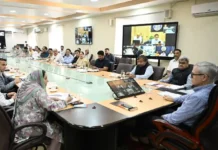
The controversy deepened existing tensions around reservation policies. Six months earlier, the government constituted a committee to review current quotas and suggest reforms. The committee has submitted a report, and it has been forwarded to the Law Department for legal scrutiny. Student groups and civil society actors began raising concerns.
Apni Party President Altaf Bukhari urged the administration to set a firm deadline. Although the Law Department was reviewing the committee’s report, he warned that the absence of a timeline risked sidelining the issue. He described the existing system as flawed and advocated a shift towards merit-based reform. “This is not about ideology. It is about justice,” he said.
PDP leader and Pulwama MLA Waheed Para echoed the call for rationalisation. He stated that while disadvantaged communities needed support, it should not come at the cost of open merit. “The solution is rationalisation, and it must be implemented.”
“There has been no real progress,” said Sahil Parray, a general category aspirant from Anantnag. “The cabinet discussed the report, but no statement or action has followed. It is deeply frustrating.”
The issue regained momentum after Omar Abdullah’s statement, which circulated widely online. Many in the general category viewed it as dismissive. “He ignores our concerns,” Sahil added. “We voted for him. He promised action. Now there is silence.”
Unequal Stakes
According to the 2011 Census, general category residents formed over 70 per cent of Kashmir’s population. Students like Sahil argued that the current reservation structure restricted their access to education and employment. A NEET PG aspirant remarked that they were being asked to compete for a narrowing share of seats, affecting not just academic progress but long-term prospects.
In medical admissions, particularly in postgraduate and super-speciality programmes, general category candidates claimed they were being edged out. Sahil cited the case of a reserved category candidate with an All India Rank of 91,000 receiving a seat in MD Radiology, while another student from the general category, with a rank of 700, failed to secure the same course. He said this was not an isolated case, but one repeated across departments and examinations.
Silence and Delay
Frustration had mounted over the administration’s silence. Students received no official update or communication on the review, despite repeated follow-ups. The panel was expected to complete its work in four to five months, but even after nearly half a year, there was no indication of progress. Sahil believed the delay might be tied to an ongoing court case, with a hearing scheduled for July 4. He suggested the administration might be awaiting the court’s direction.
Although the government maintained that the report was under standard legal review, Sahil argued that one or two weeks should suffice for such scrutiny. The prolonged wait, he said, was hard to justify.
Representation in Question
Concerns extended beyond education. Parents, civil society actors, and job aspirants questioned the lack of response from lawmakers. “There are eight MLAs from reserved categories who speak up. But where are our 30 general category MLAs?” one student asked.
The core demand from the students was for what they called “educational representation.” They contended that reservations should be based not only on population figures but on actual representation in education and public services. If a group made up 20 per cent of the population but only 2 per cent of students or employees, intervention was warranted. But where representation was already proportionate, extending further benefits only deepened inequality.
With NEET counselling approaching, the absence of an official decision loomed large. Sahil warned that unless the policy was reviewed, a significant segment of aspirants would be excluded not for lack of merit, but due to structural bias.
Government’s Stand
Last week, Cabinet Minister Sakina Itoo reaffirmed the administration’s commitment to implementing a fair reservation policy and introducing education sector reforms. “The reservation policy is for the people. That is why Chief Minister Omar Abdullah constituted a subcommittee with a six-month mandate. It was not because someone tweeted, absolutely not,” she told reporters in Tangmarg.
She added that the committee submitted its report a day before the deadline, and it had since been sent to the Law Department for vetting. “The Chief Minister is deeply concerned about the issue. We are serious about addressing it.”
Jurisdiction under Constraint
A cabinet minister, speaking anonymously to local news gatherer, KNS, said that the Jammu and Kashmir administration had limited jurisdiction over reservation matters due to constitutional provisions and post-2019 parliamentary enactments. Most quotas, he explained, now stemmed directly from legislation passed by Parliament following the abrogation of Article 370, restricting the government’s ability to make fundamental changes.
He acknowledged some administrative discretion within categories such as Residents of Backwards Areas (RBA), Actual Line of Control (ALC), and Pahari-speaking communities, which fell under the Union Territory’s domain and were being considered for restructuring. The Cabinet Sub-Committee (CSC), which submitted its report for legal review, he said, operated strictly within constitutional limits. “Quotas for SC, ST, EWS, and OBC could not be altered locally and would require parliamentary intervention for any amendment,” he said.
Protest to Procedure
The minister noted that Jammu and Kashmir’s reservation structure had undergone major changes post-2019. With central laws now applicable, the room for local adjustments had narrowed further. Even an elected government could not revise parliamentary quotas without a new act of Parliament.
“There are legal complications in reducing quotas already secured through constitutional provisions, particularly if the intention is to expand space for the general category,” said one source present during the meeting. No timeline has been set for the legal review, indicating the matter could remain unresolved for now.
Reservation Matrix
Currently, the reservation matrix allocates 20 per cent to ST and the Pahari Ethnic Group. Residents of Backward Areas and EWS have 10 per cent reservation each, while SC and OBC are allotted 8 per cent each. Another 4 per cent goes to residents near the Line of Actual Control and the International Border. Horizontal reservation includes 6 per cent for Ex-Servicemen and 4 per cent for Persons with Disabilities.
The policy became politically charged when the administration, in an affidavit before the Jammu and Kashmir High Court in early 2025, defended the reservation structure and urged the dismissal of a petition challenging it. The move triggered a sharp backlash from opposition parties, prompting the ruling JKNC to distance itself. Officials later described the affidavit as “vague” to contain the fallout.
The situation, right now, is that the status quo is in place.