About to be 10 weeks in government, Omar Abdullah is facing a diverse set of issues that will consume its own time to settle. Till then, the elected lot will have work and be seen working in a new system they are strangers to, writes Masood Hussain
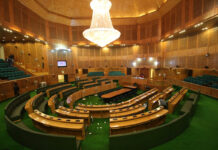
“To put it very honestly,” one of the 88 Jammu and Kashmir lawmakers said about the historic election outcome, “more than 80 lakh people of Jammu and Kashmir voted and 89 people got a job each. I got my first salary of one month, Rs 1.30 lakh and that is what it is, without doing anything.”
In a historic election, the Jammu and Kashmir National Conference (JKNC) got a landslide mandate in the 90-berth house. BJP’s Devender Rana died within days after taking oath of office. Omar was elected from two constituencies and has resigned from one berth, leaving the effective strength of the house to 88. So who is the 89th man who got a job? “He is Nasir Aslam Wani, whose file was finally cleared by the Lt Governor without agreeing to a cabinet minister status.”
Interesting Times
Jammu and Kashmir, right now is passing through interesting times. While the political class returned to governance after more than five years of shuttling between “preventive detention centres” and the home, they found almost everything changed. “It is a new set-up, a new system, a new rule book which we cannot access or understand. We are still trying to pick things,” another lawmaker said. “I have too many doubts and suspicions about the objectives of the development on the ground but I must admit that it is happening and happening very well. Too many things are happening on autopilot but yes happening.”
Another MLA, a first-timer, said that he is overwhelmed by the role that the DDC Chairmen have in districts. “It might be extra-constitutional but the fact is that they are spending funds like anything,” he said, “It may be incorrect but what I have understood in these months that the post-2019 governance structure has fetched Jammu and Kashmir two types of representatives – one is the DDC member who is supposed to be apolitical but will work on development and the second is an MLA who may lack any developmental requirement but will be completely political.” This MLA’s problem is when he will be called to a review meeting. “That will tell me my status and worth. Should the DDC chairman in a district preside over the meeting or me?” he said, “The official communications I have got so far mark DDC first and then me.”
Governance Structure
These are some of the smaller things in the larger legitimacy versus power versus authority versus rights debate that is still being discussed in hushed tones within the power corridors within and outside the civil secretariat. With a historic mandate in his pocket, Jammu and Kashmir Chief Minister Omar Abdullah is facing a serious issue on the authority versus power front. This crisis, most of which is unsaid from all sides, is too visible across the erstwhile state. “Authority has always been dichotmic,” explains an academic. “It has legitimacy as one component and power another one. In Jammu and Kashmir case, these two things are being controlled by two different people.”
Jammu and Kashmir has twin power centres. As an MHA appointee, LG has enormous powers as head of the Union Territory and the Chief Minister has a landslide mandate but has limited authority. In anticipation of the elections in Jammu and Kashmir, held on the directions of the Supreme Court, the Government of India gave Jammu Kashmir LG the final say on the functioning of the All India Services (IAS, IPS, IFS, IRS), Anti-Corruption Bureau, the Directorate of Public Prosecutions, Prisons, Forensic Science Laboratory under and legal and judicial affairs including the appointment of the Advocate General and law officers. He is the sole authority for granting prosecution sanction or the filing of an appeal.
Though this has left the entire system of governance with the elected government, the Chief Minister’s control over the management of the federal services personnel is the issue that the two set-ups have yet to generate a consensus on. In the past few nine weeks, there were various disagreements over the transfer and posting of the officers. In certain cases, there were serious issues. One officer was posted by LG’s office and the CM’s office shifted him to another position.
Issues Are Too Many
Acknowledging the landslide mandate, a veteran JKNC leader said their government took the oath of office in a changed situation. “People know it,” he said.”It will take time to come to terms with the new situation. It is as new to us as it is to the people. We were never used to such a situation in history.”
The leader said there are three kinds of issues that the government is facing. “One is what we have promised to the people. This includes the free units’ power, the LPG cinder, the rations and filling the vacancies. All these would require close consultation with the Raj Bhawan and the Government of India,” he said. “The second set of issues is the problems that crop up daily. The issue of the academic calendar came up and it was addressed. The issue of deletion of a chapter in a textbook came up and it is being addressed. The issue of major road projects and railway tracks is being debated and it needs to be tackled at the highest level. We have just started, we need time to manage this all. But, at the same time, the appointment process has started.”
The former minister said that all these issues can be better managed if the Government of India restores the status of Jammu and Kashmir as a state. That is precisely where the ball stops and that is what this government is working towards. “The real issue is the dual power structure that we are caught in,” he said.
Meeting with HM
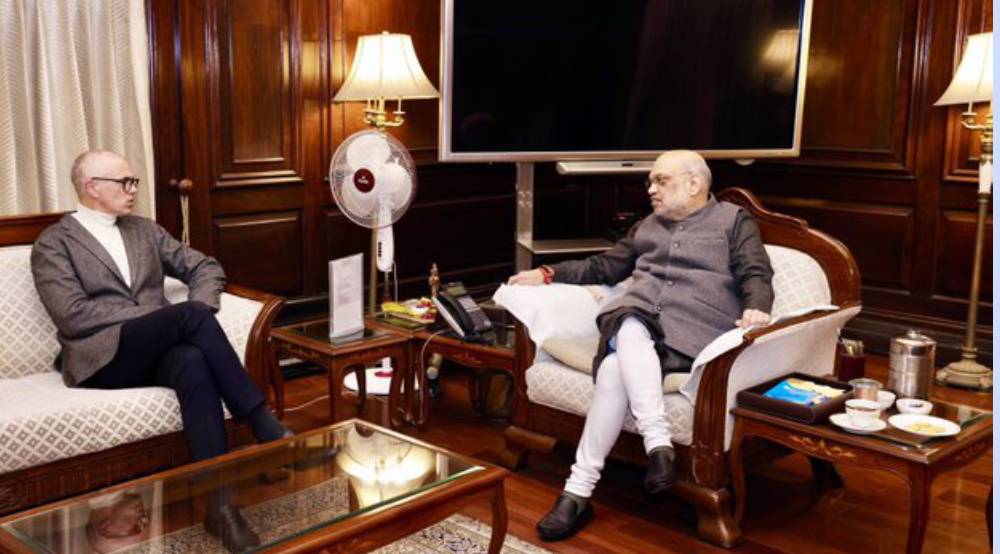
Chief Minister in the last less than six fortnights had two meetings with the Home Minister, Amit Shah, the defacto ruler of Jammu and Kashmir. On October 23, 2024, he had a 30-minute meeting and on December 19, 2024, he had an almost 20-minute meeting. Though the details of the meeting are not supposed to be public, whatever came out was around Omar’s demand that the Government of India must restore the statehood of Jammu and Kashmir because it is creating serious governance issues.
“We spoke about the restoration of statehood and our experience as an elected government over the past two and a half months, including the challenges and successes during this period,” Omar told reporters after the brief ‘cordial’ meeting. He did talk about the issues in which Jammu and Kashmir need “handholding of the Centre for effective governance”.
The government has been insisting that Jammu and Kashmir lacks the business rules that will help transact governance. When asked about it, Omar said: “The business rules are to be decided by the Jammu and Kashmir Cabinet and approved by the Lt Governor. There is no role for the Government of India in this process.” He said a Cabinet sub-committee would finalise the rules before obtaining clearance from the full Cabinet and forwarding them to Raj Bhawan.
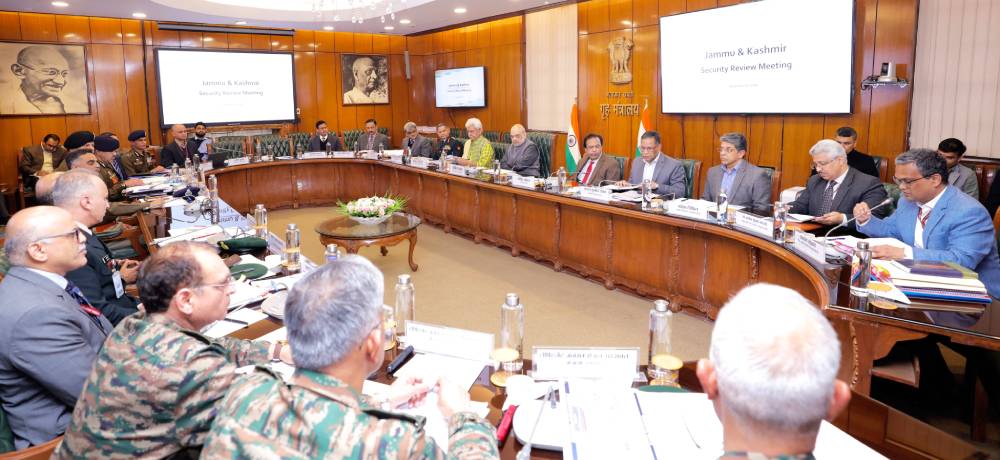
Soon after his meeting with the HM, Amit Shah presided over a three-hour-long meeting in which the security situation was reviewed. Asserting that a “terror-free” Jammu and Kashmir is the main objective, Shah asked security honchos to continue the “area domination plan” and get into “mission mode” to make it a reality. He credited the security grid for demolishing the ecosystem that sustained militancy in the region.
The high-level meeting had heads of all the security agencies. The only official from Jammu and Kashmir was Atul Dulloo, in the capacity of Chief Secretary, the head of civil administration. “Militancy cannot be countered in a vacuum,” Omar said after he met with Shah. “To address this effectively, it is crucial to take the people of Jammu and Kashmir into confidence and involve their elected representatives.”
Though the Chief Minister has been responding to every situation within the governance set-up very cautiously and maturely, still, some people still think that he sometimes reads the situation slightly differently. “After his first meeting with the Prime Minister, he felt things are moving fast and he talked a lot about the ‘successful meeting’ but that was not to be,” one political commentator, who is in the know of things said. “His second meeting with the Home Minister only proved that.”
Missing In Action
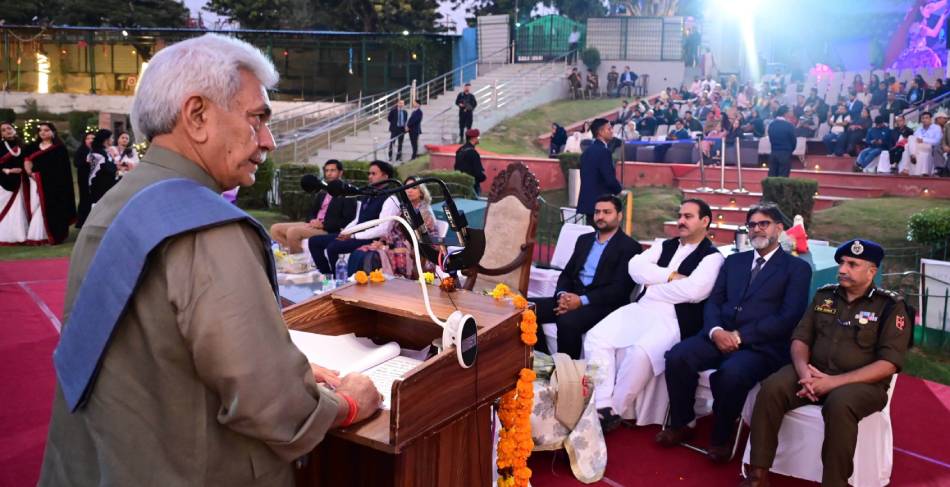
A former officer admitted that the government must be happy that the entire staff including the Jammu and Kashmir Police is “highly supportive” of the elected government. “The problem is that they are missing,” he said. “The government is currently celebrating the good governance week and just see if they are anywhere around.”
The former officer, who has worked with various ministers, believed that the lawmakers should ideally be active and seen as visible as they have been elected to be so. “If they wish to be around, they will be seen and people will also feel some kind of satisfaction. Nobody is going to offer them the space on a plate. They will have to work for it.”
Chief Minister Omar Abdullah visited various districts in Kashmir and in Jammu where he had interactions with the people and the local administration including the Deputy Commissioners and the SSPs. “He is yet to have a joint meeting with DCs and SSPs,” the former officer said. “The joint meetings help the government to put across its priorities. LG is having periodic review meetings with DCs as well as with SSPs.” There is an impression within the government and the party that Omar has barely met LG Sinha twice.
Right now the major issue that Kashmir is facing is the possible change of the Kashmir shawl into a GST slab that will hike its hike hugely thus making it unaffordable. This can devour the cascading impact of successful tourism. Since Omar has personally flown to attend the GST council meeting, a ground expectation is that his interventions would halt the potential shift. Instead, he must strongly follow up the LG administration’s proposal of getting all crafts into the lower slab basket so that Jammu Kashmir retains the growth trajectory in crafts that it has discovered of late. Jammu Kashmir exported Kashmir crafts worth Rs 1162 crore in 2023-24, for the first time, after 2016-17.