Weeks ahead of Kashmir getting full rail connectivity to the rest of the world, the Railway’s decision to expand the network within the valley is being resisted at ground level and in parliament as it can upset Kashmir’s apple cart, Aiman Fayaz reports
With the promise of global competitiveness and economic prosperity, the much-anticipated direct train route from Delhi to Baramulla is set to be inaugurated by Prime Minister Narendra Modi on January 26, 2025. While the country prepares to celebrate this historic leap of connecting Kashmir to the country’s vast rail network and fulfilling a decades-long dream, the Railway Ministry plans to expand the tracks within, which has pushed apple growers in South Kashmir to a protest.
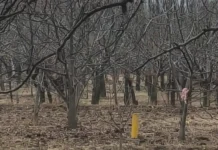
For the region’s orchard owners, whose livelihoods hinge entirely on these lands, this development threatens their heritage and their very survival, as swathes of their lush orchards fall directly in the path of progress. The developmental intervention is expected to upset the apple cart, the main mover and shaker of Kashmir’s peripheral economy.
The Start
It all started when the Railways Ministry approved the Final Location Survey for five railway lines, all within the land-deficient Kashmir, as Railways Minister Ashwini Vaishnaw reported in a detailed response in the Lok Sabha. It said the Final Location Survey for these five lines has been sanctioned. These include the doubling of the Baramulla-Banihal section (135.5 km), the Baramulla-Uri section (50 km), the Sopore-Kupwara section (33.7 km), the Awantipora-Shopian section (27.6 km), and the Anantnag-Bijbehara-Pahalgam section (77.5 km). Most of these lines pass through the land-scare valley’s apple orchards and rice fields and it quickly started generating a reaction.
“We will burn ourselves to death, but we will not let the administration take our land. This orchard is our only source of livelihood,” said Bilal Ahmad, an apple farmer from South Kashmir’s Anantnag district. He and other orchardists have been protesting for days against a railway line expansion that threatens to uproot their livelihoods.
While the government officials present the project as a step towards regional development, local voices narrate a different story. Ghulam Ahmad, a Pahalgam resident, expressed his concerns. “This is unjust. They are seizing our land in the name of development, but there is no justification for sacrificing our centuries-old orchards,” he said. Ahmad argued that the orchards are crucial not only to the local economy but also to the fragile environment. “Instead of planting more trees, they are turning our green spaces into wastelands. It will worsen Kashmir’s already precarious climate.”
Tension in Shopian
The project, part of a broader railway network extension within Kashmir, threatens the livelihoods of thousands in an area known as the Apple Bowl of Kashmir.
Ghulam Ahmad Reshi, an apple orchard owner from Shopian, is angry and restive. “We will never surrender our land for a train route we never asked for. We will die before letting them take our source of income,” Reshi said. For nine months, Reshi and many others have protested against the railway project, determined to protect their land and livelihood from what they see as an unjust takeover.
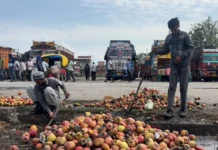
Applecart is a cornerstone of Kashmir’s economy, engaging approximately 3.5 million farmers, or 27 per cent of the population. In Shopian alone, orchards span 26,231 hectares, producing high-quality apples that contribute over eight per cent to the region’s GDP through exports. For many, these orchards are more than just farmland—they are their primary source of income and a generational legacy.
“Nearly 152 kanals of productive orchard land have been designated for the railway line,” said Abdul Gani, a resident of Reshipora. “This land is not government property; it is privately owned by us. The livelihoods of the entire village, reliant on these apple orchards, are now under threat.”
Farmers Resist
Aijaz Khuroo, the incumbent tehsildar of the area, clarified that no formal notification has been issued for land acquisition. He described the recent activity as a preparatory exercise rather than a formal step towards acquiring land. “The government might choose the other side, but since no decision has been made, we cannot acquire any land,” Khuroo said.
However, the revenue officer admitted that some drone surveys had taken place and that landmarking was being conducted unofficially, which he suggested might have created misunderstandings. Villagers, however, viewed the activity with suspicion, fearing their land could be taken without due process. Protests disrupted the survey, leaving it incomplete.
Riyaz Ahmad, another apple grower, shared his frustration. “Initially, they assured us the railway line would only take up 100 feet of land, and we thought we could cope with that,” Ahmad said. “But when the demarcation began, it turned out to be more than three times that. How can we survive if they take away so much of our land? We feel trapped. The government is not listening, and we don’t know where to turn for help.”
Residents questioned why their land was being marked and surveyed if no formal decision had been made. “Without clear answers, it is hard for us to believe this is just a routine exercise. Our livelihoods depend entirely on these orchards,” one farmer said.
Villagers pointed to past instances of land transfers for development projects, which they claim offered little or no compensation. “We have already given a lot of our land to the government—300 kanals for a CRPF battalion, the horticulture department’s drug farm, and the Zainapora Degree College,” said Ghulam Ahmad, voicing his frustration.
Fida Mohammad Bhat, a former tehsildar of Reshipora, Zainapora now posted in Budgam, provided a different perspective. He explained that the land used for the college was originally state-owned, so no compensation was required. “The land for the drug farm, however, was reclaimed from private owners. Compensation was given, but it was quite low, which understandably created resentment among the affected residents,” he said.
The unease underscores the broader challenges of balancing development and the livelihood rights of local communities in Kashmir. Most of the people living in the region rely primarily on agriculture and mostly on the apple. “It is not about the land that goes under the tracks,” one government officer, who is also an apple grower said. “Surface communication is magnetic. It gets housing settlements, shops and business too close and thus starts urbanisation that kills the spirit and the would of the land and agriculture.”
Anantnag Oppose Expansion
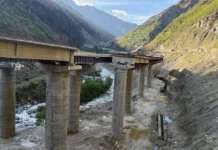
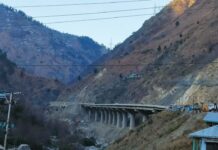
Getting rail to Kashmir has been a dream people have been waiting for since the fall of the nineteenth century. Conceived at Rs 2500 crore somewhere in 1995, the 272-km track is about to get ready for a staggering Rs 40,000 crore investment, this fall. A strategic project, it was challenged and came up as a technology marvel. This is expected to be through early next year as a small patch is getting the finishing touches right now. Right now train chugs between Baramulla, Banihal and Sangaldan on the Kashmir side and from Jammu to Katra from the plains side.
The fuss is over helping the main Udhampur-Srinagar-Baramulla Rail Link (USBRL) railway line to expand on two sides in north and south Kashmir. At Baramulla, its tail end, it intends to move towards Uri and Kupwara. In South Kashmir, one track will extend to Shopian from Awantipora station and another to Pahalgam from Anantnag. Pahalgam, a tourist resort, is the base camp for the Amarnath yatra. A major highway is also planned to reach Pahalgam bypassing all the major towns from Qazigund.
The proposed Anantnag–Pahalgam railway line has added to the growing discontent among farmers in Kashmir, already alarmed by similar projects in Shopian. Farmers in Anantnag have urged the government to reconsider the project, warning of widespread economic and ecological consequences. “We knew the fate of the people who sold their land to the main railway line,” Abdul Wahab in Srinagar outskirts said. “They were millionaires the day they sold the land and when the train came, some of them were working as labourers on the tracks.”
The 77.5-kilometre railway route, which would connect Anantnag to Pahalgam, has drawn criticism for passing through fertile farmland and orchards. Farmers and local leaders alike have questioned the necessity of the project.
Bashir Ahmad Veeri, a National Conference leader and MLA, met with farmers in Anantnag on December 1, 2024, to discuss their concerns. “I do not understand the purpose of building this railway line. Are they trying to dispossess farmers or further destabilise the economy? This region has no industrial base, and Pahalgam is not an industrial hub. We will not surrender this land without a struggle,” he said.
Similar to the Shopian protests, Anantnag residents have criticised the lack of consultation. Former minister and Apni Party president Altaf Bukhari emphasised the need for transparency and public engagement. “Most of the affected farmers are small landowners, and the environmental impact of laying tracks through fertile farmland and forested areas cannot be ignored,” Bukhari said in a post on X. He further stated that the authorities must engage with all stakeholders. “There was never a public demand for a railway line to Pahalgam. Decisions of this magnitude should not be imposed without meaningful dialogue with the people.”
Unlike north Kashmir, where the rail is planned to go to border areas in Kupwara and Uri, there are no strategic spaces down south. Experts have echoed these concerns, warning that the project could devastate Kashmir’s agrarian economy. As protests intensify in both Shopian and Anantnag, calls for a more democratic approach to development in the region grow louder.
Over 300 families in Reshipora rely on these orchards, which are now threatened by the railway project. Apple growers feel blindsided by the project, as no prior notification was given before the survey. Men with drones and equipment arrived unannounced, claiming to be researching a railway route.
Authorities have tried to allay fears, promising to mitigate the impact on local livelihoods. Himanshu Shekhar, spokesperson for Northern Railways, said efforts would be made to minimise tree felling. “While some trees may need to be cut, we will plant many more,” He said. Many view the orchards as their last hope in a region grappling with unemployment rates nearing 25 per cent.
Ecological Fallout
Environmentalists warn that uprooting orchards violates sustainable land use principles, jeopardising both the environment and the local economy. Activist Raja Muzaffar criticised the project’s potential to destroy fertile farmland and disrupt the ecological balance. The densely forested Shopian district, a hub for apple production, is especially vulnerable.
Raja highlighted the risks in areas like Shopian, Pahalgam, and Chandanwari, which lie near significant glaciers such as Kolhai and Amarnath. “Extending the railway into these regions makes little sense. The construction and operation will undoubtedly increase temperatures and carbon emissions, which could irreversibly harm the valley’s ecology,” he said. “We are looking at potential air pollution and further environmental degradation.”
Proposed railway expansions, Raja said would require a staggering amount of fertile land, much of which is under apple cultivation—a cornerstone of South Kashmir’s economy. For the Anantnag-Bijbehara-Pahalgam railway line alone, an estimated 2340 kanals of land would be acquired, most of it covered by flourishing apple orchards.
Similarly, the 27.6-km-long Awantipora-Shopian railway line would demand over 840 kanals, again encroaching heavily on orchard land. The Baramulla-Uri rail line, another significant project, is expected to require 1500 kanals.
Apple Economy
According to a report, between 1980-81 and 2016-17, Jammu and Kashmir’s apple cultivation grew at a compound annual growth rate (CAGR) of 3.17 per cent, outpacing Himachal Pradesh’s 2.63 per cent. This growth reflects the region’s increasing reliance on agriculture for livelihoods. However, despite a larger cultivation area, Jammu and Kashmir lags behind HP in terms of productivity, underscoring the need for improved orchard management and stronger institutional safeguards. Reallocating agricultural land for non-agricultural purposes risks disrupting livelihoods and could significantly harm agricultural output.
In total, over 5,500 kanals (278 hectares) of fertile, orchard-rich land are at risk of being lost to these projects. “This is not just land—it’s our lifeline,” said one orchard owner. “And for what? A railway line that they never even asked for.”
Democratic Deficit
In April 2024, farmers in Shopian district staged protests against the proposed railway line that threatened to cut through their orchards, destroying decades-old apple trees and their primary source of livelihood. At the time, Jammu and Kashmir had no elected government and was directly run by the Ministry of Home Affairs through the Lt Governor, a situation that led to a significant democratic deficit in decision-making.
During this period, controversial land acquisitions and infrastructure projects, such as the railway line, were pushed forward under the administrative setup, leaving many residents feeling alienated and excluded from decisions that profoundly impacted their lives and livelihoods. The lack of an elected government intensified feelings of powerlessness among the affected communities. Although elections have since been held and Jammu and Kashmir now has a Chief Minister in office, the situation for many residents remains unchanged. This continuation of disregard has only deepened mistrust and resentment among those whose voices remain unheard.

PDP’s Iltija Mufti voiced her concerns over the railway project and called for greater scrutiny, particularly regarding its potential impact on the region’s prized apple orchards. In a statement, she urged the administration to prioritise conducting a thorough environmental impact assessment before proceeding with the project.
Drawing comparisons to the environmental degradation caused by large-scale infrastructure projects in Uttarakhand, Mufti warned against similar mistakes in Kashmir. “In Uttarakhand, extensive road construction led to the felling of thousands of trees and destabilised the environment,” she said. “Kashmir is even more fragile, and decisions of this magnitude should not be taken lightly. There must be a thorough assessment of the impact on our environment and orchards to ensure we do not incur irreparable losses.”
Environmental activists and political leaders have joined the growing debate over the railway project in Kashmir, which has sparked protests among farmers fearing for their land and livelihoods.
Kashmir’s small landholdings add another layer of complexity. According to the 2015-16 Agriculture Census, the average size of small agricultural holdings in Jammu and Kashmir is officially recorded at 0.55 hectares. However, unofficial sources estimate the average to be closer to 0.35 hectares, equivalent to around six kanals. The 2010-11 Agriculture Census reported even smaller landholding sizes across many districts in the Kashmir Valley, with south Kashmir’s Shopian averaging just 0.56 hectares and Srinagar in central Kashmir as low as 0.31 hectares.
MP Aga Ruhullah Mehdi, while addressing the Parliament on December 4, 2024, regarding the Railway Amendment Bill 2024, strongly opposed the demarcation process for railway lines extending from Avantipora to Shopian and Anantnag. He highlighted that the procedures undertaken violate Section 411 of the Land Acquisition Act of 2013, which mandates formal public notice and a social impact assessment before initiating any project. Mehdi emphasised that this legal requirement was disregarded on the ground.
Mehdi revealed that the construction of these railway lines would destroy approximately 288 hectares of agricultural and horticultural land, including apple orchards that are over 50 years old. These lands serve as a crucial employment source for nearly 35 lakh people in Kashmir, constituting 24 per cent of the region’s population. The loss of these lands, he argued, would severely impact the livelihoods of countless families who depend on horticulture, a backbone of the local economy.
Under the EIA Notification 2006, large-scale construction projects are required to conduct an Environmental Impact Assessment (EIA). Projects that involve significant environmental implications, such as extensive land acquisition or deforestation, are legally obligated to carry out an EIA, or they may choose to do so voluntarily. This process helps assess and mitigate potential environmental impacts before the project proceeds.
Mehdi further stated that, upon consulting farmers and locals, it was clear that there was no demand for a railway line in the area. Instead, the farmers were being coerced into surrendering their lands. He described the project as destructive rather than developmental, labelling it a “colonial project” aimed at displacing and disrupting local communities rather than fostering progress.