In the perilous stretches of the Jammu–Srinagar highway, where landslides and wreckage are routine, a group of self-taught rescuers has emerged as the region’s major lifeline—risking their lives, without formal backing or equipment, to pull others back from the edge, Babra Wani reports

As soon as they received a call about a vehicle veering off the road, the office’s stillness broke. A team was deployed without hesitation, moving swiftly towards the location, hands steady on ropes and stretchers.
Faces fixed and gaze-focused, they climbed, crawled, and carried. Time seemed to slow as they reached the wreckage. Screams and wails echoed around them. From the twisted vehicle, a hand emerged—one finger wrapping around another. There was nothing to say. Only breath, shared strength, and the silent assurance that help had arrived.
A Four-Decade Mission
Nearly forty years ago, a few young men in their early twenties embarked on a mission to save lives. Led by Shahjahan Mir, now in his sixties, the group began rescuing victims of road accidents. Decades later, the mission has been passed on to Mir’s nephew, Sehraan, while Mir continues to serve as the chairman of their rescue group, the Himalayan QRT Ramsoo, an emergency response team.
Sehraan Ahmad Mir, 34, a resident of the Ramsoo area in Ramban district, followed in his uncle’s footsteps nearly a decade ago. A postgraduate in political science from Jammu University, Sehraan was previously employed in the private sector. He eventually resigned and now dedicates his full attention to the rescue effort.
“This noble mission of rescuing people was initiated by my uncle four decades ago. We live in an area where road accidents are very common, and he used to help the victims. Earlier, occasionally, since 2017, I started accompanying him regularly,” Sehraan said. “We are doing this work without any monetary gain, solely for the sake of Allah.”
Currently, the group comprises nearly forty volunteers, twenty-five of whom are registered members. Most are either unemployed or work in the private sector. “We work for free with this organisation,” he said. “We contribute a fixed amount from our own pockets every month to raise funds for the impoverished, including orphans and destitute widows.”
Self-Funded Mission
The principal aim, Sehraan said, had always been to assist accident victims, but whenever they came across individuals suffering due to poverty, they extended help wherever possible.
As the group funded its operations from personal contributions, Sehraan recalled that the Ramban administration had provided them with some essential rescue equipment around three years ago.
“With time, and with the increasing number of rescue operations we conduct, the equipment has deteriorated,” he regretted. “Almost all of it has become outdated and is no longer fit for use. Since that single instance, we have not received any assistance from any authority or group. We are managing everything on our own.”
Digital Outreach Without Donations
Mir’s Himalayan QRT Ramsoo was among the few organisations in the region, alongside Banihal Volunteers and Civil QRT Ramban, working tirelessly to assist people. However, like the others, it lacked institutional support. While some of these groups depended on public donations, Mir’s team had not initiated crowdfunding or sought public contributions.
The group’s official Facebook handle had amassed over 100,000 followers, where they regularly shared updates about their rescue operations and other relevant developments in the area.
“Our social media handles inform people about traffic updates and key infrastructural changes,” said Sehraan, who also managed the group’s online presence.
In addition to Sehraan, 26-year-old Navaid Runyal, a resident of Ramsoo, was an active member responsible for coordinating their social media activities.
The team raised awareness on road safety and traffic updates through social media platforms, and also conducted other outreach programmes.
The Rescues
“Since this area is highly prone to accidents, most of our rescue operations involve road mishaps,” Sehraan said.
Whenever the group received a call about an accident, the first response was to provide immediate medical aid.
“Our priority is always to save as many lives as possible by either providing initial treatment or taking the injured to the nearest hospital,” he said.
Nearly a year ago, ten members, including Sehraan, underwent first-aid training in Jammu, facilitated by the authorities.
Apart from road accidents, the team responded to fire incidents and emergencies involving vulnerable individuals. “If a household lacks a male member and the women need medical help, we go to assist them. We also help rescue people from inaccessible areas, often carrying them on our shoulders to reach medical facilities,” he said.
The team operated from a small room provided by the SDM Ramsoo. “It is a very small space. We had started from rented premises, but the building where we had our office was later demolished,” he added.
“All our members are male and under the age of 45. As most of our work involves physically demanding rescues, we need younger, more energetic individuals. We do not have dedicated rescue vehicles, so we either use our transport or hire vehicles for rescue missions. Many leaders and politicians promised help, but none of those promises were fulfilled,” said Navaid.
He explained that during accidents in remote areas, the team managed everything independently. For late-night emergencies, the group operated on a rotational basis. Whichever member was nearest to the accident site would take immediate action.
“We have not divided rescue duties among ourselves. Whoever is available responds, even at midnight. We are always ready,” he said. The group also organised free medical camps to assist people in areas lacking access to healthcare. “We try to reach remote areas to help those in need,” he added.
The Motivation
For Sehraan, it was a rescue operation carried out by his uncle—one he had witnessed first-hand—that compelled him to join his uncle’s efforts.
“I remember, in the 2013 summer, when I was a student of Class 11, a young boy in Ramsoo, who worked locally and went to the river around 1 pm to cool down, lost balance and was swept downstream. Lodged between boulders in the river, I watched helplessly,” Sehraan remembers. “Bystanders tried to help, but it was in vain. Then my uncle’s rescue team arrived. When I saw them reaching areas that seemed impossible for us, I felt a deep urge to be part of that work.”
Inspired by his uncle’s commitment to helping others, Sehraan began to accompany him occasionally on rescue missions after completing his graduation, before committing completely in 2017.
That one incident had a lasting impact on him. He watched as the operation stretched beyond four hours until the boy’s body was finally retrieved. “Although we could not save him, his body was recovered.”
His uncle, Shahjahan, continued to serve with the same passion he had shown in his youth. “He has rescued many bodies from the Chenab River, even jumping into it. He was among the first to carry out rescue operations in the region,” Sehraan said. “Back then, there were no NGO’s.
Among his group, Sehraan has been present at nearly every minor or major accident site in the area in recent years. “Minor accidents happen from time to time, but since January 2025, there have been around 10 to 15 major accidents involving vehicles, and I have reached every site,” he stated.
By 2024, the organisation had carried out more than 30 rescue operations.
These incidents occurred across areas such as Battery Chashma, Nachlana, Sherbibi, Magarkote, and Digdol.
During Ramazan, the Muslim month of fasting, just four days before Eid, the team undertook a rescue operation that lasted over three hours to retrieve bodies and bring them back to the road.
Roughest Rescues
Despite the routine exposure to crash sites, blood-soaked bodies, and mangled vehicles, some incidents have left a deep imprint on the team’s psyche.
In 2023, a tragic accident in the Battery Chashma area involved a Tavera travelling from Jammu. It crashed, killing all ten passengers instantly.
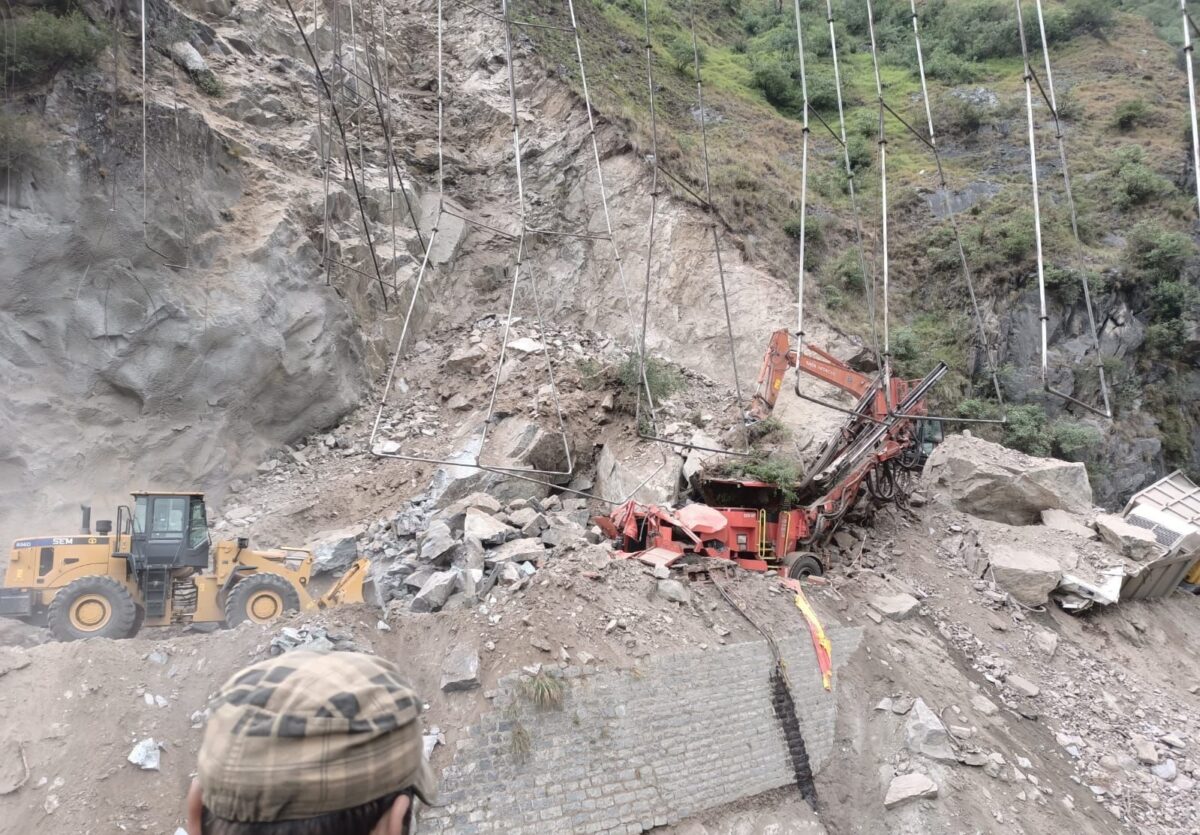
“It was one of our most dangerous rescue operations. The site lacked space, and we had to descend a cliff using ropes tied around our bodies,” Sehraan recalled. “We had to seek help from other (formally trained) rescue teams as well.”
The operation took more than ten hours. “It looked like a scene from a film. Vultures and eagles were already feeding on the corpses. The bodies were so badly disfigured that internal organs were scattered everywhere. We had to collect them in polythene bags.”
One of the earliest accidents that stayed with Sehraan involved a vehicle carrying Amarnath Yatra pilgrims. It crashed, killing approximately 23 people. “It was horrific,” he said. “It was one of our major and most difficult rescue operations. The water levels were high due to increased rainfall, which made things worse.”
Initially, it was not easy. “Earlier, especially during night rescues, we would get scared just imagining the condition of the dead bodies. But with time and experience, we grew more courageous to face the fate”
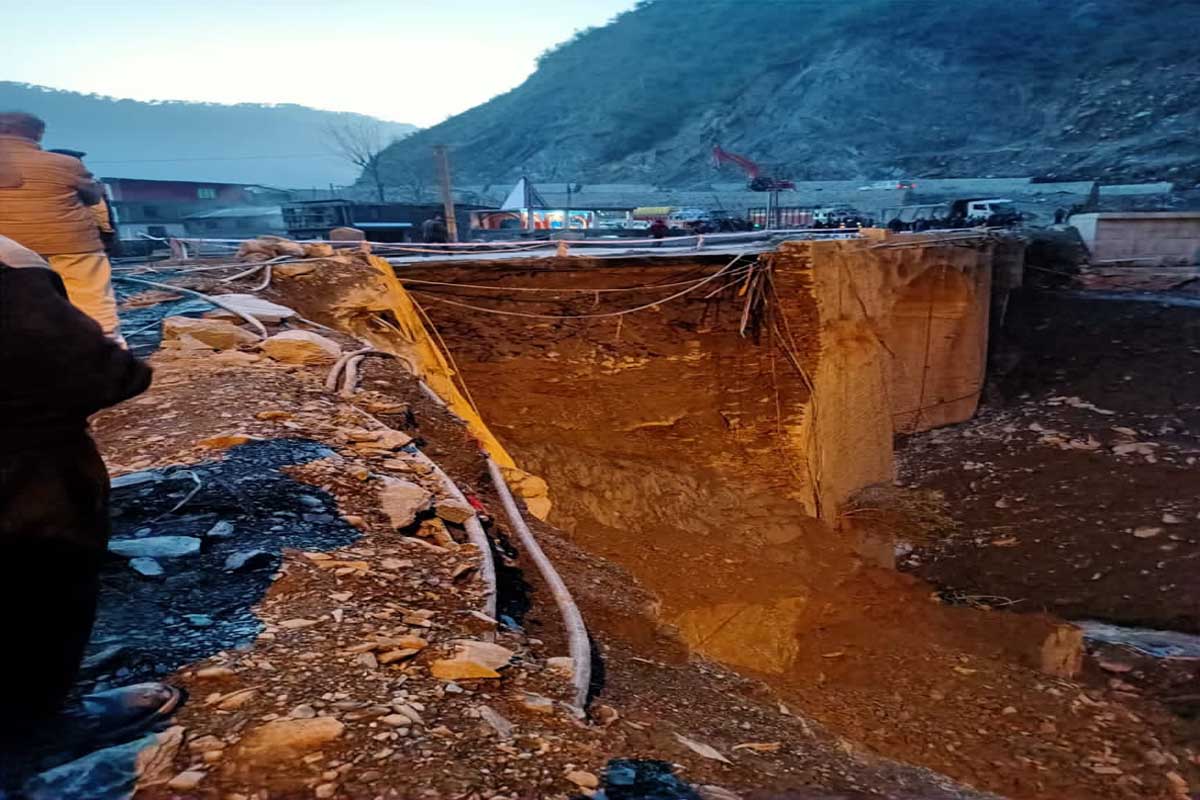
During the tunnel collapse incident, the team remained at the site for four consecutive days, assisting in the rescue operations. “It was another horrific scene. More than ten people lost their lives. The bodies were dismembered, and we had to gather the pieces.”
Recalling their fastest operation, Sehraan said they managed to complete a rescue in just 40 minutes. “It was in the Magarkote area. A tourist vehicle had fallen into a 40-foot-deep gorge. Two people died, but we managed to save the rest in just 40 minutes.”
A Treacherous Stretch
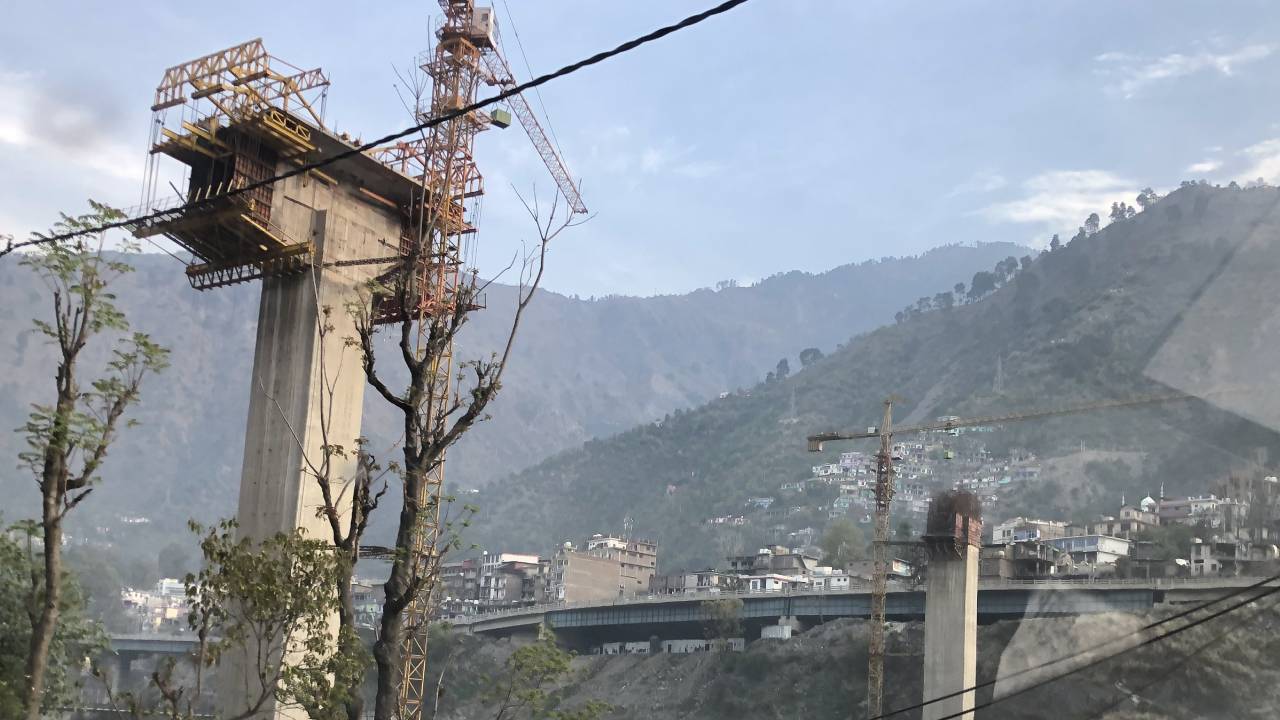
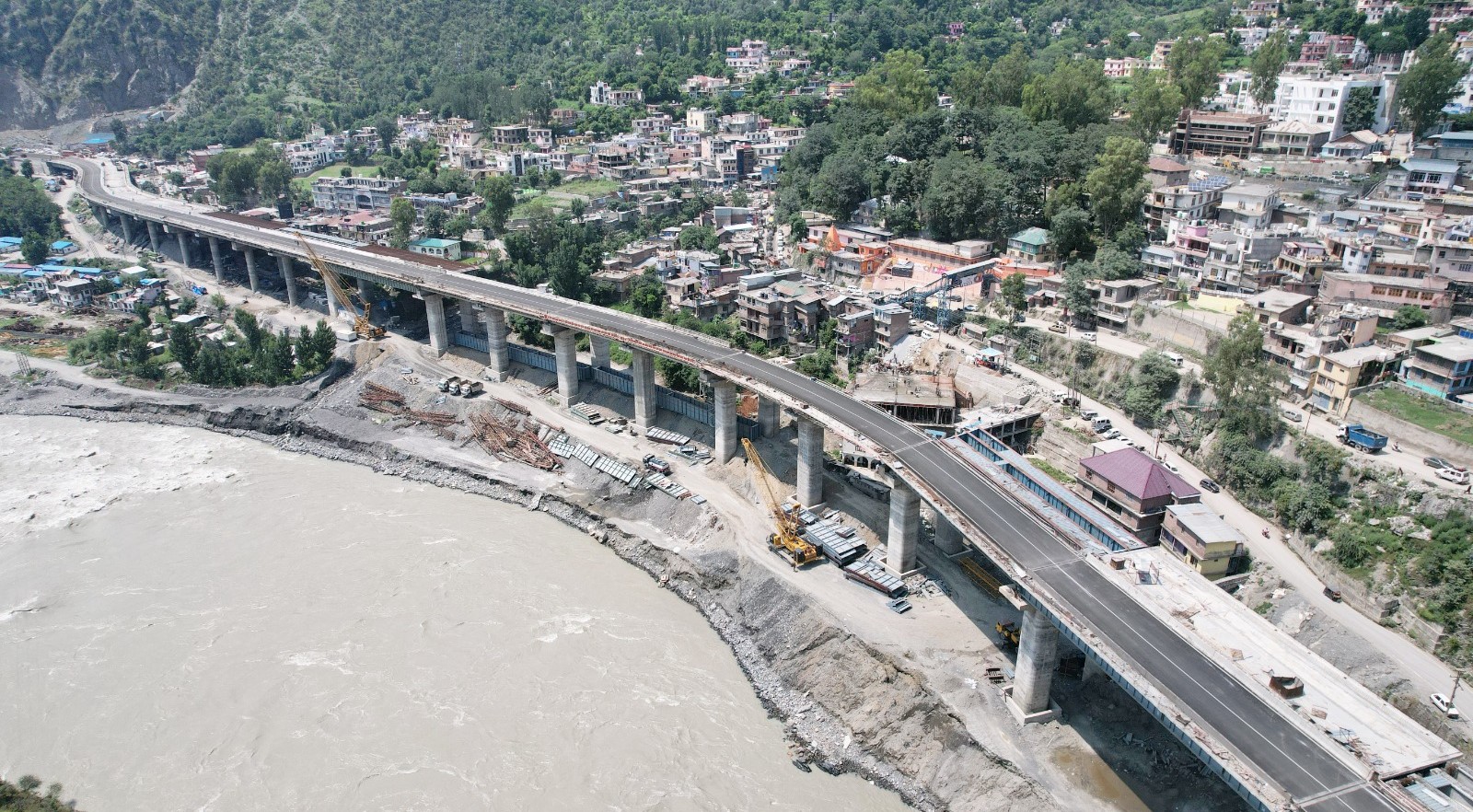
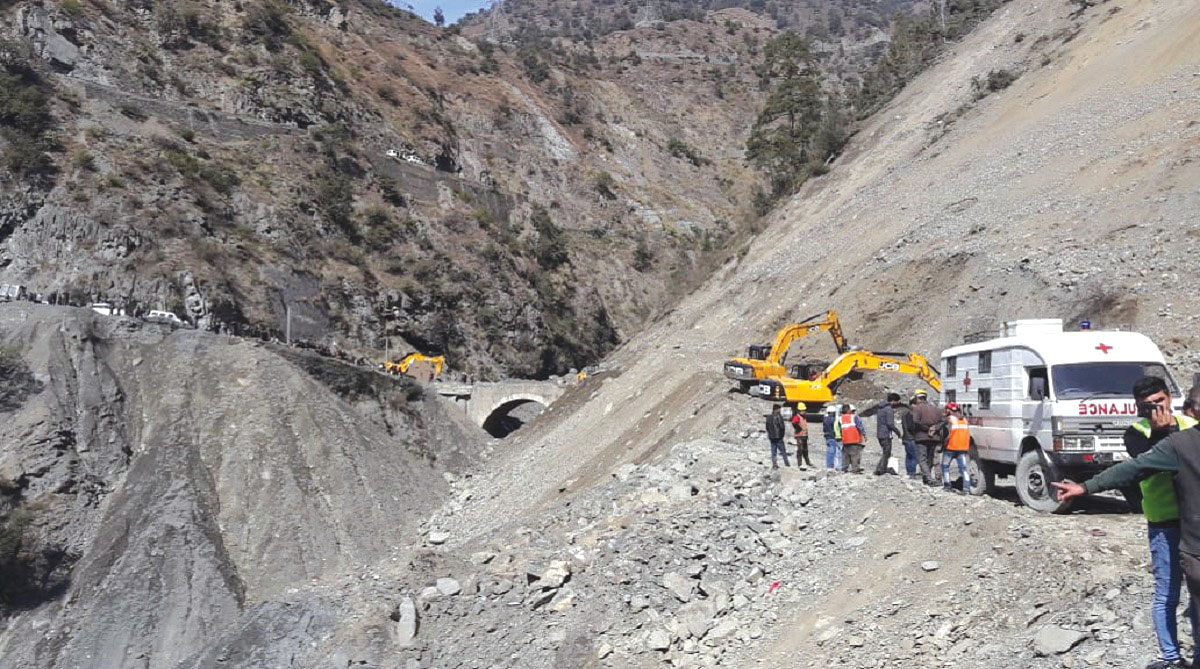
The Ramsoo-Ramban portion of the Jammu–Srinagar National Highway passed through treacherous terrain, where densely populated clusters were scattered across steep slopes and narrow valleys.
Highway serving as the only lifeline, essential for daily commutes, trade, and emergencies, the constant movement, compounded by frequent landslides, unpredictable weather, sharp curves, and deteriorating road conditions, significantly heightened the risk of accidents.
The influx of pilgrims and tourists during peak seasons further intensified congestion, rendering the stretch particularly vulnerable to road mishaps and natural calamities.
According to Navaid, the challenges faced during rescue operations in this region were severe. “Since we cannot rely on the timely arrival of an ambulance, especially during the night when it takes much longer, we try to manage everything ourselves,” he said. “We cannot afford to take any risks.”
Navaid said the most difficult aspect of their work was the lack of essential equipment. “We operate entirely at our own risk. We do not have rescue kits that could aid us. We have our own families to consider, and it is extremely dangerous to head into high-risk areas without basic gear,” he said.
“Even the ropes typically used in rescue missions are of high quality, and we do not have access to such equipment. We are in dire need of proper kits; only then can we continue our work without fear.”

Looking Ahead
“We are now making efforts to start crowdfunding, to be able to assist more people,” Navaid said.
Their broader objective was to expand their reach, both geographically and demographically. “We want to reach other districts as well. We are also planning to include women volunteers soon,” he said.
The documentation process required for raising funds and initiating crowdfunding was currently underway. They also planned to strengthen their digital footprint. “We created our Facebook account in 2021 to connect with more people. One of our members, who is currently undergoing cancer treatment at SKIMS, Soura, needs support, and we are planning to raise funds for him as well,” he said.
Members of the team hope that the established NGOs working in Chenab Valley and Kashmir, who are working on different fronts, especially relief and rescue, should come forward and help them equip themselves better. They also want them to guide them on how to secure funds and raise donations so that they can function better. This group, they insist, operates on one of the most dangerous stretches of the highway. Officials admit that while most of the highway was relaid and upgraded, the precarious nature of the Banihal Ramban belt was so dangerous that not many contractors were able to get into the scene. At various places, the road alignment disappears under landslides, forcing the road managers to rebuild the road. The government, the societies in Kashmir and Jammu have a larger stake in making the rescue team operate better.