Nowshera and Ganderbal once sustained a craft that supplied paper across the subcontinent. Industrialisation, declining demand, raw-material shortages and the loss of skilled artisans eventually pushed the traditional industry into oblivion, according to a study published by the University of Kashmir’s Centre of Central Asian Studies.
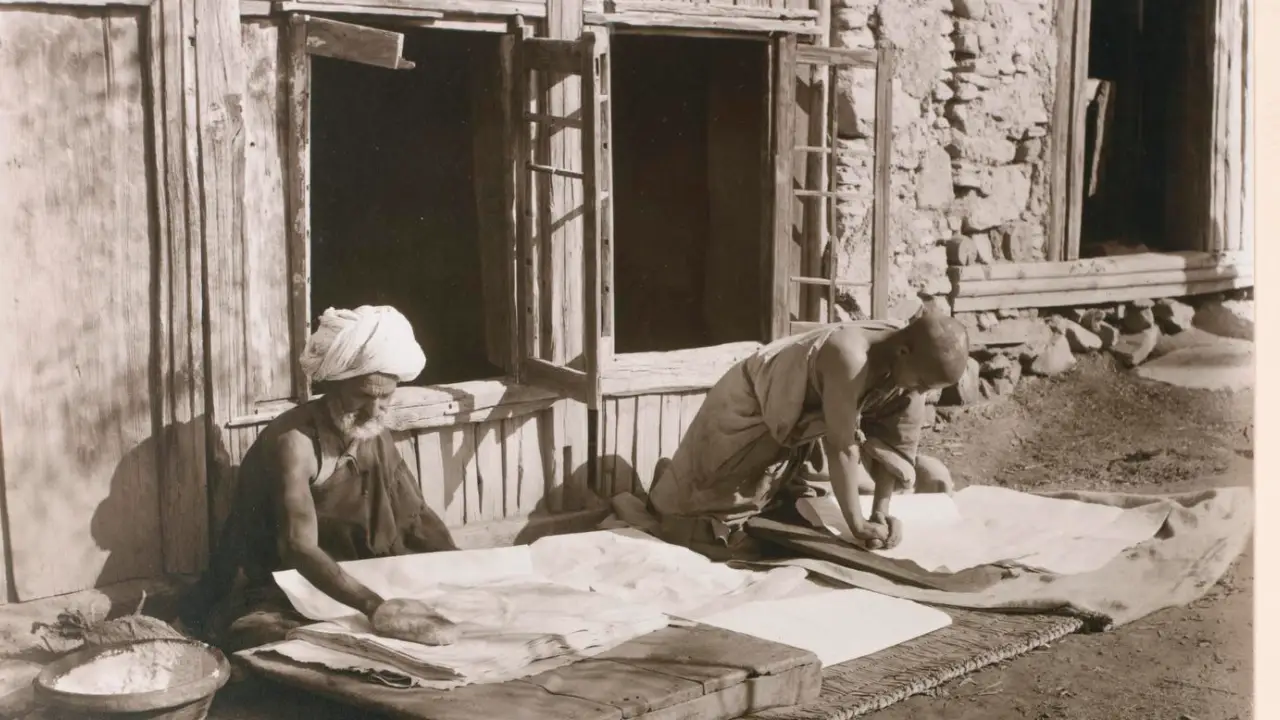
SRINAGAR: Kashmir’s centuries-old tradition of handmade paper manufacturing has disappeared, leaving behind archival records, photographs and remnants of a once-thriving craft. The industry, known locally as Koshur Kakaz, flourished under royal patronage, supplied writing material across the Indian subcontinent and sustained generations of skilled artisans. Its decline reflects the combined effects of industrialisation, changing consumer preferences, economic constraints and inadequate institutional support.
The findings appear in an academic paper, The Centuries Old Legacy of Kakaz Manufacturing in Srinagar, Kashmir, authored by Sanah Khan, Dr Mohammad Ajmal Shah and Dr Mumtaz Yatoo. The paper was published in The Journal of Central Asian Studies (Volume 31, 2024), a journal published by the Centre of Central Asian Studies, University of Kashmir, Srinagar.
The researchers trace the origins of Kashmiri papermaking to the fifteenth century. They examine its historical development, manufacturing techniques, principal production centres, varieties of paper and the circumstances that led to the disappearance of the industry. The study also documents the working conditions and livelihoods of the artisans who kept the craft alive.
Royal Origins
The paper traces the establishment of Kashmiri papermaking to the reign of Sultan Zainul Abedin, who ruled Kashmir from 1420 to 1470 CE. According to the authors, the craft reached Kashmir from Samarkand, in present-day Uzbekistan, through skilled artisans invited during his rule.
The Sultan’s patronage helped establish papermaking as an organised craft. Production developed in Nowshera, in Srinagar, and Ganderbal. The industry subsequently gained wider recognition under the Mughals and Afghans.
The researchers draw on earlier historical accounts to establish the reputation of Kashmiri paper. They cite records indicating that it was prized for its quality and durability. Its distinctive feature was the ability to wash away ink and reuse the paper.
The study refers to a letter written by Sheikh Yaqub Sarfi to Abdul Qadir Badauni. The letter reportedly attested that ink could be completely washed off Kashmiri paper, allowing it to be used again for writing.
The authors also cite historical accounts describing the extensive demand for Kashmiri paper from the time of Emperor Akbar until the late nineteenth century. Its buyers included regions such as Sialkot in Punjab, Zafarabad in present-day Uttar Pradesh, Bihar, Bengal, Ahmedabad, Aurangabad and Mysore.
The paper says Kashmiri handmade paper was particularly valued for manuscripts and correspondence. It became an important commercial product as literacy, administration and the need for written records expanded.
Central Asian Links
The study places Kashmir’s papermaking tradition within the wider movement of technology and knowledge across Asia.
Papermaking originated in ancient China and spread through Central Asia and Persia along trade routes connecting eastern Asia with the Mediterranean. The authors trace this transmission through Samarkand and onward to centres such as Baghdad, Damascus, Egypt and Morocco.
They cite scholarship suggesting that the technology travelled westward over several centuries. Arab artisans subsequently adapted the process, using linen, flax and other vegetable fibres. The paper also refers to the introduction of Khorasani paper into India during the early eighth century.
Kashmir’s adoption of the craft formed part of this wider history of cultural exchange. Its artisans developed a distinctive manufacturing tradition that combined locally available materials with specialised manual skills.
The authors argue that the history of Kashmiri paper illustrates the movement of technology between civilisations. It also demonstrates how a transmitted craft became embedded in a region’s economic and cultural life.
Production Centres
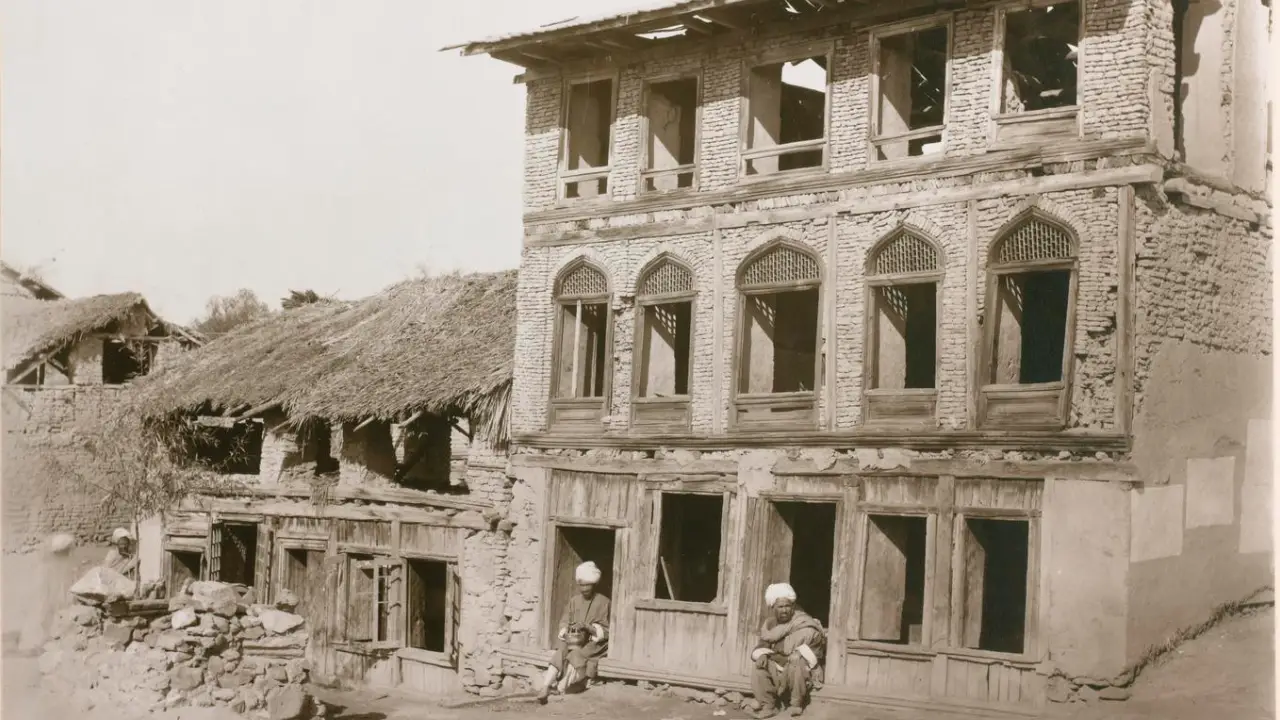
Nowshera and Ganderbal emerged as the principal centres of handmade paper production in Kashmir. The study also identifies pulp-processing sites around Srinagar, including Hari Parbat, Dal Lake, Lar Pargana and Dachigam.
Drawing on earlier accounts, the authors note that Nowshera alone had approximately 32 paper factories. These establishments provided a source of income for a substantial number of people involved in the trade.
Production, however, was seasonal. Factories often closed during winter because freezing water disrupted the operation of water-powered machinery. Workers resumed production after the winter months.
This seasonal pattern restricted the period during which artisans could earn from their work. The industry therefore faced economic vulnerabilities even when demand for its products remained strong.
The study describes papermaking as a labour-intensive activity. It depended on local materials, water-powered equipment and the accumulated knowledge of specialised workers. The craft was sustained through practical experience passed from one generation to the next.
Raw Materials
The manufacture of Kashmiri paper required rags, hemp, lime, sazi and starch. Each material played a specific role in preparing the pulp or finishing the paper.
The paper describes the mould as an essential tool, comparable in importance to a loom in weaving. Kashmiri moulds consisted of a wooden frame and a separate cover. The frame was generally made from deodar wood, while the cover was constructed from dried grass and secured with horse-tail hair at regular intervals.
These hair strands produced the characteristic lines visible in handmade paper. The mould also helped artisans lift the paper sheet from the water during production.
The preparation of raw materials required considerable effort. Workers first separated rags into smaller strips and washed them to remove dust and impurities. Lime and sazi were then added, and the material was pounded using a mortar and pestle.
The beating continued until the mixture became a fine pulp. This stage was crucial to producing paper of the required quality and consistency.
Manual Process
After beating, the pulp was drained, flattened into cakes and dried in sunlight for bleaching. The cakes were subsequently mixed with water in earthen vessels.
Vatmen used their feet to mix the material until the pulp reached the desired consistency. They controlled the thickness and weight of the eventual paper sheets by judging the condition of the mixture.
The next stage involved forming the sheets with the mould. Water was drained from the newly formed sheets before they were stacked for further processing.
The researchers describe a traditional practice in which wet sheets were stacked in blocks of 72 and left overnight. The sheets were then separated carefully and pasted onto smooth, sun-exposed mud walls to dry.
Once dry, the sheets were cut to the required dimensions. Each sheet was polished manually with a pumice stone known as karkutta. Rice starch was applied to improve the paper’s surface and its ability to receive ink from a reed pen.
The final stage was glazing. Artisans called moharkash rubbed the sized paper with polished agate to produce a smooth, refined finish.
The sequence demanded patience, experience and precise handling. Every stage, from washing the rags to polishing the finished sheet, influenced the quality of the final product.
Paper Varieties
Kashmiri artisans manufactured different varieties of paper for different purposes.
The finest grade was known as Farmashi or Maharaji, also described as royal paper. It was distinguished by its smooth finish and was made using hemp fibre mixed with rags. The paper cites a composition of two parts hemp fibre to every 16 parts of rags.
Another variety, Dahmashti, was used more commonly. The authors cite a mixture containing three parts hemp fibre to every 177 parts of rags.
A thin, straw-coloured writing paper known as Dahki was also manufactured. Kalamdani, meanwhile, was described as a lower-quality variety that did not contain hemp fibre.
These categories indicate that Kashmiri papermaking was not a uniform process. Artisans adjusted the composition and finish of their products to meet different requirements and preferences.
The production of several grades also allowed the industry to serve a broader market, from ordinary writing needs to the preparation of more refined manuscripts and correspondence.
Skilled Artisans
The paper identifies the Kakazgars, or traditional papermakers, as the custodians of this specialised knowledge.
Their work involved more than operating equipment. They had to understand the preparation of pulp, the balance of raw materials, the consistency needed to form sheets and the techniques required to finish the paper.
The authors emphasise the intergenerational character of the craft. Artisans preserved its methods by passing their knowledge and skills to younger members of their families and communities.
Papermaking was therefore both an economic activity and a form of traditional knowledge. Its disappearance affected not only the livelihoods of the workers but also the continuity of a distinctive craft tradition.
The study examines the social and economic circumstances of those engaged in the industry. It argues that the loss of skilled artisans became one of the principal threats to its survival.
Industrial Competition
The authors identify the spread of machine-made paper as a major reason for the decline of handmade production.
Modern manufacturing methods made paper cheaper and more readily available. Traditional Kashmiri paper, by contrast, required considerable manual labour, specialised skills and time-consuming processing.
As industrial paper became more accessible, the market for handmade products contracted. The traditional industry struggled to compete with large-scale manufacturing and its ability to meet growing demand.
The paper also points to the increasing influence of British rule during the late nineteenth century. It argues that the importation of paper and restrictions on the use of handmade paper contributed to the decline of the traditional industry in India.
The transition was not simply a change in production technology. It altered the economics of papermaking, reducing the commercial viability of a craft that depended on skilled labour and established production practices.
Economic Pressures
The decline was compounded by shortages of raw materials and rising production costs.
According to the study, the shrinking demand for handmade paper made it increasingly difficult for artisans to obtain the materials they needed at sustainable prices. Attempts to shift to alternative materials did not provide a viable solution.
The paper also identifies political instability and recurrent conflict as pressures on Kashmir’s traditional economy. These conditions made it harder for artisans to sustain their livelihoods through papermaking alone.
The seasonal nature of production added another difficulty. Winter closures limited the period during which factories could operate, leaving workers with a restricted window for earning an income.
Together, these factors weakened the industry’s capacity to adapt. As earnings declined and more secure employment became attractive, younger generations became less willing to continue the family trade.
Institutional Gaps
The study identifies insufficient government and institutional support as another factor behind the decline.
Although efforts were made to encourage traditional crafts, the authors argue that the measures were often inadequate to revive older industries. Policies intended to preserve and promote traditional manufacturing had limited impact on the survival of Kashmiri papermaking.
The researchers also discuss attempts to document the craft through publications, digital material and archives. Collaborations with contemporary designers and artists sought to adapt traditional techniques to new products and markets.
These initiatives, however, did not succeed in sustaining the industry. The paper says the craft ultimately survived only in archival remnants rather than as a continuing manufacturing tradition.
The authors argue that documenting the methods and history of papermaking remains important even after its commercial disappearance. Such work can preserve knowledge of the processes, materials and skills that once supported the industry.
Cultural Loss
The disappearance of handmade paper represents more than the decline of a commercial activity, according to the study.
Kashmiri paper was connected to the region’s manuscript culture, administrative history and artistic traditions. Its production relied on knowledge accumulated over generations and on a network of workers whose livelihoods depended on the craft.
The loss of that industry has therefore disrupted a link between contemporary Kashmir and its past.
The authors place particular emphasis on the cultural significance of traditional manufacturing. They argue that the disappearance of the craft amounts to a loss of heritage, as well as a break in the transmission of inherited skills.
The study concludes that Kashmiri papermaking was an important contributor to the region’s economic and cultural history. Its legacy reflects the ingenuity of local artisans and the wider exchange of knowledge across Central and South Asia.
The researchers maintain that documenting the craft is essential to understanding both its historical importance and the forces that led to its decline.